 Installation guide
 Owner’s manual
 Error Codes
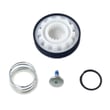


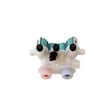
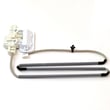
How to reset Kenmore washer model 110 top loader?
To reset your Kenmore top-load washer model 11028132413, disconnect power for at least 5 minutes, then restore power and try starting a cycle again. This clears many temporary control glitches without changing any cycle settings (see the 11028132413 use & care manual).
- Press Power to turn the washer off (if it responds).
- Unplug the washer from the outlet.
- Wait 5 minutes (full power-down).
- Plug the washer back in.
- Press Power, select a cycle, then press and hold Start/Pause/Unlock Lid for up to 3 seconds.
These checks are specific to how the 11028132413 is designed to operate:
- Lid must be closed; the washer will not run with the lid open.
- If the tub was spinning, the lid may take several minutes to unlock.
- Verify the outlet has power; reset the breaker if needed.
- Avoid non-HE detergent or oversudsing; excess suds can pause or stop operation.
- If an error code returns after a reset, follow the troubleshooting steps in the manual.
| What’s happening | What the reset helps | What to try next |
|---|---|---|
| Control panel acting frozen | Clears a temporary control fault | Power reset, then restart cycle |
| Lid won’t lock/unlock | Reboots the control | Remove items from lid area; wait for stop |
| Washer stops mid-cycle | Clears some interruptions | Check load balance, suds, and lid status |
A simple power reset is the safest first step because it can restore normal operation without disassembly or parts replacement. If the washer repeatedly fails to lock the lid, the lid lock system may need inspection.
Last updated: January 2026
Does my Kenmore top load washer have a filter?
Your Kenmore top-load washer model 11028132413 does not use a typical, user-cleanable “lint filter” like some older washers. Instead, it relies on the drain pump and internal drain path to move lint and debris out with the wash water; routine maintenance focuses on proper loading and periodic tub cleaning (see the 11028132413 use & care manual).
On many top-load HE (high-efficiency) washers like 11028132413, the “filter” people refer to is usually one of these:
- A removable lint screen (common on older designs): not typical on this model
- A drain pump clean-out trap (common on many front-load washers): not provided as an easy-access door on this design
- Inlet valve screens (tiny screens where hoses connect): present, but they are not a lint filter
If your washer is draining slowly, leaving clothes wet, or making gurgling/humming drain noises, we recommend these practical checks:
- Make sure the load is not tightly packed; tight loads can reduce draining and spinning performance
- Run Rinse & Spin (or Drain & Spin if available on your control) to see if draining improves
- Check the standpipe or laundry tub for a slow household drain
- Verify the drain hose is installed correctly (depth into standpipe matters); use the 11028132413 installation guide
- If symptoms persist, the drain pump may be restricted or failing; the compatible replacement is the washer drain pump W10876600
| Item people call a “filter” | Where it is | What it does | User-cleanable? |
|---|---|---|---|
| Lint screen | Tub rim or agitator area | Catches lint | Often yes (not typical here) |
| Pump trap/clean-out | Front lower access | Catches coins, debris | Often yes (not typical here) |
| Inlet valve screens | Hose connections | Blocks grit from water supply | Sometimes (with care) |
A washer without a simple lint filter can still run great, but small items (coins, hair pins, pet hair clumps) can end up in the drain path. Good pocket-check habits and correct drain hose setup help prevent long-drain issues and wet loads.
Last updated: January 2026
What is the life expectancy of a Kenmore washer?
For Kenmore washers like model 11028132413, the manufacturer does not publish a specific “life expectancy” in years. In real-world household use, many washers commonly run for roughly a decade or more, but lifespan varies most with installation, load habits, and maintenance.
This Kenmore top-load HE, low-water washer is designed for HE detergent and includes maintenance guidance that directly impacts longevity. We recommend following the routine care steps in the 11028132413 use & care manual.
- Use only HE (High Efficiency) detergent; avoid over-dosing (excess suds can stress components)
- Load items in loose heaps around the washplate; do not tightly pack
- Run the Clean Washer cycle about every 30 washes (helps control residue and odor)
- Leave the lid open between loads to help the tub dry
- Replace inlet hoses about every 5 years to reduce leak risk (per installation guidance)
These are common, non-model-specific ranges many homeowners experience:
| Usage level | What it looks like | Typical outcome |
|---|---|---|
| Light | 1 to 3 loads/week | Often longer service life |
| Average | 4 to 7 loads/week | Often around a decade or more |
| Heavy | Multiple loads/day | More frequent repairs, shorter life |
As washers age, we often see more issues with draining, filling, and balance control. If your 11028132413 won’t drain or leaves clothes wet, a common component to inspect is the washer drain pump W10876600.
Knowing that lifespan is usage-driven helps you decide whether to focus on preventive maintenance now or plan for repairs later. Good loading habits and routine cleaning can reduce wear on the drive system, suspension, and controls.
Last updated: January 2026
How many cubic feet is a Kenmore Model 110 washer?
For Kenmore washer model 11028132413, the exact tub capacity in cubic feet is not stated in the model-specific documents we have for this washer. Because “110” is a large Kenmore model family, capacity varies widely by the full model number and wash system.
The use & care information identifies this washer as a top-loading, high-efficiency, low-water (washplate-style) design, but it does not list a cubic-foot capacity.
- It is a top-load HE low-water washer (washplate system)
- Water level is automatically adjusted to load size (no manual water level selector)
- The manual does not provide a “cu. ft.” specification
Reference: 11028132413 use & care manual
If you need a practical estimate for load sizing, you can measure the basket and calculate an approximate volume.
- Measure inside basket diameter (inches)
- Measure usable depth (inches) to the highest normal fill line or just below the rim
- Convert cubic inches to cubic feet (divide by 1,728)
| What you measure | Why it helps |
|---|---|
| Basket diameter | Biggest driver of volume |
| Usable depth | Prevents overestimating |
| Rim-to-washplate clearance | Helps compare similar top-load designs |
Many online answers quote a single capacity (often 3.2 cu. ft. or 4+ cu. ft.), but those figures can apply to different 110-series sub-models.
Common differences that change capacity:
- Agitator vs washplate (impeller) design
- Basket shape and depth
- Model generation and platform
Capacity affects how full you can load the basket, cycle performance, and HE detergent dosing. On low-water HE designs like 11028132413, overloading can also increase off-balance events and leave items less clean.
Last updated: January 2026





