Owner’s manual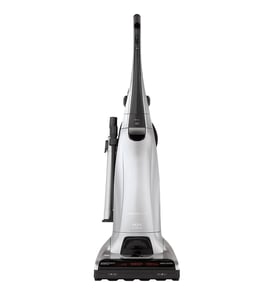




How to change the belt on a Kenmore vacuum?
To change the belt on your Kenmore upright vacuum model 40139000, unplug the vacuum, remove the nozzle guard (6 screws), lift out the brushroll, swap the belt, then reinstall the brushroll and guard. The step-by-step belt and brushroll procedure is in the 40139000 owner's manual.
- Unplug the vacuum cleaner.
- Lay the vacuum flat and flip it over so the nozzle base faces up.
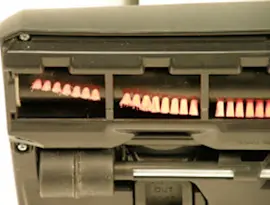
- Remove the nozzle guard by taking out 6 screws, then pivot and pull the guard off.
- Lift out the brushroll and remove the old belt.
- Slide the new belt onto the motor shaft.
- Loop the belt around the brushroll in the belt area (not over the bristles).
- Reinstall the brushroll; confirm the end caps sit in the correct orientation.
- Rotate the brushroll by hand to verify the belt tracks straight.
- Reinstall the nozzle guard and tighten the 6 screws securely.
For this model, match the belt by model number and belt style. A common replacement listed for Kenmore 40139000 is the Kenmore vacuum belt 6602-001534.
| What you’re checking | What “right” looks like |
|---|---|
| Belt routing | Belt sits on motor shaft and brushroll groove, not twisted |
| Brushroll seating | End caps fully seated, brushroll spins freely by hand |
| Reassembly | Nozzle guard flush, all 6 screws installed and snug |
A worn or stretched belt is one of the most common reasons an upright vacuum stops cleaning well on carpet. Replacing the belt restores brushroll speed, improves agitation, and helps prevent overheating from a stalled brush.
Last updated: February 2026
Where can I find the Kenmore vacuum model number?
Your Kenmore upright vacuum model number is on the model and serial number plate on the vacuum body. On model 40139000, check the main housing (often the back or lower rear area) for a label that lists both the model and serial numbers.
We recommend checking these common label locations first:
- Back of the vacuum body near the lower rear
- Bottom of the base (tilt the vacuum back and look underneath)
- Behind or near the dust bin area (after removing the bin)
- Near the cord wrap or cord entry point
- On a flat section of the main housing where a sticker can sit flush
For diagrams and the exact label callout used for this model, use the 40139000 owner's manual.
Kenmore vacuums often have similar-looking versions, and small design changes affect fit. Using the full model number helps us match the correct vacuum belt, filters, brush roll parts, and hose components.
| What you need | Where it’s used | Why it helps |
|---|---|---|
| Model number | Parts lookup and diagrams | Ensures correct part fit |
| Serial number | Service history and support | Identifies production run |
| Purchase date | Warranty and maintenance tracking | Confirms coverage timing |
- Write the model number exactly as shown (include all digits)
- Record the serial number too; it is on the same plate
- If the label is worn, use a flashlight and take a close-up photo to zoom in
A correct model number prevents ordering the wrong belt or filter and saves time during troubleshooting and repair.
Last updated: February 2026
What is the best upright vacuum for the money?
For the best upright vacuum “for the money,” we recommend choosing the model that matches your floors and maintenance preferences (bagged vs. bagless) rather than chasing the highest price tag. If you already own the Kenmore 40139000, keeping it performing like new with routine care often delivers the best value.
Focus on the features that change real-world cleaning results and ownership cost:
- Floor type match: height adjustment for carpet vs. bare floors; the 40139000 uses a height adjust knob with low, intermediate, and high settings.
- Brush roll performance: strong agitation for carpet; easy access for hair removal.
- Filtration upkeep: washable foam filters vs. replaceable filters; clogged filters reduce suction.
- Belt-driven nozzle: belts wear and stretch; a fresh belt restores brush roll speed.
- Parts availability: belts, filters, and brush components should be easy to source.
| Shopper priority | Best fit | Why it’s a value |
|---|---|---|
| Lowest ongoing cost | Bagged upright | Less filter washing; consistent airflow when maintained |
| Pet hair on carpet | Upright with strong brush roll | Better agitation and pickup on pile carpet |
| Allergies | Sealed filtration focus | Better dust containment with proper filters |
| Mixed floors | Upright with height adjustment | Easier push and better pickup across surfaces |
You get the best value by restoring airflow and brush roll drive first:
- Empty and reinstall the dust bin correctly
- Clean or replace filters on schedule (motor and exhaust filter maintenance is covered in the manual)
- Replace a worn belt if the brush roll slows or stops
- Set nozzle height to the lowest practical setting; raise it one notch if the vacuum is hard to push
Helpful references:
“Best for the money” usually means best cleaning per dollar over time. A well-maintained upright with a clean filter path and a tight belt can outperform a more expensive vacuum that is neglected.
Last updated: February 2026
Are upright vacuums better than cylinders?
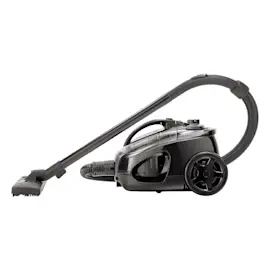
Upright and canister (cylinder) vacuums are each “better” for different cleaning needs. For the Kenmore 40139000 upright vacuum, an upright design is typically best when you want faster coverage on large carpeted areas and easy height adjustment for different floor types; compare that to canisters, which usually excel at above-floor cleaning and tight spaces.
| Feature | Upright vacuum (like Kenmore 40139000) | Canister (cylinder) vacuum |
|---|---|---|
| Best for | Large carpeted areas, quick passes | Stairs, under furniture, above-floor tools |
| Maneuverability | Good on open areas | Often better in tight spaces |
| Brush roll performance | Strong for carpet agitation | Varies by power nozzle design |
| Storage | One-piece, usually simpler | Hose and wand can take more space |
- Choose an upright if you have lots of wall-to-wall carpet and want quick, straightforward cleaning.
- Choose a canister if you clean many stairs, upholstery, drapes, or hard-to-reach areas.
- If you have mixed flooring, prioritize a model with height adjustment; the 40139000 uses a height adjust knob with settings for bare floors through plush carpet (use the lowest practical setting).
- If you have pets, focus on brush roll condition and filtration; clogged filters and worn brush parts reduce pickup on any vacuum type.
- If pushing effort is a concern, raise the height setting one step when the vacuum feels hard to push.
Matching the vacuum style to your flooring helps you clean faster and prevents common issues like poor pickup, excessive pushing force, and premature belt or brush wear. On uprights, the brush roll and belt are key wear items; keeping them in good shape maintains carpet cleaning performance.
- Set the height adjust knob to the lowest practical setting for the surface.
- Keep the hose firmly attached; the vacuum may not operate properly if the hose wand is not seated.
- Replace wear parts when performance drops; a stretched or slipping belt is a common cause of weak brush action.
Helpful references: 40139000 owner's manual, Kenmore vacuum belt 6602-001534, vacuum common questions
Last updated: February 2026