Installation guide
 Owner’s manual
 Error Codes




What is the difference between a regular GE and GE profile?
GE and GE Profile are both GE brands, but GE Profile is positioned as the step-up line with more premium features, styling, and technology. For your GE JB650SF4SS electric range, the exact feature set is best confirmed in the JB650SF4SS owner's manual.
Key differences you’ll usually see
- Features and cooking tech: GE Profile models more often add advanced cooking modes, sensors, and convenience features.
- Design and finish options: Profile typically has a more premium look (controls, handles, trim).
- Controls and connectivity: Profile models are more likely to include upgraded control interfaces and smart features.
- Price and positioning: Profile is generally the higher-tier option within GE’s lineup.
- Model-specific variations: Two ranges can look similar but differ in element sizes, oven modes, and control options.
How to compare two models quickly
Use this checklist when you’re deciding between a GE and GE Profile range:
| What to compare | GE (standard line) | GE Profile (step-up line) |
|---|---|---|
| Everyday cooking features | Core essentials | More advanced options are common |
| Controls | Straightforward | More premium interfaces are common |
| Styling | Classic | More premium styling is common |
| Best for | Value-focused kitchens | Feature-focused kitchens |
Why it matters
The “GE vs GE Profile” label affects what you get day-to-day: preheat behavior, available cooking modes, control layout, and which replacement parts (like a surface element or control board) match your exact range.
Tip for JB650SF4SS owners
If you’re comparing your JB650SF4SS to a Profile model, match these items first:
- Cooktop element sizes and types (radiant, dual, etc.)
- Oven features (self-clean options, special modes)
- Control panel layout and display style
- Electrical and cutout requirements (especially for replacements)
Last updated: January 2026
How much does it cost to replace an oven temperature sensor?
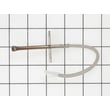
For a GE JB650SF4SS electric range, replacing the oven temperature sensor typically costs about $150 to $350 total (part plus labor). If you do it yourself, you usually pay about $30 to $90 for the sensor; confirm the exact procedure in the JB650SF4SS owner’s manual.
Typical cost breakdown
Costs vary by location, service call minimums, and whether the sensor is hard to access.
- DIY (part only): about $30 to $90
- Service call / diagnostic fee: commonly $75 to $150
- Labor (if approved after diagnosis): commonly $75 to $200
- Total professional repair: commonly $150 to $350
| Scenario | What you pay for | Typical total |
|---|---|---|
| DIY replacement | Sensor only | $30 to $90 |
| Pro repair (best case) | Sensor + minimal labor | $150 to $250 |
| Pro repair (higher end) | Sensor + longer labor + service call | $250 to $350 |
When the sensor is the likely fix
A failing oven temperature sensor often shows up as temperature control problems rather than a complete no-heat condition.
- Oven runs too hot or too cold even after preheating
- Baking results are inconsistent from rack to rack
- Temperature seems to drift during a long bake
- You see a temperature-related fault on the display (if your model shows codes)
For code lookups and what they mean on GE ranges, use GE freestanding range error codes.
Why it matters
The temperature sensor tells the control board what the oven temperature is. If the sensor is coated with cleaner residue or is failing electrically, the oven can heat improperly. The manual also notes to avoid letting oven-cleaner film build up on the sensor because it can affect baking performance.
Before you pay for a sensor
These quick checks can prevent an unnecessary part purchase:
- Make sure the oven is not in a special mode (such as Sabbath Mode).
- Verify the oven is fully preheated before judging temperature.
- Check that the sensor area is clean (avoid spraying cleaner on controls).
- If the oven is still off by a consistent amount, use the oven temperature adjustment feature described in the manual.
Last updated: January 2026
What is the life expectancy of a GE oven?
A GE electric range oven like model JB650SF4SS typically lasts 13 to 15 years with normal household use and basic maintenance. Keeping the oven cavity clean, avoiding harsh cleaners on the cooktop, and fixing heating issues early helps you reach the full lifespan.
Typical lifespan and what affects it
Most electric range ovens reach their expected service life based on heat exposure, cleaning habits, and how often the oven runs at high temperatures.
- Usage frequency: daily baking and broiling shortens life compared to occasional use
- Heat stress: frequent self-clean or very high-heat cooking accelerates wear on controls and wiring
- Power quality: loose connections or overheating at the terminal block can damage components
- Cleaning and spills: sugary spills left on surfaces can permanently dull finishes
- Repairs done early: replacing a failing element or control can prevent bigger damage
What “end of life” usually looks like
These symptoms often show up as an oven approaches the end of its service life; many are repairable.
| Symptom | Common cause | Often repairable? |
|---|---|---|
| Oven will not heat or heats unevenly | Failed bake or broil element | Yes |
| Display or clock acts erratic | Control board issue | Yes |
| Door does not seal well | Worn door gasket | Yes |
| Cooktop element not heating | Radiant/halogen element issue | Yes |
Parts that commonly drive repair decisions
If you are comparing repair vs replace on JB650SF4SS, these are common wear items we see on electric ranges:
- Heating elements (bake and broil)
- Electronic control board and clock
- Oven door gasket and door hardware
- Surface elements and related wiring connections
For example, a no-heat complaint often points to the range bake element WB44X45499 or the broil element, depending on which mode fails.
Why it matters
Knowing the typical 13 to 15 year lifespan helps you decide whether a symptom is a quick fix (element, gasket, bulb) or a sign to plan for replacement, especially if multiple major components are failing.
For model-specific operating and care guidance (including cleaning recommendations), follow the JB650SF4SS owner’s manual.
Last updated: January 2026
Why is my electric oven not heating up?
On the GE JB650SF4SS electric range, an oven that will not heat is most often caused by a tripped breaker or blown fuse, incorrect control settings (including Sabbath Mode), or a failed heating element. Start with the power supply and settings, then inspect the bake and broil elements for visible damage.
Quick checks we recommend first
- Reset the range by turning the circuit breaker OFF, then ON.
- Confirm the oven is not in Sabbath Mode and that the controls are set to Bake or Broil correctly.
- Make sure the display is on and responsive (a blank display often points to a power issue).
- Verify the oven door is fully closed and nothing is blocking the oven vent.
- If an error code flashes (an “F” plus numbers/letters), cancel the cycle and power-reset the range.
What to look for on the heating elements
A failed element can prevent heating even if the control panel looks normal.
- Look for blisters, cracks, holes, or a separated spot on the element.
- If you see a glowing spot or other visible damage during use, turn the oven off immediately.
- If the broil element works but bake does not (or vice versa), the non-working element is a top suspect.
| Symptom | Most likely cause | What we do next |
|---|---|---|
| Oven completely dead | Breaker tripped, fuse blown, power supply issue | Reset breaker; verify proper outlet/connection |
| Display works, no heat | Failed bake/broil element, control issue | Inspect elements; test continuity if qualified |
| “F” code flashes | Function error | Cancel, cool 1 hour, power-reset |
| Heats sometimes, clicking | Relay cycling | Normal operation if temperature is maintained |
Parts that commonly fix “no heat”
If inspection points to a failed component, these are common replacements for this model:
- Range bake element WB44X45499
- Range broil element WB44X20882
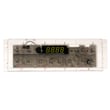
- Range oven control board and clock WB27X45466
Why it matters
An oven that will not heat is often a simple power or settings issue, but damaged heating elements can create a burn, fire, or shock hazard. Checking power, modes, and visible element condition helps you restore baking performance safely.
For model-specific operating steps and special features (including Sabbath Mode and error code guidance), use the JB650SF4SS owner's manual.
Last updated: January 2026