
What is the average lifespan of an air compressor?
Most air compressors last about 10 years on average. For a Craftsman 106153783 twin-cylinder tank-type air compressor, real-world lifespan depends most on duty cycle, heat, moisture control, and how quickly you fix air leaks and worn valves.
Typical lifespan ranges (what to expect)
- DIY / homeowner piston (tank) compressors: 5 to 10 years
- Prosumer / heavier-duty piston compressors: 8 to 15 years
- Industrial rotary screw compressors: 10 to 20 years
- Industrial centrifugal compressors: 15 to 25 years
What shortens lifespan fastest
- Running past the rated duty cycle (overheating the pump and motor)
- Letting water sit in the tank (internal rust)
- Dirty intake filter (higher pump temps, faster ring wear)
- Chronic air leaks (longer run time, more heat)
- Low oil level on oil-lubed pumps (accelerated bearing and cylinder wear)
Maintenance that adds years
- Drain the tank after use (or at least daily during heavy use)
- Keep the compressor in a clean, ventilated area so it runs cooler
- Check fittings, hose connections, and the regulator for leaks
- Replace worn electrical components promptly (switches, cords, capacitors)
- Use the right extension cord and circuit capacity to avoid motor strain
Quick “replace vs. repair” guide
| Symptom | Usually worth repairing | Usually time to replace |
|---|---|---|
| Small air leak at fitting | Yes | No |
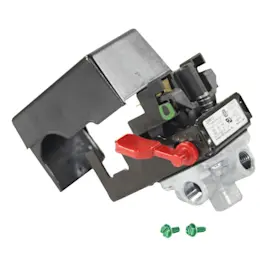
| Pressure switch not cutting in/out | Often | No |
| Slow fill plus oil carryover (oil-lubed) | Sometimes | Often |
| Tank shows heavy rust or weeping | No | Yes |
Why it matters
Air compressor life is mostly a run-time and corrosion story. Keeping run time down (fix leaks, avoid overuse) and keeping moisture out of the tank protects the pump, motor, and tank so your Craftsman 106153783 stays reliable for paint sprayer and air tool use.
For electrical troubleshooting steps that help prevent repeat failures, use our guide: how to use a multimeter to test electrical parts video.
Last updated: February 2026
Are compressors worth scrap?
Yes. A Craftsman 106153783 twin-cylinder tank-type air compressor is typically worth scrapping when the pump or motor is failed beyond practical repair because it contains a lot of recyclable steel and some copper in the motor windings.
What you can realistically expect from scrapping
Scrap value depends on local yard pricing and how much you can separate.
- Whole unit (mixed scrap): fastest option; usually paid as light iron or mixed metal
- Separated steel tank and frame: often improves payout versus leaving everything assembled
- Electric motor: commonly pays better than mixed scrap because of copper content
- Copper/brass fittings and wiring: small weight, but higher per-pound value
- Pump/compressor head: mostly cast iron or aluminum, depending on design
Before you scrap it: quick decision checklist
If the compressor still runs, it is often worth troubleshooting first.
- Does it build pressure and shut off normally?
- Is the issue just a leaking hose, fitting, or drain valve?
- Does the motor hum, trip a breaker, or blow a fuse?
- Is the tank heavily rusted, dented, or leaking (do not pressurize a damaged tank)?
- Do you need it for painting or air tools, where steady pressure matters?
Safety and prep steps (important)
We recommend doing these steps before transporting or disassembling an air compressor.
- Unplug the compressor.
- Bleed all air from the tank using the regulator and tank drain.
- Let it cool; motors and pump heads can be hot.
- If you disassemble, keep hardware together so you can sort metals.
Common “scrap vs repair” comparison
| Situation | Better choice | Why |
|---|---|---|
| Minor air leak at fitting or hose | Repair | Low cost, quick fix |
| Motor trips breaker, wiring looks damaged | Diagnose first | Could be a simple electrical issue |
| Pump is seized or knocks loudly | Scrap | Major internal wear, costly repair |
| Tank is badly rusted or leaking | Scrap | Tank integrity is critical for safety |
Why it matters
Air compressors are heavy and metal-rich, so scrapping can make sense. But if your Craftsman 106153783 only has a small leak or an electrical problem, a basic diagnosis can save you from replacing a usable compressor.
For basic electrical checks, we recommend our guide: how to tell if a fuse is blown.
Last updated: February 2026
What company makes Craftsman air compressors?
Craftsman air compressors (including model 106153783) are built by different original equipment manufacturers (OEMs) over time; Craftsman is the brand name, so the actual maker depends on the model and production run. The most reliable way to identify the OEM is by checking the data plate and any manufacturer or prefix codes.
How to identify who made your Craftsman 106153783
Look for a label on the tank, shroud, or motor area. We use those identifiers to match the correct parts list and diagrams.
- Find the data plate (often on the tank) and note all numbers and letters
- Look for an OEM name (sometimes listed as “MFG” or “Manufactured by”)
- Record any prefix codes or long ID strings on the label
- Note the motor nameplate details (HP, volts, amps, RPM)
- Match the exact model number 106153783 when searching parts
Common OEMs you may see on Craftsman compressors
Different Craftsman compressor families have been sourced from different manufacturers across the years. These names are commonly associated with Craftsman air compressors:
| What you see | What it usually means | Why it matters |
|---|---|---|
| Craftsman only | Brand label without OEM listed | You will rely on model and label codes for parts matching |
| DeVilbiss / DeVilbiss Air Power | Common on many older units | Parts and valve styles can differ by generation |
| Campbell Hausfeld | Seen on some older Craftsman models | Pump and regulator components can be brand-specific |
| MAT Holdings / Alton Industries | Common on many newer units | Helps narrow down compatible pressure switch and regulator styles |
Why it matters for parts and repairs
Air compressor parts like the pressure switch, regulator, check valve, safety valve, and tank drain valve can look similar but vary by thread type, pressure range, and mounting. Identifying the OEM from the label helps us avoid mismatched parts and repeated leaks.
Helpful next step
If you are trying to confirm the correct model number format for ordering parts, use how to find your appliance model number (and what it means for parts).
Last updated: February 2026
How to read a compressor serial number?
For the Craftsman air compressor model 106153783, the serial number is the unique ID on the data plate (tag) and is mainly used to identify the exact production run when matching parts. The way you decode the date depends on who made the compressor pump or motor, so start by identifying the manufacturer shown on the tag.
Where to find the serial number on a tank-type compressor
Check these common locations on twin-cylinder, tank-type units:
- The tank data label near the regulator, gauges, or outlet manifold
- A tag or sticker on the compressor pump shroud or pump body
- The motor nameplate (often separate from the tank label)
- The frame base rail or handle area (portable units)
How to interpret the characters (what you can reliably use)
Use the tag fields in this order:
- Serial number: the unique identifier for your specific unit
- Model number: identifies the product family (yours is 106153783)
- Manufacturer name (or an OEM code): determines the serial format
- Date field: look for “MFG DATE”, “DATE”, or a stamped date code
Common serial formats you may see
| What you see on the tag | What it usually means | What to do next |
|---|---|---|
| A clearly labeled “MFG DATE” | Direct manufacture date | Use that date for parts research |
| A serial with letters and numbers | Internal tracking; date may be embedded | Match the format to the listed manufacturer |
| Separate pump and motor plates | Different components have different serials | Record both serials when ordering parts |
Why it matters
Air compressors often change components during production (pressure switch, regulator, check valve, motor). Using the correct serial and manufacturer info helps us narrow the right replacement parts and avoid mismatches.
Practical tips before you order parts
- Write down the full serial number exactly as shown (include letters)
- Photograph the entire tag so codes and prefixes are captured
- If the tag is damaged, use our guide: how to find your appliance model number (and what it means for parts)
Last updated: February 2026
What is the most common cause of air compressor failure?
On a Craftsman air compressor like model 106153783, the most common cause of failure is poor routine maintenance that makes the pump and motor run hotter and longer than designed. A dirty intake filter, low or dirty oil in the oil-bath crankcase, and small air leaks are the biggest contributors.
Most common failure causes (and what you’ll notice)
- Restricted intake airflow: clogged intake filter; slow pressure build, higher operating temperature.
- Oil-bath lubrication neglected: low oil level or dirty oil in the crankcase; louder knocking, faster wear.
- Air leaks: fittings, hose, tank drain, check valve; frequent cycling, long run times.
- Overheating from poor ventilation: blocked cooling fins or tight enclosure; thermal overload trips.
- Electrical problems: weak outlet, damaged cord, failing pressure switch; hard starting, breaker trips.
Quick checks we recommend
- Leak test: spray soapy water on fittings and valves; bubbles confirm a leak.
- Oil check (oil-bath pump): verify oil level and condition before use; change oil on schedule.
- Airflow check: clean the intake filter and keep cooling fins clear.
- Power check: use a dedicated outlet; avoid long, undersized extension cords.
Maintenance cadence that prevents most breakdowns
| Task | Typical frequency | Why it matters |
|---|---|---|
| Drain tank | After each use | Reduces internal rust and water carryover |
| Check oil level (oil-bath crankcase) | Before each use | Prevents piston and bearing wear |
| Change compressor oil | Every 3 to 6 months (or heavy use sooner) | Keeps lubrication effective and reduces heat |
| Inspect for air leaks | Weekly | Prevents overwork and overheating |
Why it matters
When leaks, restricted airflow, or neglected oil-bath lubrication force longer run times, heat and friction rise quickly. That combination is what damages valves, rings, bearings, seals, and sometimes the motor.
For safe, accurate electrical testing on motors and switches, use: how to use a multimeter to test electrical parts video.
Last updated: February 2026