



Are Craftsman tillers any good?
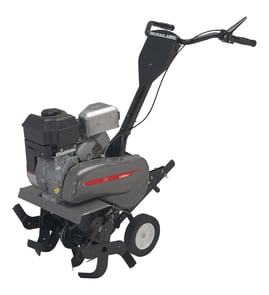
Craftsman tillers, including the Craftsman 917298333 front-tine tiller, are a solid choice for typical home garden work: they generally deliver good digging power and are easy to keep running when you stay on top of wear items like tines, cables, and hardware.
Front-tine tillers are built for garden beds and seasonal soil prep, not for breaking new ground all day. Most owners are happiest when they use them for:
- Loosening and mixing already-worked soil
- Working compost and amendments into beds
- Maintaining rows and small plots
- Light to moderate clay (in multiple shallow passes)
- Tight spaces where a larger rear-tine unit is overkill
These are the typical tradeoffs customers report across many Craftsman tillers.
Pros
- Strong tilling action for the size and price point
- Straightforward controls and serviceable design
- Parts support helps extend the machine’s life
Cons
- Wear parts can need attention sooner in rocky soil
- Cable and clutch feel can change as components stretch or glaze
- Tines and fasteners take a beating if you hit roots, stones, or hardpan
If you are judging whether your Craftsman tiller is “good,” check these items before you decide it is worn out:
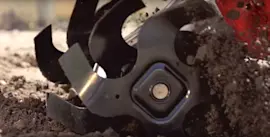
- Tines for bending, rounding, or uneven wear (tilling quality drops fast)
- Clutch engagement for slipping or delayed bite (often cable related)
- Hardware tightness on tine sets and guards (nuts and bolts back off with vibration)
- Belt and idler condition if the drive feels weak
- Handle and frame fasteners for looseness after heavy use
| Symptom | Likely wear area | Example part for this model |
|---|---|---|
| Tines do not engage crisply | Clutch cable out of adjustment or worn | Cbl/cltch t 583731701 |
| Poor tilling, bouncing, uneven cut | Worn or damaged tine | Outer tine, left 583017601 |
| Slipping or inconsistent drive | Idler/friction surface worn | Idler pad 532109227 |
A tiller can feel “bad” when it is really just due for normal maintenance. Replacing a worn tine or clutch cable often restores performance and prevents bigger failures from running the machine while it is slipping.
For step-by-step guidance, we recommend how to replace the tines on a front tine tiller.
Last updated: February 2026
Are front-tine tillers good?
Yes. Front-tine tillers like the Craftsman 917298333 are a good choice for lighter garden work because they’re easier to maneuver and are effective for loosening previously worked soil and cultivating between rows. For hard, unbroken ground, a heavier rear-tine tiller usually performs better.
- Loosen and mix soil that’s already been turned or amended
- Cultivate and control weeds between garden rows
- Work in tighter spaces where a larger tiller is hard to handle
- Handle seasonal garden prep for small to medium plots
Front-tine designs pull themselves forward with the tine rotation, which helps with control, but they can bounce or struggle in very compacted soil.
| Job type | Front-tine tiller | Rear-tine tiller |
|---|---|---|
| Previously worked soil | Best choice | Works well |
| Hard, virgin soil | Limited | Best choice |
| Tight rows and beds | Best choice | Often too large |
| Long straight passes | Good | Best choice |
- Make shallow passes first; increase depth gradually to reduce bouncing.
- Till slightly moist soil (not muddy) for better bite and less clogging.
- Keep tine hardware tight; loose fasteners reduce tilling quality.
- If the tines feel weak or the machine “skips,” inspect tine condition and mounting points.
Choosing the right tiller style saves time and reduces wear on the drive system. If you use a front-tine tiller for heavy breaking, you’ll often see more vibration, poorer tilling results, and faster wear on wear items like tines and fasteners.
For step-by-step guidance on tine service, use our how to replace the tines on a front tine tiller guide.
Last updated: February 2026
Can a front-tine tiller break new ground?
Yes, a front-tine tiller like the Craftsman 917298333 can break new ground, but it takes more time and control than a rear-tine tiller. Expect the machine to ride up or “bounce” in hard, unworked soil, so you will need shallow passes and good tine condition.
- Start with the depth stake set shallow; increase depth a little each pass.
- Make 2 to 4 passes in a crosshatch pattern (north-south, then east-west).
- Keep the engine at a steady speed; let the tines pull the tiller forward.
- Remove rocks, roots, wire, and debris first to prevent sudden stops.
- If the tines are worn or bent, replace them before attempting hard soil (see outer tine, left 583017601).
| Feature | Front-tine tiller (like 917298333) | Rear-tine tiller |
|---|---|---|
| New ground performance | Good with multiple shallow passes | Best choice for hard, virgin soil |
| Control in hard soil | More “walking” and bouncing | More stable, self-propelled feel |
| Time to reach full depth | Longer | Shorter |
- Confirm the tines are installed in the correct orientation (cutting edge leading).
- Inspect the tine hardware for looseness (pins, bolts, nuts).
- Check clutch/cable operation; a stretched or sticky cable can reduce tine drive (see cbl/cltch t 583731701).
- Reduce depth and slow your forward push; forcing it makes bouncing worse.
Breaking new ground puts the highest load on the tine set and drive system. Sharp, correctly installed tines and a properly working clutch cable help the Craftsman 917298333 dig in instead of skipping across the surface.
Last updated: February 2026
What are the common problems with lawn tillers?
Common problems on lawn tillers like the Craftsman 917298333 usually come down to fuel delivery, ignition, or drive engagement. Old fuel, a dirty spark plug, or a loose clutch/drive setup can cause hard starting, rough running, or tines that will not turn.
- Engine will not start: stale gas, clogged fuel line/filter, fouled spark plug, ignition switch issue
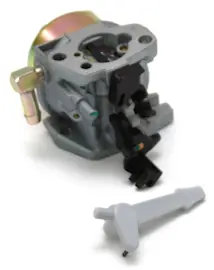
- Engine starts then dies: restricted fuel flow, dirty carburetor, blocked tank vent
- Runs rough or misfires: worn/dirty spark plug, water in fuel, carburetor out of adjustment
- Tines will not turn: clutch cable out of adjustment, worn belt (if equipped), linkage binding
- Poor tilling performance: worn/bent tines, tine installed backward, depth stake set too shallow
- Oil or gas leaking: loose fittings, cracked fuel line, overfilled crankcase
- Drain old fuel and refill with fresh gasoline (especially after storage).
- Inspect the spark plug; clean or replace if fouled.
- Check throttle and choke movement for smooth operation.
- Confirm the clutch control fully engages and returns freely.
- Look for loose hardware around the tine and drive areas.
If the tines hesitate, slip, or do not engage consistently, these model-matched parts are worth inspecting for wear, stretching, or misadjustment:
| What you notice | Likely area | Example model-matched part to check |
|---|---|---|
| Tines do not engage when lever is pulled | Clutch cable/linkage | Cbl/cltch t 583731701 |
| Engagement feels weak or inconsistent | Idler/tension contact point | Idler pad 532109227 |
| Cable routing looks off or cable rubs | Cable mounting | Lawn & garden equipment cable bracket 532009484 |
A tiller that is hard to start or has tines that will not engage is usually telling you something simple: fuel is not flowing correctly, spark is weak, or the drive system is not transferring power. Fixing those basics first prevents unnecessary parts replacement and helps protect the engine and transmission.
For step-by-step tine service, use our guide: how to replace the tines on a front tine tiller.
Last updated: February 2026
What kind of engine is on a Craftsman tiller?
Craftsman tillers, including model 917298333, use a small gasoline engine designed for outdoor power equipment; it’s the type that powers the tines through the clutch and drive system. To identify the exact engine “kind” on your unit (make, model, and CC), use the engine ID label on the engine itself.
Check the engine, not the tiller frame. Look in these common spots:
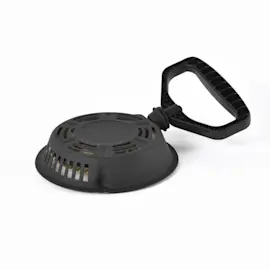
- Recoil starter housing (pull-start cover) decal
- Blower shroud emissions label
- Valve cover area
- Stamped model or type code near the muffler or fuel tank
- Engine data plate near the spark plug wire
Write down the full engine model and type code; that is what you use to match carburetor, air filter, spark plug, and recoil starter parts.
Most Craftsman front-tine tillers use a 4-cycle gasoline engine (straight gas, separate crankcase oil). Here’s how to tell quickly:
- 4-cycle: has an oil fill cap/dipstick; no need to mix oil with gas
- 2-cycle: typically no dipstick; requires oil mixed into the fuel
- Horizontal-shaft layout: common on tillers because it drives belts and pulleys easily
| What you want to know | Where to find it | Why it matters |
|---|---|---|
| Engine make/model/type | Engine label or stamping | Ensures correct tune-up and fuel system parts |
| Displacement (CC) | Engine label | Helps match carburetor and governor settings |
| Fuel and oil requirements | Fuel cap area and engine label | Prevents hard starting and engine damage |
If the engine runs but the tines do not move, the issue is often in the clutch/drive hardware.
- Inspect and adjust the clutch cable
- Check for worn linkage or missing pins
- Verify the tine hardware is secured
A common related part in the drive control system is the cbl/cltch t 583731701. For step-by-step tine service, use how to replace the tines on a front tine tiller.
Knowing the exact engine identification prevents ordering the wrong ignition or carburetor parts and helps you troubleshoot whether the problem is engine-related or in the clutch and tine drive.
Last updated: February 2026
What would cause a tiller to not start?
A Craftsman front-tine tiller like model 917298333 usually won’t start because it’s missing fuel, spark, or compression. Start with the basics (fresh fuel and correct choke setting), then test for spark and confirm fuel is reaching the carburetor.
- Confirm the engine stop switch is in RUN and the spark plug wire is firmly seated.
- Use fresh gasoline; if fuel is older than 30 days, drain and refill.
- Set the choke fully for a cold start; move to half choke as it fires.
- Check the air filter; a clogged filter can flood the engine.
- Inspect the spark plug: correct gap, not fuel-soaked, not cracked.
- Verify the recoil starter turns the engine smoothly (no binding).
| What you see | Most likely cause | What to do next |
|---|---|---|
| Plug is dry after repeated pulls | Fuel not reaching cylinder | Check fuel valve (if equipped), fuel line, carburetor bowl/jet |
| Plug is wet and smells like gas | Flooding or weak spark | Dry/replace plug, open throttle, reduce choke, test spark |
| Strong spark but still no start | Fuel delivery or carburetor issue | Clean carb passages, confirm bowl fills |
| No spark | Ignition issue | Check kill switch wiring, ignition coil air gap, plug boot |
Old fuel varnish, a restricted fuel line, or a dirty carburetor jet can prevent starting even after “cleaning.” If the engine only runs on starting fluid, focus on fuel flow.
A failed ignition coil, damaged plug boot, or grounded kill wire can eliminate spark. A spark tester gives the clearest answer.
Low compression (worn rings, stuck valve) is less common but possible if the engine spins very easily and never tries to fire.
A no-start condition is almost always one system: fuel, spark, or compression. Testing in that order prevents unnecessary parts replacement and gets your 917298333 tiller back to work faster.
For step-by-step troubleshooting, use our tiller engine won't start guide.
Last updated: February 2026
Where to find model number on Craftsman tiller?
On a Craftsman front-tine tiller like model 917298333, the model number is usually printed on a sticker or stamped into metal near the engine area, often on the recoil starter housing, under the engine shroud, or on the frame close to the muffler or spark plug.
- Recoil starter housing (pull-start cover) on the engine
- Under the engine shroud (top/side cover over the engine)
- Frame or sheet metal near the muffler heat shield
- Near the spark plug area on the engine
- Handle support or tine shield area (less common, but worth a quick look)
- Turn the engine off and let it cool completely.
- Wipe dirt and oil off the engine and frame with a rag.
- Use a flashlight and look for a silver/white label or stamped numbers.
- Take a photo and zoom in; worn labels are often easier to read on a phone.
| What you need | Why the model number matters | Example for this tiller |
|---|---|---|
| Parts lookup | Ensures correct fit and revisions | 917298333 |
| Diagrams | Shows exact assemblies and hardware | Tines, clutch, belt drive |
| Repair steps | Helps choose the right procedure | Cable and tine replacement |
Craftsman tillers often have multiple versions that look similar. Using the exact model number prevents ordering the wrong tine, cable, or hardware and saves time during repair.
If you are replacing wear items after you find the model number, our how to replace the tines on a front tine tiller guide is a solid next step.
Last updated: February 2026
Why are the tines on my tiller not turning?
If your Craftsman 917298333 tiller engine runs but the tines do not turn, the problem is usually in the drive system between the engine and tine shaft. Most often it is a loose or broken clutch cable, a worn idler pad, or a damaged belt/drive connection that is not transferring power.
- Shut the engine off and remove the spark plug wire before touching the tines.
- Confirm the tine control lever is fully engaged and not binding.
- Inspect the clutch cable for slack, kinks, or a broken end fitting.
- Look for a belt that is off the pulleys, glazed, or broken.
- Check for debris (twine, roots, wire) wrapped around the tine shaft.
- If the tines rock back and forth by hand with a clunk, inspect for a damaged drive connection or internal wear.
These model-matched parts are often involved when tines will not turn:
| Symptom | What it usually means | Model-matched part to inspect |
|---|---|---|
| Lever feels loose, little resistance | Cable out of adjustment or stretched | Cbl/cltch t 583731701 |
| Lever feels normal but belt does not tighten | Idler not applying tension | Idler pad 532109227 |
| Cable moves but linkage does not | Hardware/linkage slipped or missing | Lawn & garden equipment cable bracket 532009484 |
When the clutch cable or idler system is not applying proper belt tension, the engine can run normally but the belt slips, so the tine shaft never gets enough torque to rotate. Fixing the drive engagement early also helps prevent accelerated belt and pulley wear.
Follow a step-by-step diagnostic for this symptom and repair path: tiller tines won't turn but wheels do.
Last updated: February 2026