Installation guide
 Owner’s manual



How do I reset my GE He sensor dry dryer?
To reset the sensor-dry behavior on your GE GFDS170EH0WW electric dryer, we power-cycle it: press Power to turn the dryer off, wait about 60 seconds, then press Power again to wake the display and restart your cycle. See the GFDS170EH0WW owner's manual for the exact control steps.
Quick reset steps (sensor dry and controls)
- Press Power once (turns the dryer off; it does not disconnect power).
- Wait 60 seconds.
- Press Power again to “wake up” the display.
- Re-select your cycle (for example Normal/Mixed Loads or Cottons).
- Press Start/Pause to begin.
If the dryer still acts “stuck” or won’t respond
These are the most common control-related causes and fixes on this model:
- Control panel asleep: press Power to activate the panel.
- Control lock on: press and hold Lock Control for 3 seconds to unlock.
- Paused cycle: press Start/Pause once to resume.
- House breaker tripped: reset the breaker (electric dryers typically use two breakers).
- Delay Dry paused after door opened: close the door and press Start/Pause to restart the countdown.
What “HE sensor dry” is doing (so the “reset” makes sense)
Sensor dry continuously monitors moisture and stops when the load reaches the selected dryness level. On GFDS170EH0WW, the Dry Level setting works with common sensor cycles (such as Cottons, Normal, Perm Press, Delicates, Quick Dry, Bulky, Towels/Sheets, and Steam Dewrinkle).
| Symptom | What it usually means | What we do next |
|---|---|---|
| No time numbers showing, only lights | Sensor is still reading moisture | Keep running; time appears once moisture drops |
| Clothes still damp at end | Exhaust restriction or dry level too low | Clean venting; choose More Dry |
| Buttons don’t respond | Lock mode or panel asleep | Unlock controls; press Power |
Why it matters
A simple power-cycle clears many “glitchy” control states (sleep mode, paused logic, option selection conflicts) without changing wiring or parts. If drying performance is the real issue, venting and dry-level settings usually fix it faster than replacing components.
Last updated: February 2026
Where is my thermal fuse located on my GE dryer?
On the GE GFDS170EH0WW electric dryer, the thermal fuse is mounted on the dryer’s exhaust air path inside the cabinet; on this GE design it is found on or near the blower housing where air exits toward the vent. Use the wiring and component layout in the GFDS170EH0WW owner’s manual to confirm the exact mounting point before you remove any wires.
How we recommend locating it (safe, repeatable steps)
Follow the power-disconnect and access guidance in the GFDS170EH0WW installation guide first; then locate the exhaust air path components.
- Disconnect power at the breaker and unplug the cord before opening any covers.
- Pull the dryer forward so you can access the back and sides without stressing the vent.
- Identify the exhaust outlet and trace the duct path inward to the blower housing area.
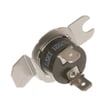
- Look for a small, flat safety device with two terminals mounted to the metal duct or blower housing.
- Take a clear photo of wire positions before disconnecting anything.
- If you are testing it, use a multimeter for continuity; a good fuse reads closed (continuity).
What you are looking for
A thermal fuse is a one-time overheat safety device; when it opens, many dryers will not run or will run with heat disabled depending on circuit design.
| Component | Typical appearance | Location clue |
|---|---|---|
| Thermal fuse | Small flat body with 2 terminals | Fastened to exhaust duct or blower housing |
| Blower housing | Metal housing around the blower wheel | Sits in the lint and exhaust airflow path |
| Exhaust duct | Metal air channel leading to vent outlet | Runs from lint area to rear vent |
Why the fuse blows (fix this before replacing parts)
A blown thermal fuse is almost always caused by overheating from restricted airflow.
- Clogged lint screen or lint buildup in the lint duct
- Crushed, kinked, or overly long vent hose
- Blocked exterior exhaust hood
- Heavy lint around the blower housing
- Improper vent material (plastic or thin foil) restricting airflow
Why it matters
Finding the correct fuse location on the exhaust path helps you test the right safety device and correct airflow problems that cause overheating, long dry times, and repeat fuse failures.
Last updated: February 2026
What is the average lifespan of GFDS170EH0WW?
A GE electric dryer like model GFDS170EH0WW typically lasts 13 years with normal household use. Consistent airflow maintenance (lint filter and venting) and avoiding overheating are the biggest factors that keep the heater, motor, and drum support parts lasting longer.
What affects lifespan the most
- Vent restriction (long runs, too many elbows, crushed duct) increases heat and wear
- Lint buildup in the lint filter housing, blower area, and exhaust duct
- Overloading that strains the drum belt, idler, and motor
- High heat cycles used constantly instead of sensor or medium heat when appropriate
- Moisture and corrosion around electrical connections and terminals
Maintenance that extends life (high impact)
We recommend following the care guidance in the GFDS170EH0WW owner’s manual and making these habits routine:
- Clean the lint filter before every load
- Inspect and clean the exhaust duct at least once a year
- Confirm the outside hood flaps open freely during operation
- Keep the dryer level to reduce drum and bearing wear
- Stop using the dryer if you smell burning or hear loud squealing or thumping
Common wear parts and what failure looks like
| Symptom | Likely wear area | Example part for GFDS170EH0WW |
|---|---|---|
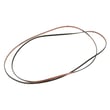
| Drum will not turn, motor runs | Belt or idler system | Dryer drum belt WE03X29897 |
| Squealing, scraping, or rumbling | Drum support/glides | Dryer drum glide bearing, upper WE03X37320 |
| No heat or weak heat | Heating circuit | Dryer heating element WE11M10001 |
Why it matters
Most “short lifespan” complaints trace back to overheating from poor venting or heavy lint buildup. Good airflow keeps temperatures stable, protects the heater assembly, and reduces stress on the drive motor and drum supports.
Last updated: March 2026