


How many square feet does a 45 pint dehumidifier cover?
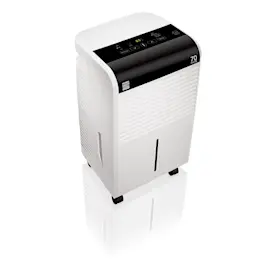
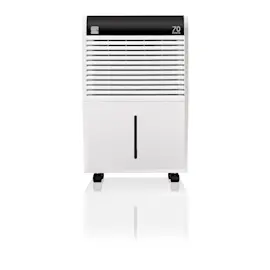
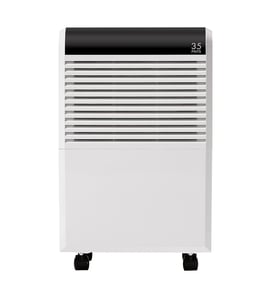
A 45-pint dehumidifier like the GE ADEL45LYL1 typically covers about 1,500 to 3,000 square feet, depending on how damp the space is, ceiling height, temperature, and airflow. For very wet basements, coverage is usually closer to the low end of that range.
Quick coverage guide (what to expect)
Use these common sizing ranges to match capacity to room conditions:
- Moderately damp areas (musty smell, occasional condensation): ~2,000 to 3,000 sq. ft.
- Very damp areas (frequent condensation, damp walls): ~1,500 to 2,500 sq. ft.
- Extremely wet areas (standing water, active seepage): plan closer to 1,000 to 1,500 sq. ft. or consider a larger unit
| Space condition | Typical 45-pint coverage | What you’ll notice |
|---|---|---|
| Moderate humidity | 2,000 to 3,000 sq. ft. | RH drops steadily, fewer odors |
| Very damp | 1,500 to 2,500 sq. ft. | Bucket fills often, unit runs longer |
| Extremely wet | 1,000 to 1,500 sq. ft. | May struggle to reach set humidity |
Why real-world coverage varies
A “square feet” number is only a shortcut. These factors change performance the most:
- Temperature: cooler basements reduce moisture removal
- Airflow: closed doors and poor circulation shrink effective coverage
- Moisture source: seepage, wet concrete, or laundry loads increase demand
- Humidity setpoint: lower targets (like 35% to 40% RH) make the unit run longer
- Maintenance: a dirty filter reduces airflow and capacity
Tips to get the most coverage from your GE ADEL45LYL1
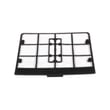
- Clean or replace the dehumidifier air filter WK85X21721 on schedule to keep airflow strong
- Place the unit away from walls and furniture so the intake and exhaust are not blocked
- Keep doors open (or use a fan) to move air from adjoining rooms
- If the bucket fills quickly, consider continuous drain (if your setup supports it)
- If the unit shuts off “full” too soon, check the bucket seating and float operation
Why it matters
Right-sizing prevents nonstop run time, short cycling, and poor humidity control. If your 45-pint unit cannot keep up, the space is effectively “bigger” because of moisture load, not just square footage.
Last updated: January 2026
What is the life expectancy of a GE dehumidifier?
Most GE dehumidifiers, including model ADEL45LYL1, typically last about 8 years with normal residential use. Regular cleaning, steady airflow, and preventing overflow events help the compressor, fan motor, and controls run longer.
Typical lifespan and what affects it
A dehumidifier’s lifespan is mainly driven by run time, maintenance, and operating conditions.
- Run hours per day: units running 24/7 wear faster than seasonal use
- Airflow restriction: a dirty filter makes the fan work harder and can stress the system
- Moisture load: very damp basements increase cycling and runtime
- Overflow protection: a sticking float can cause shutoffs or spills that lead to corrosion
- Cleaning habits: dust on coils reduces efficiency and increases strain
Maintenance that helps you reach (or beat) 8 years
Use this as a simple routine for ADEL45LYL1-STYLE portable dehumidifiers.
| Task | What to do | How often |
|---|---|---|
| Clean/replace air filter | Wash or replace the filter to keep airflow strong | Every 2 to 4 weeks in heavy use |
| Empty and rinse bucket | Rinse the bucket and dry it to reduce odor and buildup | Weekly or as needed |
| Check float operation | Make sure the float moves freely and isn’t stuck | Monthly |
| Clean cabinet and intake | Vacuum dust from grilles and wipe surfaces | Monthly |
If you need model-matched maintenance parts, use the exact replacements: dehumidifier air filter WK85X21721, dehumidifier water bucket WK10X24673, and float WK11X21723.
Why it matters
A dehumidifier that is maintained well removes moisture faster, runs fewer hours to hit the humidity set point, and puts less stress on the sealed system. That combination is what most often separates a short-lived unit from one that reaches its full service life.
Last updated: January 2026
How many hours a day should you run a dehumidifier?
For the GE ADEL45LYL1 dehumidifier, we typically recommend running it as long as needed to hold your target humidity (often 45% to 55% RH); in many homes that works out to 8 to 12 hours per day, and in very damp spaces it may run most of the day.
A practical run-time guide (based on humidity)
Use your room humidity and comfort as the decision point, not a fixed number of hours.
- Mild humidity (about 55% to 60% RH): 2 to 6 hours/day
- Moderate humidity (about 60% to 70% RH): 6 to 12 hours/day
- High humidity (70%+ RH, musty odors, damp walls): 12 to 24 hours/day until controlled
- Basements, laundry rooms, bathrooms: expect longer run times, especially in summer
Settings and habits that reduce run time
These steps help the ADEL45LYL1 remove moisture faster and cycle off sooner.
- Clean the air filter regularly; a clogged filter reduces airflow and moisture removal (see dehumidifier air filter WK85X21721).
- Keep doors and windows closed while it runs.
- Leave clearance around the intake and exhaust so air can circulate.
- Set a realistic humidity target (45% to 55% RH is a common comfort range).
- Empty the bucket before it gets full so the unit does not shut off early.
Bucket-full shutoff and why it matters
If the dehumidifier stops and the bucket is not actually full, the bucket float system may be sticking or mispositioned.
| Symptom | What it usually means | What to check first |
|---|---|---|
| Shuts off with “bucket full” behavior | Float stuck or bucket not seated | Reseat bucket, inspect float movement |
| Runs but collects little water | Airflow or room conditions issue | Filter, doors/windows, humidity setting |
| Water on floor | Drain/bucket alignment issue | Bucket seating, level floor, drain setup |
For deeper troubleshooting, use dehumidifier doesnt collect water and dehumidifier not running.
Why it matters
Running long enough to maintain a steady humidity helps prevent musty odors, condensation on windows, and damp materials. Short cycling (too little run time) often leaves humidity high and makes the unit work harder later.
Last updated: January 2026