Get free shipping on your order, with any water filter subscription. Find my filter

Open Hamburger Menu
Sears Parts Direct
Tips to find your model number
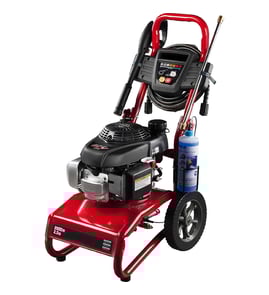
Craftsman 580767302 pressure washer

Craftsman 580767302 pressure washer Parts

Here are the diagrams and repair parts for Craftsman 580767302 pressure washer, as well as links to manuals and error code tables, if available.

By Schematic
SELECT DIAGRAM
?

This is the number corresponding to the part on the diagram / schematic

Browse Parts for 580767302 Pressure Washers

  • Handle for Craftsman 580767302 - Part CB1983AGS

    Main assy diagram

    Craftsman Pressure Washer Handle

    Part #CB1983AGS

    Replaced by #CB1983AGS

    Info Icon
    Manufacturer substitution
    This part replaces CB1983AGS. Substitute parts can look different from the original.
    In Stock
    $98.73
    Minus Item
    Qty
    Plus Item
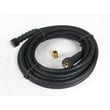
  • Briggs & Statton Pressure Washer Water Hose for Craftsman 580767302 - Part 84006753

    Main assy diagram

    30'hose

    Part #B5689GS

    Replaced by #84006753

    Info Icon
    Manufacturer substitution
    This part replaces B5689GS. Substitute parts can look different from the original.
    In Stock
    $94.05
    6% OFF Phone Price : $100.05Info Icon
    Minus Item
    Qty
    Plus Item
  • Clamp,hose for Craftsman 580767302 - Part B1232GS

    Main assy diagram

    Craftsman Hose Clamp

    Part #B1232GS

    Replaced by #B1232GS

    Info Icon
    Manufacturer substitution
    This part replaces B1232GS. Substitute parts can look different from the original.
    This item is not returnable
    In Stock
    $5.97
    Minus Item
    Qty
    Plus Item
  • Mount Shck for Craftsman 580767302 - Part 21217GS

    Main assy diagram

    Snapper Pressure Washer Double-ended Vibration Mount

    Part #21217GS

    Replaced by #21217GS

    Info Icon
    Manufacturer substitution
    This part replaces 21217GS. Substitute parts can look different from the original.
    In Stock
    $14.06
    Minus Item
    Qty
    Plus Item
  • Briggs & Stratton Generac Pressure Washer Pump Oil for Craftsman 580767302 - Part 190585GS

    Pump assy diagram

    Briggs & Stratton Generac Pressure Washer Pump Oil

    Part #190585GS

    The manufacturer no longer makes this part, and there's no substitute part

  • Pressure Washer Check Valve Kit for Craftsman 580767302 - Part 190591GS

    Pump assy diagram

    Pressure Washer Check Valve Kit

    Part #190591GS

    The manufacturer no longer makes this part, and there's no substitute part

  • Pressure Washer Inlet Check Valve Kit for Craftsman 580767302 - Part 190592GS

    Pump assy diagram

    Pressure Washer Inlet Check Valve Kit

    Part #190592GS

    The manufacturer no longer makes this part, and there's no substitute part

  • Lawn Mower Decal for Craftsman 580767302 - Part 188258GS

    Main assy diagram

    Lawn Mower Decal

    Part #188258GS

    The manufacturer no longer makes this part, and there's no substitute part

  • Screw for Craftsman 580767302 - Part 190576GS

    Pump assy diagram

    Screw

    Part #190576GS

    The manufacturer no longer makes this part, and there's no substitute part

  • Rivet for Craftsman 580767302 - Part 188194GS

    Main assy diagram

    Rivet

    Part #188194GS

    The manufacturer no longer makes this part, and there's no substitute part

Craftsman Pressure Washer 580767302 FAQs

A 4000 PSI pressure washer typically delivers about 3.5 to 4.0 GPM, but the exact flow depends on the pump design and engine horsepower. For your Craftsman 580767302, the rated output is 2400 PSI at 2.2 GPM (not 4000 PSI); see the 580767302 owner's manual.

Typical GPM at 4000 PSI (what to expect)

Most gas pressure washers marketed at 4000 PSI are built to run in this general range:

  • 3.5 to 4.0 GPM is common for commercial or heavy-duty homeowner units
  • Higher GPM usually requires a larger pump and more engine power
  • PSI and GPM trade off; raising PSI without increasing horsepower often reduces GPM
  • Real-world flow can drop slightly with long hoses, restrictive nozzles, or low inlet water supply
Rating on the box Typical flow range Best use case
2400 PSI ~2.0 to 2.5 GPM General home cleaning
3000 PSI ~2.5 to 3.0 GPM Driveways, siding
4000 PSI ~3.5 to 4.0 GPM Heavy cleaning, faster rinsing

Why your model’s GPM matters more than PSI

For cleaning speed, GPM is the bigger driver because it controls how quickly you rinse and flush dirt away. Your Craftsman 580767302 is rated at 2.2 GPM, so it will clean effectively, just more slowly than a true 4 GPM machine.

Quick checks that affect actual GPM

  • Use a clean, correct spray tip; a worn tip can change performance
  • Confirm strong garden-hose supply (no kinks, fully open spigot)
  • Check for leaks at fittings and O-rings
  • Keep the pump from overheating by not letting it idle in bypass too long

If you’re chasing low flow on this model, replacing a leaking seal can help; the pump parts list in the manual also references an O-ring used in the pump assembly, and we stock the o-ring 190584GS.

Last updated: January 2026

The most common issues we see with the Craftsman 580767302 gas pressure washer are no-start conditions, low or surging pressure, leaks at hose or pump connections, and spray pattern problems from a clogged nozzle. Use the owner's manual to confirm operating steps and maintenance intervals for this model.

Most common symptoms and what usually causes them

  • Won't start or starts then dies: stale fuel, dirty air filter, fouled spark plug, low oil shutdown (if equipped)
  • Low pressure or pressure surges: clogged spray tip, air in the inlet, restricted garden hose, unloader valve sticking
  • No detergent draw: wrong nozzle (needs low-pressure soap tip), clogged injector, air leak on suction side
  • Water leaks: worn seals or O-rings at fittings, loose connections, cracked hose
  • Pump overheats: running too long with trigger released; thermal relief may open and dump water

Quick checks we recommend first (fast, no parts)

  • Verify full water supply before starting; purge air by holding the trigger until flow is steady.
  • Clean the spray tip; a partially blocked tip is the top cause of “low pressure.”
  • Inspect hose connections and replace a flattened or nicked seal; the o-ring 190584GS is a common leak point at fittings.
  • Confirm you are using the correct high-pressure hose and that it is not kinked; the 30'hose 84006753 is the model-matched option listed for this unit.
  • If pressure spikes or stalls, focus on the unloader valve and pump valves.

Symptom-to-fix guide

What you notice Most likely area What to do next
Engine runs, weak spray Nozzle/inlet restriction Clean tip, check water supply and inlet screen
Pressure pulses Unloader/valves Inspect unloader operation; service pump valves
Drips at couplers Seals/O-rings Reseat fittings; replace O-ring
No soap draw Soap nozzle/injector Switch to soap tip; clear injector path

Why it matters

Running with low water flow, a clogged nozzle, or long trigger-off periods can overheat the pump and accelerate seal wear. Catching these issues early prevents bigger pump repairs.

For step-by-step troubleshooting beyond these basics, we recommend starting with solving pressure washer problems.

Last updated: March 2026

For the Craftsman pressure washer model 580767302, we recommend using clean, fresh, unleaded gasoline (regular pump gas). Use fresh fuel and store it safely because gasoline vapors are flammable; follow the fuel and safety instructions in the 580767302 owner's manual.

Fuel type and capacity for model 580767302

This model uses standard unleaded gasoline; the fuel tank capacity is 3.0 quarts.

Item What to use Notes
Gas type Unleaded gasoline Use clean, fresh fuel
Fuel capacity 3.0 quarts Do not overfill
Refueling safety Refuel only after cooling Avoid spills on a hot engine

Best practices to prevent hard starting and power loss

Using the right fuel is only part of reliable operation. These steps help prevent common “won’t start” and “engine losing power” complaints.

  • Use fresh gasoline; old fuel can cause hard starting and surging.
  • Refuel outdoors with the engine off and cooled down.
  • Keep the fuel container clean and sealed to prevent water contamination.
  • Do not smoke or allow sparks/open flame near gasoline.
  • Follow the seasonal maintenance schedule (spark plug and air filter service).

Why it matters

Fuel quality directly affects starting, throttle response, and engine life. Fresh unleaded gasoline helps the engine maintain a stable fuel-air mixture, which supports consistent PSI and GPM performance during cleaning.

Last updated: January 2026
Most common symptoms to help you fix your pressure washers

Choose a symptom to see related pressure washer repairs.

Main causes: overfilling engine with oil, improper fuel/air mixture, choke system problems, dirty carburetor, engine nee…

Main causes: using a high-pressure spray tip when applying detergent, clogged siphon tube, chemical injection system fai…

Main causes: dirty air filter, stale fuel, clogged or dirty carburetor, bad unloader valve…

Main causes: damaged recoil starter, oil inside cylinder, locked up engine piston…

Main causes: stale fuel, gummed up carburetor, engine needs tune up, throttle and choke controls need adjustment, bad re…

Main causes: pump running for more than 5 minutes when the spray wand isn't being used, faulty pressure relief valve, ba…

Things to do: tune up the engine, inject pump saver into the water pump when storing the pressure washer for the winter…

Main causes: insufficient water supply, clogged water inlet screen, clogged pressure hose, faulty pump check valves, stu…

Main causes: faulty unloader valve, bad pressure regulator…

Repair guides for gas pressure washers

These step-by-step repair guides will help you safely fix what’s broken on your pressure washer.

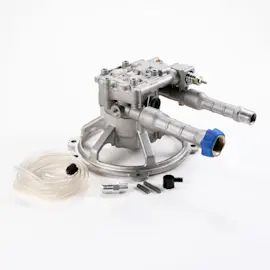
How to replace a pressure washer pump

How to replace a pressure washer pump

The pump can be damaged by air in the inlet water supply or by chemicals that remain in the pump body after using the ch…

Repair time and Difficulty

 15 minutes or less
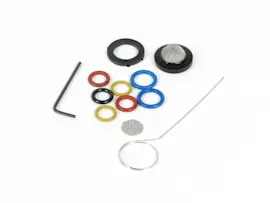
How to install a pressure washer O-ring kit

How to install a pressure washer O-ring kit

O-rings seal fittings on the pressure washer pump. Damaged seals allow water to leak from the pump. Follow these steps t…

Repair time and Difficulty

 45 minutes or less
How to replace a pressure washer unloader valve

How to replace a pressure washer unloader valve

The unloader valve recirculates water to protect the pump from damage. If the unloader valve is defective, replace it us…

Repair time and Difficulty

 15 minutes or less

Effective articles & videos to help repair your pressure washers

Use the advice and tips in these articles and videos to get the most out of your pressure washer.

How to enjoy all the online benefits we offer on our Sears PartsDirect website

How to enjoy all the online benefits we offer on our Sears PartsDirect website

Learn about all the convenient features on our Sears PartsDirect website that make your parts purchases easier.…

Tapping into a new feature in the Search Bar on Sears PartsDirect

Tapping into a new feature in the Search Bar on Sears PartsDirect

Learn about a new feature added to the Search Bar on Sears PartsDirect…

Top questions about Sears and Sears PartsDirect

Top questions about Sears and Sears PartsDirect

Get answers to frequently asked questions about Sears and Sears PartsDirect.…

Parts & More

Bottom-Mount Refrigerator
Built-In Microwave
Compact Refrigerator
Dishwasher
Dryer
Front-Engine Lawn Tractor
Gas Walk-Behind Mower
Parts
Riding Mowers & Tractors
Table Saw
Top-Mount Refrigerator
Washer
Water Softener