Installation guide
 Owner’s manual
 Error Codes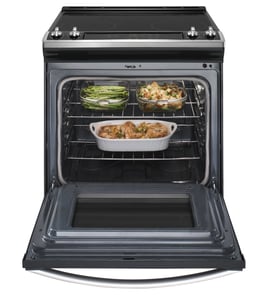

Are JennAir ovens gas or electric?
Jenn-Air ovens can be gas, electric, or dual-fuel depending on the model. For model JES9800BAF, it is an electric range, so the oven is electric and the cooktop uses electric radiant elements. For operating details and features, use the JES9800BAF owner's manual.
We recommend confirming by model number and the power connection, not by appearance.
- Check the model tag for JES9800BAF (or your exact model number)
- Electric ranges typically use a 240V power cord and terminal block connection
- Gas ranges require a gas supply line and shutoff valve
- Dual-fuel ranges use both a gas line (cooktop) and 240V power (oven)
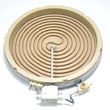
On this Jenn-Air electric range, the oven heat comes from electric heating elements, and the cooktop uses radiant elements under a glass-ceramic surface.
| Range type | Oven heat source | Cooktop heat source | What you will see behind the range |
|---|---|---|---|
| Electric (JES9800BAF) | Electric elements | Electric radiant elements | 240V cord to a terminal block |
| Gas | Gas burner | Gas burners | Gas line connection |
| Dual-fuel | Electric elements | Gas burners | Gas line plus 240V power |
The fuel type affects installation requirements, troubleshooting steps, and which replacement parts fit. For example, an electric range may use an electrical connection component like the terminal block WPW10245259, while a gas range would not.
Last updated: January 2026
Is JennAir considered high end?
Yes. Jenn-Air is widely considered a high-end (often “attainable luxury”) appliance brand, and the JES9800BAF electric range reflects that positioning with premium styling and feature-focused design compared with typical mid-tier ranges.
High-end ranges usually stand out in build, cooking performance, and design details. For Jenn-Air, that typically shows up as:
- Premium finishes and a more design-forward look
- Feature-rich cooking modes and controls
- Higher replacement-part costs compared with basic ranges
- More specialized components (for example, downdraft ventilation parts on some models)
- Greater emphasis on fit, alignment, and installation details
For model-specific features and care guidance, use the JES9800BAF owner’s manual.
Use these real-world checkpoints when you are deciding where Jenn-Air fits in your kitchen:
| Checkpoint | Standard range | High-end range (typical) |
|---|---|---|
| Materials and finish | Basic painted or standard stainless | Premium finish options, heavier trim |
| Controls and features | Core bake/broil | More cooking modes, more precise control |
| Parts and service | Lower-cost common parts | Higher-cost, model-specific parts |
| Ownership expectations | Basic cleaning and use | More attention to correct use and care |
“High end” usually means you get more features and a more premium look, but it also means correct installation and proper care are more important for long-term reliability. For example, the manual notes that forcing the oven door during cleaning or cooling can damage the door, and that some smoke or odor during early clean cycles can be normal.
When you are maintaining a Jenn-Air range, we recommend focusing on the parts that most affect safety, performance, and day-to-day use:
- Power connection components such as the terminal block WPW10245259
- Heating components such as the bake element
- Door sealing parts such as the door gasket
- Ventilation parts such as the downdraft vent grease filter
Last updated: January 2026
What are common problems with JennAir stoves?
Common problems on the Jenn-Air JES9800BAF electric range include the oven not heating correctly, uneven cooking on the glass-ceramic cooktop, control or knob issues, smoke or odor during self-clean, and downdraft vent performance problems. Many symptoms trace back to cookware, cleaning habits, or a failed heating or control component.
- Oven not heating or slow to preheat: failed bake element, safety thermostat issue, or control problem
- Uneven cooking or hot spots on the cooktop: warped or thin cookware, pan size mismatch, or a weak radiant element
- Self-clean smoke or strong odor: heavy soil or items left in the oven (some smoke and odor is normal early on)
- Control panel hard to clean or acting erratic: moisture or cleaner sprayed directly on pads
- Downdraft not pulling well: grease filter clogged or blower issue
- Confirm cookware fit and flatness: use flat, heavy-gauge pans; keep the base within about 1 inch of the element size.
- Clean correctly: spray glass cleaner onto a cloth (not onto the control area), and avoid abrasive cleaners on knobs and panel.
- After self-clean: do not force the door open while cleaning or cooling; wait for the cycle to finish and the lock to release.
- Check the vent filter: wash or replace the grease filter if airflow is weak.
| Problem | Common fix | Example part for JES9800BAF |
|---|---|---|
| Oven not heating | Replace bake element | Bake element WPW10310274 |
| Weak downdraft airflow | Replace/clean grease filter | Range downdraft vent grease filter WP71002111 |
| Range dead or power issues | Inspect/replace terminal block | Terminal block WPW10245259 |
Heating and airflow problems can cause undercooked food, longer cook times, and extra wear on the control system. Using the right cookware and cleaning methods also helps protect the glass-ceramic surface and control panel from damage.
For model-specific operating steps (control lock for cleaning, self-clean behavior, and care guidance), follow the JES9800BAF owner’s manual.
Last updated: January 2026
How long should a JennAir stove last?
A Jenn-Air electric range like model JES9800BAF typically lasts 15 to 20 years with normal household use. Consistent cleaning, avoiding overheating, and fixing small issues early (like a weak bake element or worn door gasket) helps you reach the full lifespan.
Most ranges reach the higher end of the lifespan when these conditions are true:
- The cooktop is kept clean and cookware is flat-bottomed to reduce stress on radiant elements
- The oven door seals tightly and is not forced during self-clean or cool-down
- Heating performance stays even (no long preheat times or uneven baking)
- Electrical connections stay tight and corrosion-free
- Venting stays clear (especially on downdraft models)
These symptoms usually mean repairs are becoming more frequent or more expensive:
- Oven takes much longer to preheat than it used to
- Baking is uneven even after calibration checks
- Surface elements cycle erratically or do not match knob settings
- Door does not close firmly, heat leaks, or you see damaged gasket material
- Control issues (random beeping, unresponsive keys, intermittent power)
| Situation | Usually worth repairing | Often points to replacement |
|---|---|---|
| Oven not heating evenly | Replace a failed bake element WPW10310274 | Multiple heating and control failures together |
| Heat leaking at door | Replace a worn door gasket WPW10162384 | Door frame damage plus repeated gasket failures |
| Downdraft airflow weak | Clean or replace range downdraft vent grease filter WP71002111 | Motor and control problems at the same time |
A range that is losing heat (door seal issues) or heating inconsistently (element problems) uses more electricity, cooks less predictably, and can shorten the life of other components. Your JES9800BAF owner’s manual also notes not to force the oven door during cleaning or cooling, which helps prevent damage and premature wear.
Last updated: January 2026