Get free shipping on your order, with any water filter subscription. Find my filter

Open Hamburger Menu
Sears Parts Direct
Tips to find your model number
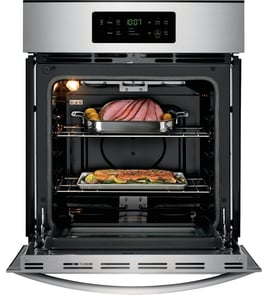
GE JRP14G*J1 electric wall oven

GE JRP14G*J1 electric wall oven Parts

Here are the diagrams and repair parts for GE JRP14G*J1 electric wall oven, as well as links to manuals and error code tables, if available.

By Schematic
By Part
SELECT DIAGRAM
?

This is the number corresponding to the part on the diagram / schematic

Browse Parts for JRP14G*J1 Wall Ovens

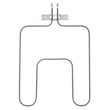
  • Range Broil Element for GE JRP14G*J1 - Part WB44X173

    #651

    All parts diagram

    Broil Unit

    Part #WB44X185

    Replaced by #WB44X173

    Info Icon
    Manufacturer substitution
    This part replaces WB44X185. Substitute parts can look different from the original.
    In Stock
    $36.19
    14% OFF Phone Price : $42.19Info Icon
    Minus Item
    Qty
    Plus Item
  • Refrigerator Evaporator Fan Blade for GE JRP14G*J1 - Part WR60X114

    #613

    All parts diagram

    Refrigerator Fan Blade

    Part #WR2X3198

    Replaced by #WR60X114

    Info Icon
    Manufacturer substitution
    This part replaces WR2X3198. Substitute parts can look different from the original.
    This item is not returnable
    In Stock
    $23.44
    20% OFF Phone Price : $29.44Info Icon
    Minus Item
    Qty
    Plus Item
  • Ge Range Timer for GE JRP14G*J1 - Part WB19X10006

    #16

    All parts diagram

    Timer

    Part #WB19X5269

    Replaced by #WB19X10006

    Info Icon
    Manufacturer substitution
    This part replaces WB19X5269. Substitute parts can look different from the original.
    In Stock
    $384.21
    $12.00 OFF Phone Price : $396.21Info Icon
    Minus Item
    Qty
    Plus Item
  • Appliance Screw, #8-18 X 1/4-in, 12-pack for GE JRP14G*J1 - Part WB1X500D

    #769

    All parts diagram

    Screw

    Part #WB1X500

    Replaced by #WB1X500D

    Info Icon
    Manufacturer substitution
    This part replaces WB1X500. Substitute parts can look different from the original.
    This item is not returnable
    In Stock
    $9.32
    10% OFF Phone Price : $10.32Info Icon
    Minus Item
    Qty
    Plus Item
  • Range Washer, 12-pack for GE JRP14G*J1 - Part WB1X119D

    #312

    All parts diagram

    Washer

    Part #WB1X119

    Replaced by #WB1X119D

    Info Icon
    Manufacturer substitution
    This part replaces WB1X119. Substitute parts can look different from the original.
    This item is not returnable
    In Stock
    $24.60
    20% OFF Phone Price : $30.60Info Icon
    Minus Item
    Qty
    Plus Item
  • Screw for GE JRP14G*J1 - Part WB1X524

    #2067

    All parts diagram

    Screw

    In Stock
    $43.98
    Minus Item
    Qty
    Plus Item
  • Range Oven Light Lens for GE JRP14G*J1 - Part WB36X192

    #523

    All parts diagram

    Range Oven Light Lens

    Part #WB36X192
    This item is not returnable
    In Stock
    $15.39
    12% OFF Phone Price : $17.39Info Icon
    Minus Item
    Qty
    Plus Item
  • Spit Support for GE JRP14G*J1 - Part WB48X62

    #249

    All parts diagram

    Spit Support

    In Stock
    $125.90
    Minus Item
    Qty
    Plus Item
  • Strk Spri for GE JRP14G*J1 - Part WB9X154

    #354

    All parts diagram

    Strk Spri

    In Stock
    $53.17
    Minus Item
    Qty
    Plus Item
  • Hinge Support for GE JRP14G*J1 - Part WB10X121

    #261

    All parts diagram

GE Electric Wall Oven JRP14G*J1 FAQs

Most GE electric wall ovens like model JRP14G are designed for a 240-volt (often called 220-volt) circuit, not a standard 120-volt (110-volt) outlet. A dedicated double-pole breaker and proper wiring are typically required for safe operation.

What you should expect for voltage and wiring

  • Voltage: Most electric wall ovens use 240 VAC (sometimes listed as 208/240 VAC).
  • Breaker: Commonly 30A to 50A double-pole, depending on the oven’s wattage.
  • Wiring: Typically 8 AWG or 10 AWG copper (depends on breaker size and local code).
  • Connection: Many wall ovens are hardwired to a junction box rather than plugged into a receptacle.
  • Neutral/ground: Some installations use 4-wire (hot-hot-neutral-ground); older homes may have 3-wire setups.

Quick check: is it 120V or 240V?

Use this as a fast field guide at the electrical box (power off if you are opening anything):

What you see What it usually means Typical for electric wall ovens
Single-pole breaker (one handle) 120V circuit No
Double-pole breaker (two tied handles) 240V circuit Yes
Thick cable (often 8/3 or 10/3) to a junction box Higher-amperage appliance feed Yes

Why it matters

A 240V wall oven on the correct circuit heats properly and runs safely. Trying to power a wall oven from a 120V circuit can cause no-heat symptoms, nuisance breaker trips, or wiring overheating.

If you are troubleshooting “no heat” or uneven heating on a GE wall oven, these model-matched parts are commonly involved:

Last updated: January 2026

For a 20-amp wall-oven circuit, we use a dedicated 20-amp, 2-pole breaker with 12 AWG copper conductors (typically 12/2 with ground) for a 240-volt feed. For your GE JRP14G electric wall oven, always match the circuit to the oven’s nameplate amperage.

What to verify before you wire it

  • Confirm the oven’s nameplate rating (amps or kW) on the frame behind the door or on the side trim.
  • Confirm supply voltage (most wall ovens are 240/208 VAC).
  • Confirm it is a dedicated circuit (no other loads on the breaker).
  • Confirm copper wire is used (aluminum requires different terminations and sizing practices).
  • Confirm the junction box and strain relief are rated for the wire size and temperature.

Typical circuit setups (common in homes)

Circuit rating Typical copper wire Typical breaker Notes
20 amp 12 AWG 2-pole 20A Common for smaller wall ovens or lower kW units
30 amp 10 AWG 2-pole 30A Common for many single wall ovens
40 amp 8 AWG 2-pole 40A Common for higher wattage or some double ovens

Why it matters

An undersized breaker or wire can cause nuisance tripping, slow heating, or overheated connections at the terminal block or junction box. An oversized breaker can fail to protect the wiring if a short or high-resistance connection develops.

If you are troubleshooting power issues

If the oven is dead, trips the breaker, or heats inconsistently, we check these items in order:

  • Loose or overheated wire connections at the junction box or terminal block
  • Burned terminals such as the terminal WB17X171
  • Damaged wiring (test safely with a meter)
  • Failed high-current components like the transformer WB20X57 (if used in the circuit)

For safe electrical testing steps, use how to use a multimeter to test electrical parts video.

Last updated: January 2026

No. “30-inch” wall ovens are grouped by a nominal width, but the actual oven width and the required cabinet cutout can vary by brand and design. For a GE electric wall oven like model JRP14G, you should always match the cabinet cutout dimensions to the exact model before ordering or installing.

What “30-inch” usually means

Most wall ovens are sold in 24-, 27-, and 30-inch classes. The listed width is a category, not a guarantee that every 30-inch wall oven fits the same opening.

Common differences you’ll see:

  • Cutout width can vary by fractions of an inch
  • Cutout height varies more between single vs. double ovens
  • Overall depth and required clearance behind the oven can differ
  • Trim overlap (the visible frame) can hide small gaps, but it can’t fix a wrong cutout
  • Electrical junction box location and conduit length can affect fit

Quick fit check before you buy or swap

Use this checklist to avoid a cabinet that is too tight or leaves gaps:

  • Measure the cabinet cutout width, height, and depth in at least 3 spots
  • Confirm whether you have a single or double wall oven opening
  • Check that the door can open fully without hitting adjacent cabinets
  • Verify the electrical supply and junction box location match the oven’s needs
  • Plan for safe handling; wall ovens are heavy and awkward to lift

Typical size ranges (general guidance)

These are common ranges for 30-inch class wall ovens; your exact numbers depend on the specific model.

Measurement Typical 30-inch class range Why it varies
Overall width About 29 3/4 in to 30 in Trim and chassis design
Cutout width About 28 1/2 in to 29 1/2 in Mounting rails and insulation
Cutout height (single) Varies widely Control layout and oven capacity
Cutout height (double) Much taller than single Two cavities and venting

Why it matters

A wall oven that is even slightly oversized for the cutout can bind, damage cabinetry, or prevent proper mounting. An opening that’s too large can leave visible gaps that trim cannot fully cover.

If you’re refreshing the look after installation, a new trim WB7X596 can help with appearance, but it won’t change the required cabinet cutout.

Last updated: January 2026
Most common symptoms to help you fix your wall oven

Choose a symptom to see related wall oven repairs.

Main causes: bad oven door lock assembly, faulty electronic control board, wiring failure…

Main causes: faulty oven temperature sensor, control system problem, weak burner igniter, damaged oven element…

Main causes: lack of gas supply, broken igniter, tripped circuit breaker, broken oven element, tripped thermal fuse, con…

Main causes: lack of electrical power, bad electronic control board, faulty oven control thermostat…

Main causes: broken broil element, faulty broil burner igniter, control system failure…

Main causes: broken bake element, bad bake burner igniter, tripped thermal switch, control system failure…

Most common repair guides to help fix your wall oven

These step-by-step repair guides will help you safely fix what’s broken on your wall oven.

How to replace the thermal switch in a wall oven

How to replace the thermal switch in a wall oven

If the oven won't heat after resetting the thermal switch, replace the thermal switch.…

Repair time and Difficulty

 60 minutes or less
How to replace a wall oven thermal fuse

How to replace a wall oven thermal fuse

The thermal fuse trips to prevent the over from excessively overheating. The oven won't heat again until you replace the…

Repair time and Difficulty

 60 minutes or less
How to replace a wall oven door outer glass panel

How to replace a wall oven door outer glass panel

Learn how to replace a damaged outer window panel on your wall oven door with these step-by-step instructions. …

Repair time and Difficulty

 45 minutes or less

Effective articles & videos to help repair your wall oven

Use the advice and tips in these articles and videos to get the most out of your wall oven.

How to remove grease from your oven

How to remove grease from your oven

Oven looking grimy? Discover how to clean a greasy oven using safe, effective methods like baking soda and more.…

How to read a wiring schematic video

How to read a wiring schematic video

Learn how to decipher symbols so you can buy the right part for your problem.…

How to correct an oven's temperature setting

How to correct an oven's temperature setting

If your oven consistently undercooks or overcooks, it might need recalibration. You can reset it yourself.…

Parts & More

Air Compressor
Bottom-Mount Refrigerator
Dvd Player
Electric Range
Exercise Cycle
Front-Engine Lawn Tractor
Front-Tine Tiller
Gas Walk-Behind Mower
Grass Catcher Attachment
Lawn & Garden
Parts
Riding Mowers & Tractors
Side-By-Side Refrigerator
Top-Mount Refrigerator
Washer