 Owner’s manual


What is the average lifespan of an LG washing machine?
Most LG washing machines, including the LG WT5101HV top-load washer, typically last 10 to 15 years with normal household use. Consistent cleaning, correct loading, and fixing small problems early are what most often separate a 10-year washer from a 15-year washer.
- Load size and balance: frequent overloading or chronic out-of-balance loads shorten tub, suspension, and drive life.
- Water quality: hard water speeds up detergent buildup and can stress valves and sensors.
- Maintenance habits: routine tub cleaning and leaving the lid open to dry reduces odor and corrosion.
- Installation basics: a level washer and solid floor reduce vibration wear.
- Repair timing: replacing a worn part early prevents secondary damage.
| Usage pattern | What it looks like | Typical lifespan |
|---|---|---|
| Light | 1 to 3 loads/week | 12 to 15 years |
| Average | 4 to 7 loads/week | 10 to 13 years |
| Heavy | 8+ loads/week, bulky items often | 7 to 10 years |
If performance changes, these are common wear or failure points on top-load washers:
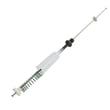
- Suspension: controls tub movement; worn rods can cause shaking and off-balance spins (see washer suspension rod and spring assembly 4902FA1665W).
- Lid lock: confirms the lid is closed for spin; failures can stop or interrupt cycles.
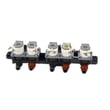
- Water inlet valve: controls fill; debris or wear can cause slow fill or no fill.
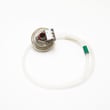
- Water-level sensing: the pressure switch and hose help prevent overfilling and underfilling.
A washer that is maintained and kept level runs with less vibration, fills and drains correctly, and avoids repeated strain on the drive system. That directly extends the service life and reduces the chance of a mid-cycle breakdown.
For model-specific care steps, cycle recommendations, and cleaning guidance, follow the WT5101HV owner’s manual.
Last updated: February 2026
Why are LG parts so expensive?
LG parts for the WT5101HV washer often cost more because they are model-specific, built to tight tolerances, and sold through a smaller supply chain than generic components. Pricing also reflects the complexity of electronic and drive-system parts, plus inventory and distribution costs.
- Model-specific engineering: Many components are designed for a specific LG platform (fit, connectors, calibration).
- More electronics: Sensors, control-related parts, and motor components cost more than simple mechanical pieces.
- Precision and durability requirements: Drive and suspension parts must handle high loads and vibration.
- Lower interchangeability: Fewer “universal” substitutes means fewer low-cost alternatives.
- Supply chain and stocking: Warehousing, shipping, and keeping parts available for years adds cost.
| Part type | Example part on WT5101HV | Why it can cost more/less |
|---|---|---|
| Motor/drive system | Washer drive motor 4417EA1002K | High-power component; tight specs; heavier shipping |
| Sensor/electronics | Washer motor rotor position sensor 6501KW2002B | Specialized electronics; model-specific wiring |
| Mechanical small part | Washer Washplate Cap (5006EA3009B) | Simpler molded part; typically lower cost |
- Confirm the full model number and revision using the WT5101HV owner's manual.
- Match by part ID (not just a description) to avoid wrong-fit returns.
- If the symptom is vibration or off-balance, diagnose first; you may only need suspension parts like 4902FA1665W rather than a drive component.
- For fill problems, check screens and hoses before replacing the inlet valve.
- If you see an error code, use an LG-specific guide to narrow the likely failed part before buying.
Buying the correct LG part the first time prevents repeat failures, leaks, and installation rework. On a top-load washer like the WT5101HV, the most expensive parts are usually the ones tied to the motor, sensing, and balance control.
Last updated: February 2026
What is the most common problem with LG washers?
The most common LG washer problems are drain and spin related: slow or no draining, out-of-balance spinning (UE errors), and fill-level issues that stop a cycle. On the LG WT5101HV, these symptoms often trace back to load size, leveling, or a few key components listed in the WT5101HV owner's manual.
- Drain problems: water left in the tub, long cycle times, or the washer stops mid-cycle.
- Unbalanced load (UE): banging, walking, repeated rebalancing, or a spin that never ramps up.
- Fill or water-level sensing problems: overfilling, underfilling, or stopping with water still running.
- Lid lock problems: won’t start, won’t spin, or stops because the lid won’t lock.
- Agitation/wash action issues: poor cleaning, unusual noises, or a washplate that feels loose.
- Redistribute the load: mix items, avoid washing one heavy item alone, and do not pack the basket.
- Level the washer: a slightly unlevel cabinet makes UE and vibration much more likely.
- Confirm water supply: both hot and cold valves fully open; inlet screens not clogged.
- Run a cleaning cycle: detergent buildup can cause odors and performance issues.
- Look for simple obstructions: check pockets and the tub for small items that can jam movement.
| Symptom | Likely area | Example part for this model |
|---|---|---|
| UE, shaking, banging | Suspension and load balance | Washer suspension rod and spring assembly 4902FA1665W |
| Won’t spin or stops | Lid safety circuit | Washer lid lock EBF61674802 |
| Overfills/underfills, odd water levels | Water-level sensing | LG washer water-level pressure switch 6501EA1001R |
| Poor agitation or loose washplate | Washplate/hub hardware | Washer washplate AGZ72909711 |
Drain, balance, and water-level problems are the issues most likely to cause incomplete cycles, extra wear on the drive system, and repeat error codes. Fixing loading habits and leveling first prevents unnecessary part replacement and helps the washer run quieter and longer.
Related help: LG top load washer ue and ue error codes, LG top load washer error codes.
Last updated: February 2026
How do I fix the OE error on my LG top load washer?
The OE error on your LG WT5101HV washer means the washer is not draining fast enough. We fix it by checking for a kinked drain hose, a clogged drain path, or a drain pump issue; then we reset power and retest a Drain/Spin cycle.
- Unplug the washer for 1 minute (or turn off the breaker), then restore power and try Drain/Spin.
- Make sure the drain hose is not kinked, crushed, or pushed too far down the standpipe.
- Confirm the standpipe or laundry tub drain is not backing up (slow household drain can trigger OE).
- Reduce the load size and remove heavy, waterlogged items; overloading can slow draining.
- If you recently moved the washer, re-check the drain hose routing and height per the WT5101HV owner's manual.
If the hose and household drain are OK, focus on the washer components that affect draining and water-level sensing.
- Look for debris that could be restricting the drain pump inlet (coins, socks, lint).
- Check wiring connections to the motor and sensors if the washer stops mid-drain.
- If the washer seems to drain but still “thinks” water is in the tub, inspect the pressure system:
- Pressure hose for pinholes, kinks, or a loose fit
- Pressure switch operation
| Symptom you see | Most likely area | Example part for this model |
|---|---|---|
| Won’t drain or drains very slowly | Drain pump or blockage in drain path | (Pump not listed in the parts shown) |
| Drains but OE returns, water level seems wrong | Water-level sensing | LG washer water-level pressure switch 6501EA1001R and washer water-level pressure switch hose 5210FA3427J |
Running the washer with standing water can lead to poor cleaning, odor, and repeated cycle interruptions. Fixing the drain path and water-level sensing restores normal drain timing and prevents repeat OE errors.
For more LG top-load balance and drain-related error guidance, we use the steps in LG top load washer ue and ue error codes to confirm load size, leveling, and spin behavior that can affect draining performance.
Last updated: February 2026


