Owner’s manual
 View engine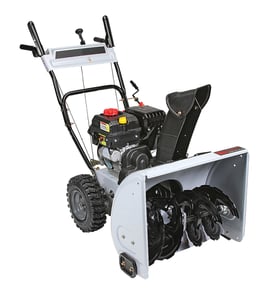




How to find snowblower model number?
On the Husqvarna ST224-96193009604 gas snowthrower, we find the model and serial numbers on a decal attached to the rear of the snow thrower housing. Once you locate the decal, record both numbers so you can match the correct parts and manual information.
Where to look on this model
Check these common spots on the ST224-96193009604:
- Rear of the snow thrower housing (decal location for model and serial numbers)
- Back side of the unit near the frame behind the auger housing
- Areas that stay relatively protected from snow spray and abrasion
For diagrams and identification notes, use the owner's manual.
What the model number helps you do
Having the exact model number lets us match the right Husqvarna parts and diagrams, including items that often vary by version.
- Order the correct belts, cables, and chute parts
- Confirm the right hardware sizes (bolts, screws, washers)
- Pull the correct exploded-view diagrams for assembly locations
Quick check: model number vs. serial number
Use this as a simple guide when you are writing the numbers down:
| Item | What it identifies | How it is used |
|---|---|---|
| Model number | The snowblower version (example: ST224-96193009604) | Parts lookup and manual match |
| Serial number | Your specific unit | Service history and production tracking |
Why it matters
Snowblower parts can look similar but differ in length, mounting style, or belt routing. Using the exact model number prevents ordering the wrong drive or auger components, such as the snowblower drive belt, 38.2-in 584216102 or the Husqvarna snowblower auger drive belt 501818201.
Last updated: February 2026
What kind of gas does a Husqvarna ST224-96193009604 take?
Your Husqvarna ST224-96193009604 gas snowthrower uses fresh, clean regular unleaded gasoline (minimum 87 octane) and it can run on gasoline with up to 10% ethanol (E10). Do not use fuel with more than 10% ethanol; it can cause fuel-system problems and void warranty terms listed in the owner's manual.
Fuel type and what to avoid
Use fuel that matches these guidelines:
- Regular unleaded gasoline (87 octane or higher)
- Ethanol blend up to E10 (10% ethanol maximum)
- No oil mixed into the gasoline (this is not a 2-cycle fuel mix)
- Avoid E15, E85, or any blend over 10% ethanol
- Avoid old fuel; use what you can burn within about 30 days
Quick specs for ST224-96193009604
| Item | Spec |
|---|---|
| Fuel type | Unleaded regular gasoline |
| Minimum octane | 87 |
| Ethanol limit | Up to 10% (E10) |
| Fuel tank capacity | 0.31 gal (1.17 L) |
Best practices to prevent hard starting and carburetor issues
These steps reduce varnish and moisture problems that commonly affect snowblower fuel systems:
- Fill the tank only to the bottom of the filler neck (do not overfill)
- Wipe up any spilled fuel before starting
- If the snowthrower will sit 30 days or longer, run the engine until the carburetor is empty
- Use fuel stabilizer for storage; run the engine about 10 minutes after adding it
- Store fuel in an approved container and keep it tightly sealed
Why it matters
Snowthrowers like the Husqvarna ST224-96193009604 often sit between storms and between seasons. Higher-ethanol fuel attracts moisture and can separate during storage, which leads to corrosion, gum deposits, and poor performance.
Last updated: February 2026
What is the typical lifespan of a gas snowblower?
A gas snowblower typically lasts 10 to 15 years with normal residential use and routine maintenance. For your Husqvarna ST224-96193009604 gas snowthrower, consistent oil changes, belt inspections, and proper off-season fuel storage are the biggest factors that keep it running closer to the high end of that range.
What most affects lifespan
- Fuel care and storage: stale fuel and ethanol-related moisture cause hard starting and carburetor issues.
- Oil change routine: change engine oil about every 25 hours of operation or at least once a year.
- Belt condition: check belts about every 50 hours; replace if slipping or worn.
- Wear items and fasteners: keep shear bolts and other bolts tight for safe operation.
- Cleaning habits: keep the housing clean; avoid spraying water into the engine area.
Maintenance schedule we recommend (typical)
| Item | When to do it | Why it matters |
|---|---|---|
| Engine oil | Every 25 hours or yearly | Prevents accelerated engine wear |
| Belts | Inspect every 50 hours | Prevents drive/auger slip and heat damage |
| Spark plug | Each season or every 100 hours | Improves starting and power |
| Fuel system for storage | If storing 30+ days | Prevents gum/varnish and fuel-system corrosion |
Storage habits that extend life
Follow the storage steps in the owner's manual. Key practices include:
- Let the engine cool before storing indoors.
- For storage 30 days or longer, run the engine until fuel lines and carburetor are empty (or use stabilizer as directed).
- Do not store gasoline from one season to the next.
- Cover with a breathable cover (avoid plastic that traps moisture).
Why it matters
Most “end of life” snowblower failures are maintenance-related (fuel system problems, belt wear, low oil damage), not a worn-out machine. Keeping up with oil, belts, and storage prevents the common issues that shorten service life.
Last updated: February 2026
What engine is on a Husqvarna ST224-96193009604?
The Husqvarna ST224-96193009604 uses a gasoline engine, but the operator’s manual for this model treats the engine as a separate component and directs you to the engine manual for engine-specific identification details. For safe operation and starting procedures, use the ST224-96193009604 owner's manual.
How to identify the exact engine on your unit
Use these quick checks on your ST224-96193009604 to confirm the engine make and model:
- Look for an engine ID label on the blower housing, valve cover, or recoil starter shroud
- Record the engine model, type, and code (or serial) exactly as printed
- Check the emissions label; it often lists displacement and family information
- Compare the label details to the engine parts breakdown if you are ordering engine-specific parts
- Match what you find to the “Engine” section referenced in the manual (it points you to the engine manual)
What the manual confirms about the engine system (model-specific)
Even without listing the engine model number, the ST224-96193009604 manual confirms key engine-related features and controls:
| Item | What it tells you | Why it helps |
|---|---|---|
| 120V electric start + recoil start | Two starting methods are supported | Confirms starter type and power requirements |
| Safety ignition key | Key must be inserted to run | Helps diagnose “won’t start” complaints |
| Fuel shut-off valve, choke, primer, throttle | Standard cold-start and run controls | Helps with starting and stalling troubleshooting |
| Fuel guidance | Up to E10 gasoline is acceptable | Prevents fuel-related running issues |
Why it matters
The exact engine model determines the correct tune-up parts (spark plug, carburetor parts, gaskets) and the right service specs (oil type/amount, governor settings). Getting the engine ID first prevents ordering the wrong parts.
Related parts on this model that affect performance
If the engine runs but the snowblower will not move or will not throw snow well, these drive components are common suspects:
- Snowblower drive belt, 38.2-in 584216102 (traction drive)
- Husqvarna snowblower auger drive belt 501818201 (auger engagement)
Last updated: February 2026
Where does 224 come from?
On the Husqvarna gas snowthrower model ST224-96193009604, “224” is the series/model designation used to identify the ST 224 platform in the operator documentation and parts listings. It is not a measurement; it is part of the model name that helps match the correct manual, specifications, and replacement parts. See the ST224-96193009604 owner's manual for how Husqvarna labels the ST 224 model and its operating specs.
What “ST224” means on this snowblower
For this model, the key takeaway is that ST224 is the product’s model family name, and 96193009604 is the full identifier used for parts lookup.
Common places you will see “ST 224” used:
- The operator’s manual cover and safety sections
- Product specifications (fuel type, oil type, spark plug gap)
- Maintenance and troubleshooting charts
- Parts diagrams and parts lists for the correct fit
Why the number matters when ordering parts
Snowblower parts can look similar across models, but small differences (belt length, chute hardware, gearbox components) change what fits.
Use the full model number ST224-96193009604 when selecting parts such as:
- Snowblower drive belt, 38.2-in 584216102
- Husqvarna snowblower auger drive belt 501818201
- Snowblower gearbox 598831601
Quick ID guide (what to match)
| What you’re matching | Example on this unit | Why it matters |
|---|---|---|
| Model family | ST 224 | Identifies the platform/series |
| Full model number | ST224-96193009604 | Ensures correct parts and manual |
| Part ID | 584216102 | Ensures you land on the exact replacement |
Why it matters
Using the correct model designation prevents ordering the wrong Husqvarna belt, chute component, or drivetrain part, and it keeps maintenance steps aligned with the correct fuel and oil specifications listed for ST 224.
Last updated: February 2026