Installation guide
 Owner’s manual


Do you need to run hot water before starting the dishwasher?
Yes. For the GE GLD4458R00CS dishwasher, we recommend running the hot water at the nearest sink until it stops getting hotter, then starting the cycle. This helps ensure the dishwasher fills with 120°F to 150°F water for best cleaning performance.
What we recommend (best practice)
- Turn on the hot water faucet closest to the dishwasher.
- Let it run until the temperature stops rising (it is fully hot).
- Start the dishwasher, then turn the faucet off.
- Use a normal amount of dishwasher detergent (not hand soap).
- If your home has low water pressure at the moment, wait until pressure returns to normal before running a cycle.
Temperature and pressure targets for GLD4458R00CS
The installation instructions for this model call out specific incoming water requirements.
| Item | Recommended range | Why it matters |
|---|---|---|
| Incoming hot water temperature | 120°F to 150°F | Hotter water dissolves detergent better and improves wash results |
| Minimum temperature for best wash | 120°F | Helps prevent poor cleaning and film on dishes |
| Hot water supply pressure | 20 to 120 PSI | Low pressure can cause fill valve leaking and poor fills |
If you still get poor cleaning after preheating the water
Preheating helps, but it will not fix every wash issue. Check these common causes next:
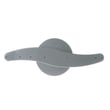
- Spray arm holes clogged or spray arm not spinning freely (consider the dishwasher spray arm WD22X10047).
- Filter area dirty or restricted (consider the dishwasher filter WD22X10077 if yours is damaged).
- Large items blocking the detergent dispenser or wash arms.
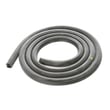
- Air gap or disposer clogged, or the drain hose routing is incorrect.
- Water pressure temporarily low at the sink.
Why it matters
Dishwashers clean best when the first fill is truly hot. If the dishwasher starts with lukewarm water sitting in the hot line, detergent may not dissolve well and greasy soil can redeposit on dishes.
For additional model-specific operating guidance, follow the temperature and use recommendations in the GLD4458R00CS owner's manual.
Last updated: February 2026
What is the average life expectancy of a GE dishwasher?
A GE dishwasher like model GLD4458R00CS typically lasts 10 to 12 years with normal household use. Consistent cleaning, correct detergent use, and fixing small leaks or draining issues early are the biggest factors that keep a dishwasher running longer.
Typical lifespan and what changes it
Most dishwashers fall into a similar lifespan range, but day-to-day conditions make a real difference.
- Usage frequency: 1 load/day usually wears parts faster than 3 to 4 loads/week
- Water quality: hard water speeds up mineral buildup on spray arms, seals, and the tub
- Maintenance: cleaning filters and checking seals prevents pump strain and leaks
- Loading habits: blocked spray patterns reduce cleaning and increase rewash cycles
- Early repairs: replacing a worn seal or clogged filter prevents bigger failures
Quick maintenance schedule (simple and effective)
Use the GLD4458R00CS owner's manual for the exact care steps and locations.
| Task | How often | Why it helps |
|---|---|---|
| Rinse and clean the filter area | Monthly | Prevents poor cleaning and pump strain |
| Inspect door seals for debris or tears | Monthly | Reduces leaks and moisture damage |
| Run a dishwasher cleaner cycle | Every 1 to 3 months | Cuts odor and mineral buildup |
| Check spray arms for clogs | Every 3 to 6 months | Restores wash pressure and coverage |
Parts that commonly extend service life
If performance drops, these model-matched parts are common fixes before a major repair.
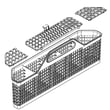
- Dishwasher filter WD22X10077 (helps with poor cleaning and circulation issues)
- Dishwasher spray arm WD22X10047 (helps when dishes stay dirty or spray is weak)
- Dishwasher tub gasket WD08X10018 (helps stop door and tub edge leaks)
- Dishwasher drain pump WD26X10046 (helps when water will not drain)
Why it matters
A dishwasher near the end of its expected life often shows small symptoms first (longer cycles, residue, standing water, or minor leaks). Addressing those early usually reduces wear on the circulation system and electronic controls, helping you reach the 10 to 12 year average.
Last updated: February 2026
What is the most common problem with a GE dishwasher?
The most common GE dishwasher problem is a drain issue: water stays in the bottom because the drain path is clogged (filter, hose, air gap, or drain pump). On the GE GLD4458R00CS, we start by checking the drain system and doing a quick power reset described in the GLD4458R00CS owner's manual.
Most common symptoms and what they usually point to
- Water won’t pump out: clogged drain path, blocked disposer connection, or a failing drain pump
- Not cleaning well: clogged filter, spray arm holes blocked, low water fill, or circulation issue
- Leaks at the door: worn tub gasket or lower door seal
- Won’t start or stops mid-cycle: door latch problem or control issue
- Control panel acts “stuck”: needs an unlock sequence or a power reset
Quick checks we recommend first (no parts needed)
- Reset power: turn off the breaker or wall switch for 30 seconds, then restore power.
- Check the sink drain: if the kitchen sink drains slowly, the dishwasher often cannot drain well.
- If you have an air gap: clean it.
- If it drains into a disposer: run the disposer clear.
- Look for a kinked or clogged drain hose under the sink.
Parts that commonly fix the “won’t drain” complaint
If the drain path is clear but water still will not pump out, these model-matched parts are common fixes:
| Symptom | Most likely area | Example model-matched part |
|---|---|---|
| Hums but won’t drain | Drain pump | Dishwasher drain pump WD26X10046 |
| Drains slowly or backs up | Drain hose/tube restriction | Drain tube WD24X10045 |
| Poor cleaning, debris recirculates | Filter restriction | Dishwasher filter WD22X10077 |
Why it matters
Standing water can cause odors, redeposit food on dishes, and strain the drain pump. Fixing the drain path early also prevents repeat clogs and improves overall wash performance.
Last updated: February 2026