Owner’s manual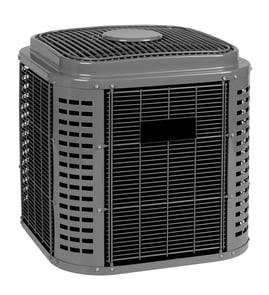



Is central AC good for a home?
Yes. For most homes, a central air conditioner like the Icp H2A336GKA100 is a strong choice because it cools the whole house evenly through ductwork, keeps indoor humidity more stable, and can be efficient when the system is correctly sized, installed, and maintained (see the owner's manual).
- You want consistent, whole-home cooling (not just one room)
- Your home already has ductwork in good condition
- You prefer one thermostat controlling the entire home
- You want a quieter indoor experience (the loudest components are outdoors)
- You plan to maintain clearances and keep the outdoor coil clean
Central AC is not always the best match. Consider alternatives if:
- You do not have ducts (adding ducts can be a major project)
- You want different temperatures in different rooms (zoning)
- You have limited outdoor placement options due to noise or clearance constraints
Our Icp H2A336GKA100 documentation emphasizes placement and airflow. Plan for these typical outdoor-unit needs:
| Item | Typical guidance for this model type | Why it matters |
|---|---|---|
| Top clearance | About 48 in. above the unit | Prevents hot discharge air from recirculating |
| Side clearance | About 18 in. at coil inlets (one side can be reduced to about 6 in. in some layouts) | Protects capacity and efficiency |
| Location | Away from bedroom windows, fresh air intakes, dryer vents, and exhaust sources | Reduces noise and keeps the coil cleaner |
Central AC performance depends heavily on airflow and installation details. If the outdoor unit is crowded by shrubs, fences, or debris, efficiency drops and parts like the compressor, contactor, capacitor, and condenser fan motor work harder.
- Keep shrubs, trash cans, and fencing at least 18 in. away from coil inlets
- Keep the outdoor coil free of grass clippings, leaves, and weeds
- Check condensate drainage monthly during cooling season
- Use only an alkaline-based coil cleaner on a cold coil (avoid acid-based cleaners)
- Avoid non-breathable weather covers that trap moisture
Last updated: February 2026
What are the 5 main parts of AC?
In a typical split central air conditioner like the Icp H2A336GKA100, the five main parts are the compressor, condenser coil, expansion device, evaporator coil, and the blower (indoor fan). Together, they move heat from inside your home to outdoors; see the H2A336GKA100 owner's manual for system operation details.
- Compressor (outdoor unit): Pumps refrigerant through the system and raises its pressure and temperature.
- Condenser coil (outdoor unit): Releases heat outdoors as the refrigerant condenses.
- Expansion device (metering device): Drops refrigerant pressure before it enters the evaporator (often a TXV or fixed orifice, depending on the matched indoor coil).
- Evaporator coil (indoor unit): Absorbs heat from indoor air as refrigerant evaporates.
- Blower (indoor fan): Moves air across the evaporator coil and through the ductwork.
| Step | Location | What happens |
|---|---|---|
| 1 | Indoor | Blower pushes warm air across the evaporator coil |
| 2 | Indoor | Refrigerant absorbs heat in the evaporator |
| 3 | Outdoor | Compressor pumps refrigerant to the condenser |
| 4 | Outdoor | Condenser coil rejects heat to outdoor air |
| 5 | Indoor | Expansion device meters refrigerant back to the evaporator |
On the H2A336GKA100, several key electrical and airflow parts live in the condenser section. If the outdoor unit will not start or the fan will not run, these are common suspects:
- Central air conditioner contactor 1172472
- Capacitor CAP050550440RTP
- Central air conditioner condenser fan motor 1173774
- Central air conditioner condenser electronic control board 1088977
Knowing the “big five” helps you troubleshoot faster. For example, the manual’s sequence of operation shows that a call for cooling energizes the contactor, which starts the compressor and outdoor fan motor; if that chain breaks, cooling stops even if the thermostat is calling.
Last updated: February 2026
What is a centralized AC unit?
A centralized (central) AC unit is a whole-home cooling system that uses an outdoor condenser and an indoor coil to remove heat from your home, then distributes cooled air through ductwork. For Icp model H2A336GKA100, the thermostat typically starts cooling by energizing the contactor, which runs the compressor and condenser fan.
When your thermostat calls for cooling, the system follows a simple electrical sequence described in the owner's manual:
- Thermostat closes the cooling circuit (commonly R to Y) to request cooling.
- The outdoor contactor pulls in, sending power to the compressor and condenser fan.
- The indoor blower relay is energized (commonly R to G), starting the indoor blower.
- When the thermostat is satisfied, the circuits open; the contactor drops out and the motors stop.
- Some systems run the indoor blower a little longer if a time-delay relay is used.
A central air conditioner cools the entire home because it ties into your duct system and uses separate indoor and outdoor sections.
| Component | Where it is | What it does |
|---|---|---|
| Thermostat | Inside | Signals a call for cooling (demand) |
| Contactor | Outdoor unit | Switches high voltage to compressor and fan |
| Compressor | Outdoor unit | Pumps refrigerant to move heat out of the home |
| Condenser fan | Outdoor unit | Moves air across the outdoor coil to reject heat |
| Indoor coil + blower | Furnace/air handler | Absorbs heat indoors and pushes cooled air through ducts |
Knowing what “centralized AC” means helps you troubleshoot smarter. For example, if the thermostat is calling for cooling but the outdoor unit is silent, the issue is often in the outdoor electrical path (contactor, capacitor, wiring, or control board) rather than the ductwork.
These are common “no-cool” or “outdoor unit not running” suspects for H2A336GKA100:
- Central air conditioner contactor 1172472
- Capacitor CAP050550440RTP
- Central air conditioner condenser electronic control board 1088977
- Central air conditioner condenser fan motor 1173774
Last updated: February 2026
Does central AC have a heat pump?
A central AC system like the Icp H2A336GKA100 is a cooling-only outdoor condenser; it does not provide heat by itself. A heat pump is a different type of outdoor unit that can both cool and heat, using a reversing valve and defrost controls.
Check the outdoor unit nameplate and the wiring/sequence of operation details in the owner's manual. In general, these clues help:
- Cooling-only central AC: outdoor condenser plus a separate furnace or air handler for heat
- Heat pump: outdoor unit provides heat and cooling; often paired with electric heat strips or a furnace for backup
- Thermostat labels: heat pumps often use terminals like O/B (reversing valve) and may show AUX/EM heat
- Winter operation: heat pumps run the outdoor unit in heating mode; cooling-only AC will not
- Service components: heat pumps typically include a reversing valve and defrost control logic
The H2A336GKA100 documentation focuses on cooling operation: a call for cooling energizes the contactor to start the compressor and condenser fan, and it shows typical thermostat connections for cooling stage and indoor fan. That matches a standard central AC condenser setup.
If you are troubleshooting a no-cool condition, these parts are commonly involved:
- Central air conditioner contactor 1172472
- Capacitor CAP050550440RTP
- Central air conditioner condenser fan motor 1173774
| System type | Cools | Heats | Typical paired equipment |
|---|---|---|---|
| Central AC (cooling-only) | Yes | No | Gas furnace or electric air handler for heat |
| Heat pump | Yes | Yes | Air handler; sometimes backup heat (AUX/EM) |
Knowing whether you have a heat pump changes how you diagnose “no heat” complaints, thermostat wiring, and which components are expected in the outdoor unit. It also affects what you should see running outdoors during cold weather.
Last updated: February 2026