Owner’s manual
 Error Codes



What are the dimensions of the Samsung RF28JBEDBSG?
The Samsung RF28JBEDBSG refrigerator is typically about 35 3/4 inches wide and about 70 inches tall (with hinges). Depth varies by configuration: about 36 1/2 inches with handles, or about 34 inches without handles. For the exact spec set for your unit, use the RF28JBEDBSG owner's manual.
Common dimension sets you may see
These are the most common ways refrigerator dimensions are listed (width x height x depth):
- With hinges, handles, and doors: 35 3/4" x 70" x 36 1/2"
- Without hinges and door: 35 3/4" x 68 7/8" x 29 3/8"
- With hinges and door, no handle: 35 3/4" x 70" x 34"
Quick reference table
| Measurement style | Width | Height | Depth |
|---|---|---|---|
| With hinges, handles, and doors | 35 3/4" | 70" | 36 1/2" |
| Without hinges and door | 35 3/4" | 68 7/8" | 29 3/8" |
| With hinges and door, no handle | 35 3/4" | 70" | 34" |
How we recommend measuring your space
To avoid fit issues with a Samsung bottom-mount refrigerator like RF28JBEDBSG, we recommend:
- Measure the cabinet opening width at the front and back
- Measure height to the lowest overhead cabinet (include trim)
- Measure depth to the wall and note baseboards or water line clearance
- Plan for door swing clearance and drawer pull-out space
- Leave airflow space behind and above per the RF28JBEDBSG owner's manual
Why it matters
Refrigerator depth changes the most depending on handles, hinges, and how the doors sit. Using the correct “with handles” or “no handle” depth prevents installation problems and helps ensure the doors open fully without hitting cabinets.
Last updated: February 2026
What is the common problem with Samsung fridge ice maker?
On the Samsung RF28JBEDBSG, the most common ice maker problems are no ice production, ice clumping or freezing in the bin, small or hollow cubes, and dispenser issues. These usually trace back to restricted water flow, temperature that is too warm, air leaks at the doors, or ice buildup around the ice room.
Most common symptoms and what they point to
- No ice at all: water supply issue, frozen fill path, or ice maker not cycling
- Small or hollow cubes: low water pressure, clogged filter, or a weak inlet valve
- Ice clumps or “snow” in the bin: warm air intrusion, frequent door openings, or ice room frost
- Slow ice production: freezer temperature too warm or condenser airflow problems
- Dispenses poorly or jams: ice container issues or ice buildup in the chute
Quick checks we recommend first (10 to 20 minutes)
- Confirm the ice maker is turned ON and not in a “lock” or “off” mode.
- Set temperatures to typical targets: 0°F freezer, 37°F fresh food.
- Dump old ice, wash and dry the bin, then reinstall it fully.
- Check door closure and gaskets for gaps that let humid air in.
- If water flow at the dispenser is weak, address filtration and supply first.
Parts that commonly solve ice maker complaints
If the basics check out, these model-matched parts are frequent fixes:
| Symptom | Likely cause | Model-matched part to consider |
|---|---|---|
| Hollow/small cubes, no fill | Water not entering fast enough | Refrigerator water inlet valve DA62-04027A |
| Ice clumping, poor dispensing | Bin not seating or damaged | Refrigerator ice container DA97-14474A |
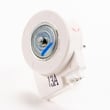
| Frosty ice room, warm temps near ice maker | Airflow problem | Refrigerator ice maker evaporator fan DA97-12540A |
Why it matters
Ice makers are sensitive to water flow and temperature stability. A slightly warm freezer, a restricted water path, or humid air leaking past a door seal can quickly cause freezing, clumping, and low production.
Helpful references
- RF28JBEDBSG manual
- Why your Samsung fridge stopped making ice and how to fix it
- How to prevent water dispenser and ice maker problems
Last updated: February 2026
What's the average lifespan of a Samsung fridge?
Most Samsung refrigerators, including the Samsung RF28JBEDBSG, typically last 10 to 15 years with normal household use. Consistent maintenance (clean airflow, stable temperatures, and timely part replacement) is what most often determines whether you land closer to 10 years or closer to 15.
Typical lifespan and what affects it
A refrigerator’s service life is mainly driven by compressor run time, heat removal, and door-seal performance.
- Usage patterns: frequent door openings and warm food loads increase run time
- Installation conditions: tight clearances and dusty areas raise condenser temperatures
- Maintenance: dirty condenser area and blocked vents shorten component life
- Water system care: regular filter changes help protect the water valve and ice system
- Repair history: replacing a failed fan motor or sensor can extend overall life
What “end of life” usually looks like
These are the most common “big ticket” failure areas as a fridge ages.
| Symptom | Common system involved | Example part on this model page |
|---|---|---|
| Warm fresh food or freezer | Sealed system or airflow | Compressor, evaporator, condenser fan |
| No ice or slow ice | Ice room airflow or water supply | Ice maker fan, water inlet valve |
| Temperature swings | Sensors or control | Refrigerator temperature sensor |
| Loud humming or rattling | Fan motor or ice components | Condenser fan motor assembly |
Maintenance that helps you reach the high end of the range
We recommend these habits for Samsung bottom-mount and French door refrigerators:
- Vacuum dust from the condenser area and keep rear airflow clear
- Keep door gaskets clean so the doors seal tightly
- Set stable temps (avoid frequent adjustments)
- Replace water filters on schedule and flush after changes
- Address fan noise early so airflow problems do not snowball
For model-specific care and operating guidance, follow the RF28JBEDBSG owner's manual.
Why it matters
A refrigerator that runs hotter or longer than designed wears the compressor and fans faster. Simple airflow and sealing maintenance reduces run time, improves temperature stability, and helps you get the full expected lifespan.
Last updated: February 2026
Why is the bottom of my Samsung fridge freezing?
When the bottom of the fresh food section in your Samsung RF28JBEDBSG is freezing, cold air is usually being pushed into the wrong area or it is not circulating correctly. The most common causes are a blocked air vent, a damper problem, or a temperature sensor issue.
Quick checks we recommend first
- Set the refrigerator temperature to 37°F and the freezer to 0°F, then wait 24 hours for temperatures to stabilize.
- Make sure food packages are not blocking the rear air vents or packed tightly against the back wall.
- Move items away from the bottom shelf and crisper area; overpacking can trap cold air.
- Check that doors close fully and nothing is preventing a tight seal.
- Look for frost buildup on the back interior panel; heavy frost points to airflow or defrost issues.
What typically causes bottom-shelf freezing
| Likely cause | What you notice | What to do next |
|---|---|---|
| Airflow blocked | Freezing is worst near the back/bottom | Reorganize items; keep vents clear |
| Damper stuck open | Random freezing even at normal settings | Inspect damper operation; replace if not moving |
| Sensor reading wrong | Temps swing, food freezes then warms | Test/replace sensor |
| Fan or evaporator airflow issue | Warm spots plus freezing spots | Check fan noise and frost pattern |
Parts that commonly fix this symptom
If airflow control or temperature feedback is failing, these model-matched parts are common solutions:
- Refrigerator air damper assembly DA97-08430A
- Refrigerator temperature sensor DA32-10104N
- Refrigerator temperature sensor DA32-00033C
Why it matters
Freezing in the fresh food section can ruin produce, crack containers, and force the compressor to run longer than necessary. Fixing airflow and sensing problems helps keep stable temperatures and reduces frost and ice buildup.
Model-specific guidance
Use the RF28JBEDBSG manual to locate the air vents, damper area, and the recommended loading clearances for proper circulation.
Last updated: February 2026