Owner’s manual
 Error Codes




What does 23C mean on a Samsung refrigerator?
On Samsung refrigerator model RF23HCEDBSR, “23C” indicates a condenser fan problem (the fan by the condenser coils is not running correctly). This can cause warm temperatures, poor cooling, and the compressor running longer than normal; check the fan area for blockage and restore power safely.
What to check first (safe, quick steps)
- Unplug the refrigerator (or turn off the breaker) before inspecting any fan area.
- Wait at least 5 minutes before plugging the refrigerator back in after a power disconnect.
- Pull the refrigerator straight out enough to get airflow and access to the lower rear area.
- Look for dust buildup, packaging, or anything contacting the fan blade.
- Make sure the unit has proper installation clearance so heat can dissipate.
Why the condenser fan matters
The condenser fan pulls air across the condenser coils to remove heat. If it slows down or stops, the refrigerator cannot reject heat efficiently, so the fresh food and freezer sections can warm up and the system can run excessively.
Common causes and likely fixes
| What you notice | Most common cause | What we recommend |
|---|---|---|
| Fan area is packed with lint/dust | Restricted airflow | Clean coils and the fan area; recheck operation |
| Fan blade won’t spin freely | Ice, debris, or a damaged blade | Clear obstruction; replace damaged parts as needed |
| Fan runs sometimes, then stops | Failing motor or wiring connection | Inspect wiring; replace the condenser fan assembly if needed |
| “23C” returns after reset | Ongoing fan or control issue | Troubleshoot fan circuit; consider professional service |
Parts that are often involved
If cleaning and clearing obstructions does not solve it, these model-compatible parts are commonly related to condenser fan cooling issues:
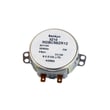
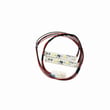
- Refrigerator condenser coil and fan motor assembly DA97-13784B
- Refrigerator temperature sensor DA32-10104N (helps the control board monitor temperatures)
Why it matters
Running with a condenser fan fault can lead to food spoilage, heavy frost patterns, and extra wear on the sealed system. Correcting airflow and fan operation quickly protects cooling performance and energy use.
For model-specific safety, operating modes, and installation clearances, follow the owner's manual.
Last updated: February 2026
What is the difference between force defrost FD and RD?
On Samsung RF23HCEDBSR refrigerators, RD and FD are service-mode defrost options used to melt ice so airflow and cooling recover. RD is the less aggressive choice for a localized icing issue; FD is the more aggressive choice when icing is heavier or affecting multiple areas. For your model’s control display and button sequence, use the RF23HCEDBSR owner's manual.
RD vs FD at a glance
Use RD first, then step up to FD only if the problem persists after a full cycle and normal cooling time.
- RD: targeted, lighter defrost for a single problem area (commonly the fresh food airflow/evaporator area).
- FD: stronger, broader defrost intended to clear heavier ice buildup that can affect cooling and ice production.
- Both modes create melt water; plan for drainage and cleanup.
- After defrosting, fix the cause (door seal leak, blocked vents, frequent door openings) so ice does not return.
What to do when you hear fan noise from ice
Fan rubbing, ticking, or buzzing can happen when ice contacts the evaporator fan. The best approach is still to start with RD and escalate only if needed.
- Run RD first and let the refrigerator return to normal operation.
- If noise and poor airflow continue, run FD to clear deeper or wider ice.
- Avoid chipping ice with sharp tools; it can damage the evaporator cover and coils.
| Symptom | Start with | Move to next if not resolved |
|---|---|---|
| Mild frost, slightly warm fresh food | RD | FD |
| Fan noise plus weak airflow | RD | FD |
| Heavy ice, repeated icing, ice maker issues | FD | Check defrost components |
Parts that commonly relate to repeat icing
If forced defrost helps temporarily but icing returns, a defrost-system issue is likely.
- Refrigerator defrost heater DA47-00244U
- Refrigerator temperature sensor DA32-10104N
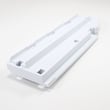
- Samsung refrigerator fresh food evaporator cover assembly DA97-12608A
Why it matters
Ice on the evaporator restricts airflow; that causes warm temperatures, fan noise, and can interfere with ice maker performance. For ice-production troubleshooting, use why your Samsung fridge stopped making ice and how to fix it.
Last updated: February 2026
What is the most common problem with Samsung refrigerators ice?
On the Samsung RF23HCEDBSR, the most common ice issue is ice clumping or a freeze-up that blocks ice from dispensing or slows production. The usual root causes are water supply problems (especially low pressure), a restricted filter, or moisture getting in around doors and the ice chute.
Quick checks that fix most ice problems
- Confirm the refrigerator is connected to a potable water supply and the shutoff valve is fully open.
- Verify water pressure is 20 to 125 psi for proper ice maker operation (a key spec in the owner's manual).
- If ice is not dispensing, remove the ice bucket, clear clumped ice, reinstall it, then try dispensing again.
- After a power outage, dump the melted and refrozen ice from the bucket to prevent cubes freezing together.
- If the ice maker seems stalled, use the built-in ice maker test button (press and release when the chime sounds; do not hold it).
Parts that commonly contribute to ice and dispenser trouble
If the checks above point to a supply restriction or a freeze-up at the dispenser, these model-compatible parts are common fixes:
| Symptom | Most likely area | Example part for RF23HCEDBSR |
|---|---|---|
| Slow or hollow cubes | Water supply restriction | Refrigerator water filter DA29-00019A |
| No fill, weak fill, or intermittent ice | Water inlet control | Refrigerator water inlet valve DA62-04027A |
| Ice jams at the door chute | Air leak or frost at chute | Refrigerator dispenser ice chute cap and gasket assembly DA97-12594A |
Why it matters
Ice makers are sensitive to airflow, temperature, and water flow. When water pressure is low or the filter is restricted, cubes form poorly and can bridge together. When warm, moist air leaks into the ice path (door seal or chute gasket), frost builds up and eventually blocks the auger and chute.
Good habits to prevent repeat freeze-ups
- Replace the water filter on schedule.
- Keep doors closed firmly; avoid slamming one door hard enough to pop the other open.
- If you will be away and not using ice or water, close the water valve.
Last updated: February 2026