Owner’s manual
 Error Codes




How do I reset my Samsung dryer?
For your Samsung DVG60A9900V dryer, the most reliable reset is a Factory Reset from the settings menu (tap and hold Options for 3 seconds, select Factory Reset, then tap OK). For quick glitches, a simple power cycle also works; see the steps in the DVG60A9900V owner's manual.
Quick reset options (use the one that fits your situation)
- Power cycle (clears temporary glitches): Turn the dryer off, unplug it (or switch the breaker off), wait about 5 minutes, then restore power.
- Factory Reset (returns settings to default): Hold Options 3 seconds, dial to Factory Reset, tap OK.
- Cancel an active dryer section (if applicable): Tap and hold UPPER or LOWER for 3 seconds to cancel that section’s operation.
- Restart a cycle after an information code: After addressing the cause (door, airflow, etc.), start the cycle again.
What to check if the code comes back after a reset
A reset clears the symptom, but the dryer will show the code again if the condition is still present.
- Door-related messages: Make sure the door closes fully and no laundry is pinched.
- Overheating or high-temp codes (example: HC): Clean the lint filter and confirm strong airflow.
- Long dry times: Reduce load size and verify airflow; sensor cycles can extend time based on moisture.
- Thermistor-related codes (example: tC): Temperature sensing may be out of range; a failed sensor can cause repeated errors.
| Situation | Best reset to try | Why it matters |
|---|---|---|
| Random freeze, unresponsive controls | Power cycle | Clears temporary control glitches |
| You changed settings and want defaults back | Factory Reset | Restores factory settings |
| Dryer stops with a heat-related code | Reset after cleaning airflow path | Prevents repeat overheating shutdowns |
Why it matters
Resetting is useful for clearing a temporary control issue, but repeated information codes usually point to a real condition such as restricted airflow, a door closure problem, or a temperature-sensing issue. If you’re seeing heat or temperature codes repeatedly, checking airflow and sensors protects drying performance and helps prevent overheating.
For code meanings and next steps, we use the Samsung dryer error codes guide alongside the troubleshooting section in your manual.
You can order replacement parts for your dryer from the parts list for this model, or search by model number on Sears PartsDirect.
Last updated: February 2026
How to tell if Samsung dryer thermal fuse is bad?
A bad thermal fuse in your Samsung dryer (model DVG60A9900V) is typically “open” and will stop the dryer from heating or running. We confirm it by testing the fuse with a multimeter for continuity; no continuity means the fuse is blown and must be replaced after fixing the overheating cause.
How to test the thermal fuse (continuity test)
- Unplug the dryer (and shut off gas if you have a gas model).
- Access the thermal fuse (commonly on the blower housing or heater/burner duct area).
- Pull the wires off the fuse terminals (grab connectors, not wires).
- Set your multimeter to continuity (beep) or ohms.
- Touch one probe to each fuse terminal.
- Good fuse: meter beeps or reads near 0 Ω
- Blown fuse: no beep or reads OL/infinite resistance
- If the fuse is blown, do not bypass it; replace it.
For panel removal and access guidance specific to your dryer, follow the DVG60A9900V owner's manual.
Symptoms that often point to a blown thermal fuse
A thermal fuse usually opens because the dryer overheated. Common symptoms include:
- Dryer won’t start (some designs cut all power through the fuse)
- Dryer runs but won’t heat
- Cycle stops early and clothes stay damp
- Burning smell or very hot cabinet (address airflow immediately)
Fix the overheating cause first (most common: restricted airflow)
Before installing a new fuse, correct the condition that caused overheating:
- Clean the lint filter and confirm it seats correctly
- Check the exhaust duct for lint buildup, kinks, or crushing
- Verify the outside vent hood opens freely
- Make sure the load size is not overpacked
- If the dryer “does not warm up,” follow the airflow and power checks in the manual troubleshooting table
Quick airflow check table
| What you check | What “good” looks like | What to do if it’s not good |
|---|---|---|
| Lint filter | Clean, no film | Wash and dry the screen; clean housing |
| Vent duct | Short, smooth, not crushed | Re-route or replace ducting |
| Outside vent | Strong airflow, flap opens | Clear blockage at hood |
Why it matters
The thermal fuse is a one-time safety device. If you replace it without fixing the airflow restriction or overheating issue, the new fuse can blow again and the dryer can keep drying poorly.
To look up model-correct replacement parts and diagrams, use the parts list for DVG60A9900V or search by model on Sears PartsDirect.
Last updated: February 2026
How to tell if a Samsung dryer heating element is bad?
On your Samsung DVG60A9900V dryer, a bad heating element shows up as no heat or very long dry times even with a clean lint filter and strong exhaust airflow. We confirm it by checking the heater for continuity and for a short to the metal housing; see the DVG60A9900V owner's manual.
Symptoms that point to a heater circuit problem
- Dryer tumbles but clothes stay cool or damp
- Drying time suddenly increases on the same cycle
- Heat starts, then stops repeatedly (often overheating protection)
- Information codes related to heat or temperature sensing (for example, HC, tC, tC5)
Checks to do before using a meter
- Clean the lint filter completely
- Inspect the vent hose for kinks, crushing, or heavy lint buildup
- Confirm strong airflow at the outside vent while running a timed cycle
- If a code appears, match it to the troubleshooting table in the DVG60A9900V owner's manual
Multimeter test: what “bad” looks like
Unplug the dryer before accessing internal components.
| Test | Normal result | Bad result |
|---|---|---|
| Continuity across element terminals | Continuity | Open (no continuity) |
| Element terminal to metal heater housing | No continuity | Continuity (short to ground) |
Parts that commonly affect heating
If airflow is good and the element tests open or grounded, replacement is the fix. If the element tests good, a safety or sensing part can still stop heat.
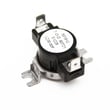
- Dryer high-limit thermostat DC47-00017A
- Dryer thermistor DC32-00007A
- Dryer radiant sensor DC32-00008A (gas heat control)
Why it matters
Restricted venting and lint buildup can overheat the dryer and trip safety controls, which causes no-heat symptoms and can lead to repeat heater failures. Fixing airflow first improves drying performance and protects the heater circuit.
Last updated: February 2026