Installation guide
 Owner’s manual


Does my Kenmore top load washer have a filter?
The Kenmore 41744042400 is a front-load washer, and it does not use a traditional, user-cleanable lint filter like many top-load models. Most routine “filter” maintenance on this washer focuses on the drain path (pump area and hoses) and keeping the door boot clean; see the 41744042400 owner's manual.
If you are chasing slow drain, standing water, or odor, these are the most common places to inspect and clean:
- Check the drain hose for kinks, clogs, or improper standpipe height
- Verify the standpipe height is within the installation range (typical minimum 24 in., maximum 96 in.)
- Look for debris buildup in the door boot (bellows) folds and wipe them out
- Run a hot cleaning cycle (empty) to reduce residue and odor
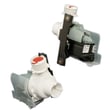
- If draining is weak or noisy, the drain pump may be restricted or failing
| Symptom | Most likely area | Part to consider |
|---|---|---|
| Won’t drain or drains very slowly | Drain pump or drain path | Washer drain pump 137108000 |
| Leaks during drain or at the back | Drain hose connection or hose damage | Washer drain hose 134592700 |
Front-load washers like the Kenmore 41744042400 rely on a clear drain path to spin and drain correctly. A partial restriction can cause long drain times, water left in the tub, vibration during spin, and musty odors.
We recommend confirming these basics from the installation guide because an incorrect drain setup can look like a “clogged filter” problem:
- Standpipe height: 24 in. minimum, 96 in. maximum
- Drain hose should be secured and routed without sharp bends
- Keep the washer level to reduce vibration and improve draining
Last updated: February 2026
How to identify a Kenmore washer model?
Your Kenmore washer model number is printed on the appliance’s model and serial tag. For Kenmore model 41744042400, the tag is typically located around the door opening area on front-load washers, or on the back panel near the power cord and control area. Use the full model number to match exact replacement parts.
Check these common tag locations first:
- Inside the door opening, around the door frame (front-load)
- Behind the lower service panel area (some front-load designs)
- On the back of the cabinet near the power cord
- Along the side of the cabinet opening (top-load)
- Under the lid near the hinge area (top-load)
For diagrams and location notes specific to your washer, use the 41744042400 owner's manual.
Kenmore model numbers are often 11 characters or longer. Many start with a 3-digit prefix that identifies the manufacturing source (for example, 417 is commonly used on Kenmore front-load washers). Entering the complete model number helps us match the correct door lock, drain pump, water inlet valve, and other parts.
| What you see on the tag | What to do | Why it helps |
|---|---|---|
| Full model number (example: 41744042400) | Use it exactly as printed | Ensures correct part fit |
| Serial number | Keep it for service records | Helps date and production run |
| Partial number or missing digits | Recheck the tag for faded characters | Prevents ordering the wrong part |
- Wipe the label gently with a damp cloth and mild soap
- Use a flashlight at an angle to reveal faint printing
- Take a close-up photo and zoom in
- Avoid scraping the label; it can remove the ink
Kenmore washers can look similar across multiple series, but parts like the door lock assembly, drain hose routing, and console components can vary by model. Using the exact model number prevents returns and speeds up repair.
Last updated: February 2026
How to unclog drain hose on Kenmore washer?
For Kenmore washer model 41744042400, we unclog the drain hose by safely disconnecting it, clearing the blockage, then reinstalling it with the correct standpipe setup (U-shape and air gap) so the washer drains without siphoning. Use the 41744042400 installation guide for the correct drain height and routing.
- Unplug the washer before servicing the drain hose.
- Turn off both water faucets.
- Keep a shallow pan and towels ready for water in the hose.
- If the washer was just running, let water cool before handling.
- Pull the washer forward enough to access the rear.
- Remove the drain hose from the standpipe or laundry tub.
- If needed, disconnect the hose from the washer outlet (expect water to spill).
- Check and clear the most common clog points:
- The hose end at the standpipe
- The hose bend where it loops upward
- The washer outlet port and hose connection
- Flush the hose:
- Run hot water through it, then flush again until flow is strong.
- For residue buildup, soak the clogged end in hot water with vinegar, then rinse.
- Reinstall the hose correctly (see next section).
The install specs for this washer matter as much as the cleaning.
- Form a U-shape at the end of the drain hose.
- Leave an air gap around the hose in the standpipe (do not seal it tight).
- Use a standpipe with minimum 1-1/4 inch diameter.
- Standpipe height above floor:
- 24 in minimum
- 96 in maximum
| Setup item | Target for 41744042400 | What goes wrong if off |
|---|---|---|
| Standpipe height | 24 to 96 in | Low: siphoning; high: poor draining |
| Hose shape | U-shaped end | Siphoning, slow drain |
| Fit in standpipe | Air gap | Siphoning, gurgling |
If the hose is clear but the washer still will not drain, the issue is often the pump or a kinked/damaged hose.
- Replace a split, soft, or permanently kinked hose with the washer drain hose 134592700.
- If you hear the pump hum but water does not move, inspect or replace the washer drain pump 137108000.
A partially clogged drain hose can trigger slow-drain symptoms, leave water in the drum, and cause siphoning that refills the tub. Correct hose routing and standpipe height keep draining consistent and protect the drain pump.
Last updated: February 2026
What is the capacity of the Kenmore 400 Series washer?
The Kenmore 41744042400 is a front-load washer in the Kenmore 417 series; capacity varies by the exact 400 Series/417-series variant, so we use the model’s documentation to confirm the correct tub size. Check the 41744042400 owner's manual for the listed capacity for your exact configuration.
Capacity is usually stated in cubic feet (cu. ft.) and may appear in the specs section.
- Look for “Capacity”, “Tub volume”, or “Washer capacity” in the specifications pages
- If the manual lists multiple versions, match by model number 41744042400 and any suffix/series notes
- If you are comparing to another Kenmore 400 Series washer, compare cu. ft. (not basket diameter)
- Use capacity to size loads (towels, bedding) and to choose the right cycle and detergent amount
Most Kenmore front-load washers in this general family are commonly in the 3.0 to 3.5 cu. ft. range, but the exact number should come from the model-specific specs in the manual.
| What you’re checking | What it tells you | Where to find it |
|---|---|---|
| Capacity (cu. ft.) | How much laundry the tub is designed to handle | Specs section in the manual |
| Washer type | Front-load vs. top-load affects typical capacity | Model description/manual |
| Installation constraints | Space planning, not capacity | 41744042400 installation guide |
Using the correct capacity helps prevent overloading (poor cleaning, vibration, longer dry times) and underloading (wasted water and energy). It also helps when replacing parts like the door boot (bellows) or planning an under-counter install.
Last updated: February 2026
What is the life expectancy of a Kenmore washer?
A Kenmore washer typically lasts 10 to 15 years. For the Kenmore 41744042400 front-load washer, lifespan depends most on load size, installation (leveling and drain setup), and routine care; following the 41744042400 owner's manual and 41744042400 installation guide helps you get the full service life.
Most washers reach the 10 to 15 year range when they are installed correctly and not routinely overloaded.
- Heavier weekly use shortens life faster than occasional use
- Overloading strains the drive system, tub bearings, and shocks
- Poor leveling increases vibration and wear on suspension parts
- Hard water accelerates valve and dispenser buildup
- Skipped cleaning leads to odor, residue, and seal wear
Use these habits to reduce wear on the door boot (bellows), drain system, and inlet valve.
- Use HE detergent and measure carefully (too much causes residue)
- Leave the door slightly open between loads to dry the tub
- Wipe the door seal area and check for small items after each wash
- Run a monthly tub-clean cycle (or hot cycle with washer cleaner)
- Check fill and drain performance; slow draining stresses the pump
If your 41744042400 is near the end of its typical lifespan, compare the symptom to the likely repair path.
| What you notice | Common cause | Usual next step |
|---|---|---|
| Won’t drain or leaves water | Drain restriction or failing pump | Inspect hose, then consider replacing the washer drain pump 137108000 |
| Door won’t lock or won’t start | Door lock/catch issue | Check latch alignment; consider the door catch 131763256 |
| Excessive shaking/banging | Leveling or worn shocks | Re-level; consider the level shock 5304485917 |
A washer that is out of level or installed with a poor drain setup can vibrate, siphon, or strain components. The installation instructions for this model call out proper drain hose setup (including an air gap and forming a U shape) and running a full cycle to confirm leak-free operation.
Last updated: February 2026