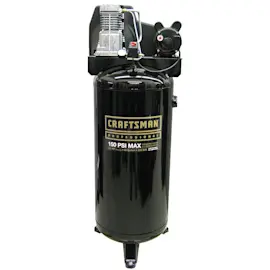
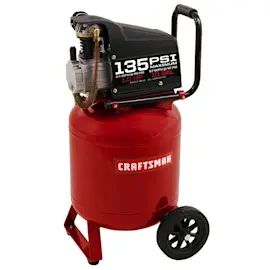
Owner’s manual

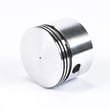

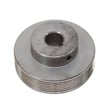
What is the most common cause of air compressor failure?
The most common cause of air compressor failure is poor maintenance that lets small problems (dirty intake filter, air leaks, loose belt, and out-of-spec fasteners) turn into overheating, overwork, and premature pump wear. On the Craftsman 919184192, even minor leaks can make the compressor overwork and break down sooner.
What fails first most often (and why)
These are the issues we see most often lead to “failure” symptoms like won’t start, won’t build pressure, or runs constantly:
- Air leaks at fittings/lines: leaks force longer run time and heat buildup.
- Restricted air intake filter: reduces airflow, lowers output, and increases pump stress.
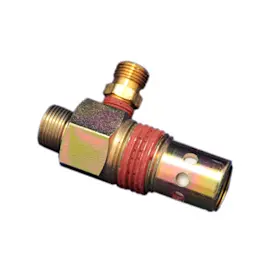
- Check valve problems: can cause constant leaking at the pressure switch release valve after shutoff.
- Loose belt or pulley alignment issues: reduces pumping efficiency and can damage components.
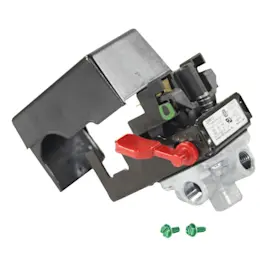
- Pressure switch issues: can prevent proper cut-out, leading to unsafe overpressure conditions.
Quick checks that prevent major breakdowns
Use these steps as a simple preventative routine (and follow the safety steps in the owner's manual before servicing):
- Turn the unit off, disconnect power, and bleed tank pressure before inspecting.
- Check fittings and connections with soapy water; tighten leaking fittings (do not overtighten).
- Inspect the intake filter; clean or replace if dirty.
- Listen for air leaking at the pressure switch release valve after shutdown; that often points to a check valve issue.
- Verify the belt and pulley alignment, then reinstall the belt guard.
Common “cause to symptom” map
| What’s happening | Most likely cause | What to do next |
|---|---|---|
| Runs but won’t build tank pressure | Air leaks, restricted intake, check valve restriction | Leak test, clean/replace filter, inspect check valve |
| Safety valve pops | Pressure switch not shutting off, cut-out set too high | Shut off immediately; service pressure switch |
| Constant leak after shutoff | Defective check valve seat | Clean/replace check valve |
| Low air to tools | Demand exceeds compressor output, leaks, dirty filter | Reduce demand, fix leaks, service filter |
Why it matters
Air compressors usually do not “suddenly fail”; they wear out faster when they overwork. The manual specifically notes that even minor leaks can cause overwork and premature breakdown, and it also calls out routine inspections (like checking for leaks and keeping fasteners properly torqued) to protect the pump and tank.
For step-by-step troubleshooting by symptom, use our DIY guide: air compressor won't start.
Last updated: February 2026
Is it worth it to repair a compressor?
Yes, it’s often worth repairing a Craftsman air compressor model 919184192 when the problem is a normal wear item (pressure switch, regulator, check valve, safety valve, seals) and the tank is sound. It’s not worth repairing if the air tank is leaking or damaged, because the tank must be replaced, not repaired.
Quick decision checklist
We use these points to decide repair vs. replace:
- Replace the compressor if the air tank leaks or leaks at welds; the manual says the tank must be replaced and the leak must not be repaired.
- Repair if the issue is a serviceable component (pressure switch not bleeding, check valve, regulator adjustment, safety valve that won’t reseat).
- Repair if the unit won’t start due to electrical supply issues (breaker/fuse, low voltage, extension cord problems).
- Replace if repeated failures keep happening and the pump is worn enough to need major rebuild work.
- Repair if the fix restores safe operation and the compressor meets your air demand (CFM at PSI) for your tools.
What the manual says about “don’t repair” situations
The biggest line in the sand is the tank. For this model, the manual warns that a weakened tank can rupture; it specifically says:
- If the air tank develops a leak, replace it immediately with a new air tank or replace the entire compressor.
- Never drill into, weld, or modify the air tank.
For safety and long-term value, we treat a leaking tank as a replacement decision. See the owner's manual for the exact wording and inspection guidance.
Repair vs. replace: cost and effort comparison
| Situation | Typical fix | Worth repairing? |
|---|---|---|
| Won’t start | Check power, pressure switch, check valve | Usually yes |
| Won’t build pressure | Leak check, valve/seal service, pump work | Often yes |
| Safety valve pops or leaks | Replace safety valve | Usually yes |
| Tank leaks or weld leaks | Replace tank or compressor | Replace compressor |
Why it matters
Air compressors store high-pressure air; a compromised tank or bypassed safety control is a serious hazard. Choosing repair only makes sense when it restores safe pressure control and reliable tank integrity.
Helpful DIY guidance
- Use our symptom guide: air compressor won't start
- If you’re considering major pump work: how to rebuild an air compressor pump
Last updated: February 2026
How to tell if an air compressor regulator is bad?
On a Craftsman 919184192 air compressor, a bad regulator shows up as unstable outlet pressure: the regulated PSI will creep up after you stop airflow, drop sharply when a tool is used, or you will hear constant leaking at the regulator area even with fittings tight. Use the tank gauge and your regulated gauge to confirm.
Quick checks that point to a bad regulator
- Pressure creep: set the regulator, stop using air, and watch the regulated gauge; PSI slowly rises.
- Pressure droop under load: PSI drops a lot when a tool is running, even though tank pressure is adequate.
- Won’t adjust smoothly: knob feels stuck, jumps, or changes pressure unpredictably.
- Constant hissing at the regulator body: leak continues after you rule out hose and fitting leaks.
- Tools act starved for air: nailers, blow guns, or impact tools run weak or inconsistent at the same setting.
Step-by-step test (safe and practical)
- Build tank pressure normally, then open the outlet valve and set the regulator to a typical working pressure.
- Run an air tool (or blow gun) and adjust the regulator while air is flowing; this is the correct way to set regulated pressure.
- Stop airflow and watch the regulated gauge for 1 to 3 minutes.
- If the regulated PSI creeps up or will not hold steady, the regulator is worn or contaminated.
Rule out other common causes first
Many “regulator problems” are actually leaks or control issues elsewhere.
- Check all quick-connects and fittings with soapy water; tighten snugly (do not over-tighten).
- If you hear air leaking at the pressure switch release area after shutdown, suspect the check valve.
- If the safety valve pops or tank pressure runs too high, the pressure switch control is the issue, not the regulator.
| Symptom you see | Most likely cause | What to do next |
|---|---|---|
| Regulated PSI rises after you stop using air | Regulator creep | Replace regulator or clean if serviceable |
| Regulated PSI drops slightly when tool runs | Normal | Adjust regulator under flow |
| Big PSI drop and weak tool performance | Air demand exceeds compressor output, restriction, or leak | Check hose size, filter, leaks |
Why it matters
A stable regulator protects tools and accessories from overpressure. Our manual also notes a regulator must be used for accessories rated below 175 PSI, and the regulator outlet pressure must stay under the tool’s maximum rating.
Related DIY help
Last updated: February 2026
What company makes Craftsman air compressors?
Craftsman air compressors are made by different manufacturers (OEMs) depending on the model and production era. For Craftsman model 919184192, the design and documentation align with the long-running Craftsman compressor platform that was commonly supplied through DeVilbiss Air Power for Sears; the most reliable way to confirm the exact OEM for your unit is by matching the model and spec details in the owner's manual.
How to identify who built your specific Craftsman 919184192
We use the model number, data plate, and parts breakdown to identify the original manufacturer behind a Craftsman-branded compressor.
- Check the data plate for the full model and any additional code (often near the tank or motor)
- Compare the specification chart and feature descriptions in the manual to your unit
- Look for the manual’s platform identifiers (formatting, safety sections, and parts layout)
- Use the compressor type details (oil-lube, single stage, vertical stationary) to narrow the OEM family
- Match key components on your unit (pressure switch style, regulator layout, gauge arrangement)
What “Craftsman” means for manufacturing
Craftsman is a brand; the actual compressor can be produced by different OEMs over time. That is why two Craftsman air compressors can look and service differently even if they share similar tank size or PSI ratings.
Common OEM patterns (general guidance)
| What you have | What it usually indicates | Why it helps |
|---|---|---|
| Same Craftsman brand, different model numbers | Different OEMs across years | Parts and manuals vary by model |
| Oil-lube vs. oil-free pump | Different pump families | Maintenance and rebuild steps differ |
| Stationary vertical tank design | Shop compressor platform | Often uses heavier-duty components |
Why it matters
Knowing the OEM behind your Craftsman 919184192 helps you choose the right repair approach (pressure switch setup, check valve style, pump rebuild method) and prevents ordering mismatched parts.
Related troubleshooting and repair help
If you are diagnosing a problem while you identify the platform, these guides help narrow the system involved:
- Air compressor won't start
- Air compressor won't build tank pressure
- How to replace an air compressor pressure switch
Last updated: February 2026
What are the 4 types of compressors?
The four common compressor types are reciprocating (piston), rotary screw, centrifugal, and axial. Your Craftsman air compressor model 919184192 is a shop-style unit that uses a positive-displacement design (most often reciprocating) to build tank pressure for tools and accessories; see the owner's manual for your model’s operating and safety details.
The 4 compressor types (what they are best for)
- Reciprocating (piston): Uses a piston and cylinder to compress air; common for home garages and intermittent use.
- Rotary screw: Uses two meshing screws for continuous airflow; common in commercial shops and industrial duty.
- Centrifugal: Uses a high-speed impeller to move air and build pressure; best for large-volume industrial systems.
- Axial: Uses rotating blades (like a turbine) to compress air in stages; used in specialized high-flow applications.
Quick comparison
| Type | How it compresses air | Typical use case | Strength | Tradeoff |
|---|---|---|---|---|
| Reciprocating | Piston in a cylinder | DIY, small shop | Higher pressure capability, simple design | Louder, more vibration |
| Rotary screw | Twin screws | Continuous shop air | Smooth, steady output | Higher upfront cost |
| Centrifugal | Impeller | Large plants | High flow efficiency | Not ideal for small demand |
| Axial | Blade stages | Specialized systems | Very high flow | Complex, niche |
Why it matters when choosing parts and troubleshooting
Knowing the compressor type helps narrow likely causes when performance changes:
- Won’t start: electrical supply, pressure switch, motor, or unloader-related issues
- Won’t build tank pressure: pump wear, valve issues, leaks, or restrictions
- Can’t adjust output pressure: regulator or downstream restriction (some regulators are sold separately)
- Gauge readings seem wrong: tank pressure gauge or related fittings
For model 919184192, follow the safety and maintenance practices in the owner's manual, including proper ventilation and routine tank draining after use to reduce internal corrosion.
Last updated: February 2026