Error Codes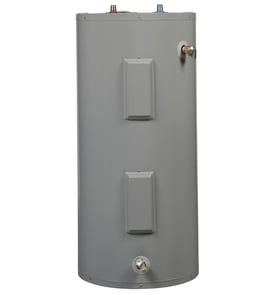



What is the life expectancy of an A. O. Smith electric water heater?
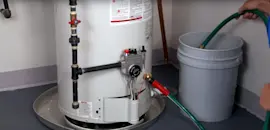
Most A. O. Smith electric water heaters have a typical life expectancy of 10 to 12 years. With consistent maintenance (especially flushing and anode-rod checks), many units reach 12 to 15 years; neglected maintenance and hard water shorten service life.
- Water quality: hard water accelerates scale buildup on the heating element.
- Maintenance frequency: regular tank flushing reduces sediment.
- Anode rod condition: a depleted anode speeds up tank corrosion.
- Temperature setting: higher setpoints increase stress and scale.
- Usage level: heavy daily demand increases cycling and wear.
For Ao Smith model EES80T913, these common replacement parts help you keep the tank protected and operating efficiently:
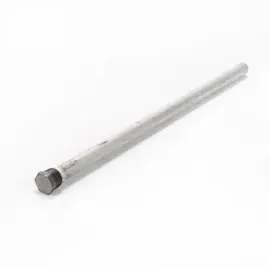
- Inspect and replace the anode rod 100109434 when it is heavily worn.
- If you see corrosion protection issues or want an alternate material option, check the anode,alum 100109594.
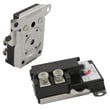
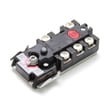
- If overheating or inconsistent temperature is an issue, a failing thermostat is a common cause; match your heater to the correct thermostat 100109846 or thermostat 100110039.
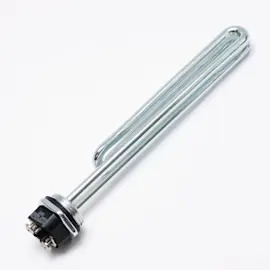
- If recovery is slow or you have no hot water, a scaled or failed heating element is a frequent culprit; consider the element 100110051 or element 100108960.
| What you notice | Most likely issue | What we typically do |
|---|---|---|
| Hot water runs out fast | Sediment, element not heating fully | Flush tank; test/replace element |
| Water temp swings | Thermostat drifting | Test and replace thermostat |
| Rusty water or metallic smell | Anode depleted, tank corrosion starting | Inspect/replace anode rod |
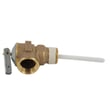
| Dripping from discharge pipe | T&P valve weeping or pressure/temp issue | Evaluate and replace T&P valve if needed |
Once the tank itself corrodes through, repairs are no longer cost-effective. Replacing wear items like the anode rod and keeping sediment under control is what most often separates a 10-year heater from a 15-year heater.
Last updated: February 2026
Why are 80-gallon water heaters discontinued?
Many 80-gallon residential water heaters were phased out or became harder to find because newer energy-efficiency standards pushed manufacturers toward designs with lower standby heat loss (often requiring more insulation and different tank designs). In practice, that shifted the market toward heat pump (hybrid) units, different “high recovery” options, or fewer standard electric-resistance 80-gallon models.
When efficiency rules tighten, manufacturers typically respond by changing the product mix rather than keeping every older size and style.
- More insulation can make comparable-capacity tanks physically larger
- Some 80-gallon “standard” electric models became less common than 50 to 65 gallon sizes
- Many households are steered toward hybrid heat pump water heaters for large capacity needs
- Availability varies by region and by what distributors stock
- Replacement often requires checking electrical requirements and clearance, not just gallons
Here are the most common directions we see customers take when replacing an older 80-gallon unit like Ao Smith model EES80T913.
| Replacement approach | Best for | What to double-check |
|---|---|---|
| 65-gallon standard electric | Moderate demand homes | First-hour rating, recovery rate |
| 80-gallon hybrid (heat pump) | High demand, efficiency focus | Height/diameter, airflow/space |
| High-recovery electric (smaller tank) | Limited space | Element wattage, breaker size |
| Two smaller tanks (series/parallel) | Very high demand | Plumbing layout, space, cost |
Gallons alone do not tell you how much hot water you will actually get. Recovery rate, element wattage, and standby losses can make a smaller tank perform similarly to an older, less efficient 80-gallon model.
If your EES80T913 is still serviceable, replacing key wear items can extend performance and safety:
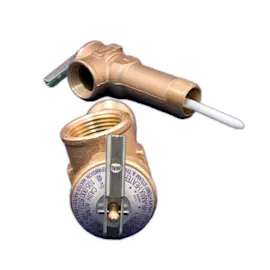
- Replace a leaking or weeping relief valve with the t & p valve 100108279
- Reduce odor and slow tank corrosion by checking the anode rod 100109434
- Address inconsistent temperature by testing/replacing a thermostat 100109846
- Restore heating performance by replacing a failed element 100110051
Last updated: February 2026
What is the most common issue with tankless water heaters?
On an Ao Smith EES80T913 electric water heater (a tank-style unit), the most common hot-water complaint is not a tankless “heat exchanger scaling” problem; it is reduced heating from a failed heating element or a thermostat issue. Checking the elements and thermostats restores normal recovery.
- Hot water runs out faster than normal
- Water is lukewarm even with the temperature set higher
- Recovery is slow after showers or laundry
- Breaker trips or you smell hot wiring near the access panel
- Popping or rumbling sounds (sediment on the tank bottom)
- Burned-out heating element: One element fails and the tank can’t keep up; replace the correct element for your model.
- Thermostat not regulating: A thermostat can stick open/closed and cause lukewarm water or overheating; replace the failed thermostat.
- Sediment buildup: Insulates the lower element and reduces efficiency; flush the tank.
- Safety valve leaking: A leaking relief valve can indicate overheating or pressure issues; replace the valve if it won’t reseat.
| Symptom | Most likely cause | Part commonly involved |
|---|---|---|
| Lukewarm water, fast runout | Upper or lower element failed | Element 100110051 or lo element 100108954 |
| Temperature swings or too hot | Thermostat issue | Thermostat 100109846 |
| Dripping from discharge pipe | Relief valve not sealing | T & p valve 100108279 |
A weak element or faulty thermostat forces longer run times, increases energy use, and can lead to nuisance breaker trips. Fixing the heating circuit parts keeps recovery time and water temperature consistent.
Last updated: February 2026