Owner’s manual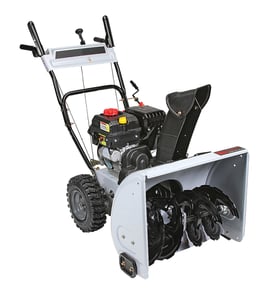



How to find snowblower model number?
For Craftsman snow thrower model 536884811, we find the model and serial number on a decal attached to the rear of the snow thrower housing. Your engine also has its own model number, typically found on the blower housing; you may need both when ordering parts or looking up service info in the owner's manual.
Where to look on this Craftsman snow thrower
Check these common spots first:
- Rear of the snow thrower housing (model and serial decal)
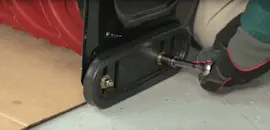
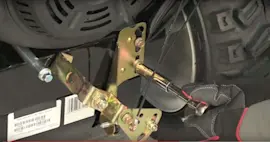
- Motor mount frame (model number location is also referenced for ordering parts)
- Engine blower housing (engine model number location)
- Areas that collect snow and grime; wipe the surface clean to reveal the label
Quick steps to locate and record the number
- Shut the machine off and let all moving parts stop
- Disconnect the spark plug wire before reaching near belts, pulleys, or the auger area
- Use a flashlight and wipe the label area with a dry rag
- Write down the full model number and serial number exactly as shown
- If you are ordering engine-related parts, record the engine model number too
What numbers you may see (and why they matter)
| Number type | Example for this unit | Used for |
|---|---|---|
| Snow thrower model number | 536884811 | Looking up diagrams, parts lists, and adjustments |
| Snow thrower serial number | Varies by unit | Identifying production run details |
| Engine model number | 143.804072 | Engine-specific parts and service references |
Why it matters
Using the correct model number helps us match the right Craftsman 23 inch snow blower parts (like belts, pulleys, bearings, and decals) to your exact build so you avoid ordering a similar-looking part that does not fit.
Last updated: February 2026
Is sae 30 the same as 5W30 for snowblower?
No. SAE 30 and 5W-30 are different oils; for Craftsman snow thrower model 536884811, our owner’s manual specifies SAE 10W-30 and notes that SAE 5W-30 can be used to make cold starting easier when temperatures are consistently 20°F or lower (SAE 30 is thicker in cold weather and can make starting harder). See the owner's manual.
What the numbers mean (quick comparison)
SAE 30 is a single-viscosity oil; 5W-30 is a multi-viscosity oil designed to flow better when cold.
| Oil type | Cold-start flow | Warm running protection | Best use in a snowblower |
|---|---|---|---|
| SAE 30 | Poor in cold temps | Good when warm | Mild weather only; not ideal for winter starts |
| 5W-30 | Very good | Good | Cold weather operation; easier starting |
| 10W-30 | Good | Good | General use; matches the manual’s primary recommendation |
What we recommend for model 536884811
Use the oil weight the manual calls for, then adjust for temperature:
- Use SAE 10W-30 for typical winter conditions.
- Use SAE 5W-30 when you need easier starting in 20°F and below.
- Avoid SAE 30 for cold-weather snow removal because it can crank slowly and delay lubrication at startup.
- Fill to the FULL mark on the dipstick; do not overfill.
- Change oil after the first 2 hours of operation, then about every 25 hours or at least once per year.
Why it matters
Oil that is too thick at startup increases pull-start or electric-start strain and slows oil flow to internal engine parts. Using the correct viscosity helps the engine start easier and reduces wear during the first minutes of operation.
Last updated: February 2026
Is it cheaper to repair or replace a snowblower?
It’s cheaper to repair your Craftsman 536884811 snowblower when the fix is a normal wear item (belt, shear pin, spark plug) and the total repair cost stays under about half the price of a comparable new machine. Replace it when major drivetrain or engine repairs stack up or reliability becomes a recurring problem.
Quick decision checklist
- Repair when the problem is isolated (noises, slipping drive, won’t throw snow) and parts are readily available.
- Repair when the machine is structurally solid (no severe rust-through, bent auger housing, or damaged frame).
- Replace when the engine has low compression, heavy smoking, or repeated no-start issues after tune-ups.
- Replace when the drive system needs multiple major components at once (friction drive, bearings, gears).
- Replace when you’ve had frequent breakdowns in the last 1 to 2 seasons.
- Always stop the engine and disconnect the spark plug wire before inspections or repairs (per the owner's manual).
Typical repairs that are usually worth doing
Many “won’t move” or “won’t throw” complaints on this style of snowblower come down to wear parts and adjustments.
| Symptom | Common cause | Typical path forward |
|---|---|---|
| Auger won’t spin or won’t throw snow | Worn/damaged auger drive belt | Inspect belt condition and belt guides; replace belt if cracked or stretched |
| Unit won’t move forward | Worn friction wheel or linkage out of adjustment | Inspect friction wheel and adjust linkage; replace friction wheel if worn |
| Squealing or slipping under load | Idler pulley wear or belt tension issue | Check pulley bearing and belt tension; replace pulley if noisy or rough |
If you’re chasing belt slip or poor engagement, the belt routing and service steps in the owner's manual are the best starting point.
Parts that can tip the scale toward “repair”
If the rest of the machine is in good shape, replacing a few common wear components is usually cost-effective.
- Idler pulley 1502120MA (helps maintain belt tension)
- Clutch cable 1579MA (restores proper engagement if stretched or damaged)
- Shear pins, belts, and routine maintenance items (often inexpensive compared to replacement)
Why it matters
A snowblower that vibrates abnormally or repeatedly clogs can signal a developing mechanical issue. Addressing wear parts early helps prevent secondary damage to pulleys, bearings, and the drive system, and it keeps the machine safer to operate.
Last updated: February 2026
Should I spray my snowblower with WD-40?
Yes, you can lightly spray a water-displacing lubricant on the chute and auger housing of your Craftsman 536884811 23-inch snow blower to help reduce snow sticking; keep it off belts, friction-drive parts, and the engine. For off-season protection, the manual also recommends coating bare metal with a rust preventative. See the owner's manual.
Where spraying helps (and where it causes problems)
Use a light coat only on slick, non-drive surfaces; avoid anything that needs friction to work.
- OK areas: inside the discharge chute, chute deflector, auger housing (bare metal)
- Avoid: belts, pulleys, friction wheel/disc area, tires, and any braking surfaces
- Avoid: hot muffler/exhaust area and electrical connections
- Do not spray: directly into the engine or carburetor area
- Wipe overspray: to prevent drips onto the floor and to reduce dirt buildup
Best timing: during use vs. end-of-season
Our guidance depends on what you are trying to accomplish.
| Goal | What to do | Notes |
|---|---|---|
| Reduce chute clogging while blowing | Apply a very light coat to the chute interior before starting | Reapply only if sticking returns; too much attracts grit |
| Prevent rust during storage | Clean, dry, then coat bare metal with a rust preventative spray | Matches the manual’s storage guidance |
| Remove packed snow/ice after use | Let engine idle briefly, then clean off snow and debris | Keep hands out of chute; use a tool |
Quick after-use routine we recommend
The manual calls out steps that help prevent corrosion and freeze-ups.
- Release the auger and traction levers
- Move throttle to STOP, remove the ignition key
- Disconnect the spark plug wire before cleaning
- Let the engine idle a few minutes to melt accumulated ice
- Remove snow, ice, and debris; flush off salt if possible; dry the unit
Why it matters
On a friction-drive snow blower like the Craftsman 536884811, traction depends on clean, dry friction surfaces. Spraying lubricants where friction is required can cause slipping, poor drive performance, and faster wear, even if it helps snow slide through the chute.
Last updated: February 2026
How to tell year of Craftsman snowblower by serial number?
For Craftsman model 536884811, the build year is determined by decoding the serial number date code on the ID tag, not the model number. Craftsman serial formats vary by manufacturer; use the decoding steps in the 536884811 owner's manual to match your tag style and identify the year.
Step 1: Find the ID tag and write down the serial number
Use the model and serial tag on the machine (not the engine label). Record the full serial exactly as shown.
- Look for a sticker or riveted plate on the chassis or frame
- Check near the handle support area and rear frame
- Check the auger housing side panels
- Clean off snow, oil, and grime so every character is readable
Step 2: Match your serial number to the correct Craftsman date-code style
Craftsman used more than one serial format; the tag layout tells you which decoding pattern to use.
- Character-based Craftsman code (common on older units):
- 1st character: product type
- next characters: month and day code
- 5th character: year within the decade
- MTD-style date code (often starts with a letter):
- 1st character (letter): month (A = Jan through L = Dec)
- next 2 digits: day of month
- next digit: year within the decade
How to convert the “year within the decade” into a full year
A single digit gives the last digit of the year; you confirm the decade by the machine’s era and parts style.
| Year digit in serial | Full-year examples |
|---|---|
| 1 | 2001 or 2011 |
| 4 | 2004 or 2014 |
| 9 | 2009 or 2019 |
Why it matters
The correct year helps us match the right diagrams and running changes for your 536884811, which prevents ordering the wrong drive or auger components (for example, the clutch cable 1579MA or idler pulley 1502120MA).
Last updated: February 2026