Owner’s manual
 Error Codes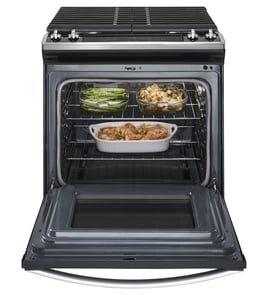


How long should a Kenmore gas stove last?
A Kenmore gas range like model 36275501990 typically lasts 15 years with normal household use. Keeping burners lighting correctly, maintaining steady gas pressure, and cleaning spills promptly helps the oven and surface burners heat reliably for the long haul.
Most gas ranges reach their full service life when heat, ignition, and gas flow stay consistent.
- Heavy daily cooking shortens lifespan faster than occasional use
- Poor flame quality (yellow flames) signals a combustion issue that accelerates wear
- Power outages matter on electric-ignition models because the oven cannot operate without power
- Grease and spills that bake onto surfaces can damage finishes and clog burner ports
- Loose or damaged wiring can cause intermittent ignition and control problems
Use your 36275501990 owner's manual for the correct operating and safety steps, especially around ignition and flame appearance.
- Surface burners should light within about 4 seconds after air is purged from the gas line
- Natural gas flames should look soft blue; LP gas can show yellow tips on outer cones
- If the oven takes too long to ignite (often 30 to 90 seconds is normal), watch for worsening delays
- Keep burner heads and ports clean so gas flow stays even
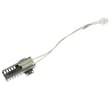
- If the oven will not ignite, a common wear item is the igniter; the bake burner ignition WB13X40208 is one model-matched option
| Item | Normal behavior | What to do if it is not normal |
|---|---|---|
| Surface burner ignition | Lights quickly after turning to LITE | Clean burner ports; check spark and wiring |
| Flame color | Soft blue (natural gas) | Service if flames are yellow |
| Oven ignition | Ignites after a short delay, then cycles | Check igniter and gas flow |
A range that lights quickly and burns with the correct flame pattern runs cooler at the controls, heats more evenly, and avoids repeated ignition cycling that wears parts like igniters, valves, and wiring.
Last updated: February 2026
Does Kenmore make gas ranges?
Yes. Kenmore sells gas ranges, including the Kenmore 36275501990 gas range, which is designed and certified as a gas cooking appliance and uses standard gas-range installation and safety requirements. For model-specific operation and safety details, use the 36275501990 owner's manual.
Kenmore is the brand on the appliance; the range itself is a full-size household gas range that must be installed, grounded (for electric ignition models), and serviced using standard gas-appliance practices.
- Gas ranges must be installed by a qualified installer.
- The range must be correctly adjusted for the type of gas used (natural gas or LP).
- LP conversion must be performed by a qualified LP installer.
- Anti-tip hardware must be installed to reduce tip-over risk.
- Know the location of the gas shut-off valve before you need it.
Exact features vary by model, but most Kenmore gas ranges include a gas cooktop and a gas oven (bake and often broil), with either electric ignition or standing pilots depending on the design.
| Feature area | What you may have | Why it matters |
|---|---|---|
| Ignition | Electric ignition or standing pilot | Affects troubleshooting and power needs |
| Gas type | Natural gas or LP (convertible) | Correct setup prevents poor performance |
| Safety | Anti-tip bracket/device | Helps prevent tip-over injuries |
Knowing Kenmore makes gas ranges helps when you are ordering parts and following the correct safety steps for gas appliances. For example, if the oven will not ignite, a common repair path is checking the igniter circuit and replacing the igniter when needed, such as the bake burner ignition WB13X40208 for this model.
Last updated: February 2026
How to remove the top of a Kenmore gas range?
To remove the cooktop top on Kenmore gas range model 36275501990, we start by making the range safe (burner controls OFF and grates fully cool), then lift off the grates and burner pieces; depending on the configuration, we remove a few mounting screws so the cooktop can lift up or come off for service.
- Turn all surface burner knobs to OFF.
- Make sure all grates are cool before lifting them.
- If you smell gas, turn off the gas supply and stop.
- Keep items off the cooktop; hot vent air can ignite flammables.
- If you need to access wiring, unplug the range or shut off power at the breaker.
For model-specific cautions and diagrams, follow the 36275501990 owner's manual.
- Remove the grates and set them aside.
- Remove burner caps (lift straight up).
- Remove burner heads/bases if your version uses removable bases; some are held by screws.
- Look for mounting screws at the front lip (under the control area) or near burner openings; remove them.
- Lift the cooktop:
- Many gas ranges lift from the front and hinge up.
- Others lift up and then slide forward to release tabs.
- Support the top safely (do not strain gas tubing or wiring).
| Item | Usually tool-free? | Why it matters |
|---|---|---|
| Grates | Yes | Exposes burner area and fasteners |
| Burner caps | Yes | Allows burner head removal |
| Burner heads/bases | Sometimes | Accesses cooktop screws and brackets |
| Cooktop mounting screws | No | Releases the cooktop top |
If the oven or surface ignition is acting up, cooktop access is often needed to inspect wiring, switches, and spark components. For oven bake ignition symptoms (no glow/spark, delayed ignition, weak ignition), the bake burner ignition WB13X40208 is a common service part for this model’s parts list.
Removing the cooktop correctly prevents bent burner tubes, pinched igniter wires, and gas leaks. It also makes cleaning and troubleshooting (burner ignition, burner flame quality, control access) faster and safer.
Last updated: February 2026
How to change Kenmore spark electrode igniter?
On Kenmore gas range model 36275501990, replacing a surface-burner spark electrode (igniter) means shutting off power, lifting off the grate and burner parts, swapping the electrode lead, then reinstalling the burner head so the electrode opening lines up for reliable sparking. See the 36275501990 owner's manual for burner-part removal and safety notes.
- Turn all burner knobs to OFF.
- Disconnect electrical power at the breaker or unplug the range (spark ignition is electric).
- Let the cooktop cool completely.
- Do not work on one burner while another burner is set to LITE (all burners can spark).
- If you smell gas at any time, stop and ventilate the area.
- Remove the grate.
- Lift off the burner cap and burner head (and drip pan if your range uses them).
- Locate the electrode; it sits next to the burner and is exposed when the burner head is removed.
- Remove the mounting screw or retainer holding the electrode.
- Disconnect the wire from the old electrode.
- Connect the wire to the new electrode terminal; make sure the connector is fully seated.
- Reinstall the electrode and secure it.
- Reinstall burner parts in the same position and size location.
- Restore power and test ignition.
- Make sure the burner head is seated correctly and the small hole near the electrode is not clogged.
- Dry the burner head fully after cleaning; moisture can prevent ignition.
- Confirm the electrode tip is not cracked and is positioned close to the burner.
- If clicking happens but no flame, clean the burner ports and verify gas supply is on.
| Symptom | What it usually means | What to do |
|---|---|---|
| Clicking and burner lights | Normal operation | Adjust flame after ignition |
| Clicking but no flame | Misaligned/dirty burner head or no gas | Reseat/clean, confirm gas on |
| No clicking | No power or failed ignition circuit | Restore power, inspect wiring |
Correct electrode placement and burner-head alignment prevent delayed ignition, uneven flames, and repeated clicking, which helps your Kenmore range heat predictably and safely.
Last updated: February 2026