Installation guide
 Owner’s manual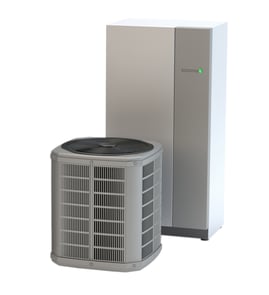



How much is a combined heating and cooling system?
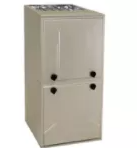
A combined heating and cooling system like the Payne PY1PJB048090AAAA packaged gas heat and electric cooling unit typically costs $10,000 to $20,000 installed. Your final price depends on unit capacity, ductwork condition, and whether gas, electrical, flue, and condensate connections need updates.
What drives the installed price
Installed pricing includes equipment plus job-site labor and materials. The biggest cost factors usually include:
- Unit capacity and airflow setup (CFM and static pressure targets)
- Ductwork repairs, sealing, or resizing
- Electrical disconnects, wiring, and control troubleshooting
- Gas piping, shutoff valve, and leak testing
- Flue/venting and condensate drain changes
- Permits, startup checks, and commissioning
Typical cost breakdown
Most packaged-unit installs follow a similar split:
| Cost area | What it covers | Typical share |
|---|---|---|
| Equipment | Packaged unit and any curb/adapter needs | 40% to 60% |
| Labor | Removal, setting unit, duct tie-in, wiring, gas, drain | 25% to 45% |
| Extras | Duct/electrical/venting updates, permits, disposal | 5% to 25% |
Model-specific details that affect sizing and cost
The PY1PJB048090AAAA documentation includes airflow and pressure-drop information by unit size; correct airflow setup affects comfort, efficiency, and noise, and it can add labor if duct restrictions must be corrected. Use the commissioning and maintenance sections in the installation guide when planning sizing and startup.
Why it matters
A packaged heating and cooling unit performs best when airflow, gas input, electrical connections, and condensate drainage are set correctly. That reduces nuisance shutdowns and helps protect major components like the heat exchanger and blower.
If you are budgeting for repairs instead of replacement
Many “no heat” or “no cool” problems are repairable. Common service items on packaged units include:
- Control board issues (see circ board LH33WP003)
- Gas heat control problems (see gas valve EF32CW035)
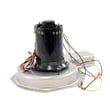
- Air movement problems (see blower assembly 48GS400649)
Last updated: February 2026
Is it cheaper to repair or replace HVAC parts?
For a Payne PY1PJB048090AAAA central package unit, it’s cheaper to repair when the problem is isolated (like a failed electrical control or airflow issue) and the rest of the system is in good condition. Replacement makes more financial sense when major components fail repeatedly or repair costs climb close to the cost of a new unit.
A practical way to decide (repair vs replace)
Use these checkpoints to make a clear call:
- System age: If the unit is 10 to 15 years old or more, replacement usually wins on long-term value.
- Repair size: If a single repair is around 50% or more of the installed cost of a new unit, replacement is typically the better investment.
- Repeat failures: Multiple breakdowns in a season (especially compressor, heat exchanger, or control issues) point toward replacement.
- Efficiency and comfort: If energy bills are climbing and comfort is inconsistent, newer equipment often pays back faster.
- Service safety: Package units involve system pressure and electrical components; beyond basic coil and filter cleaning, repairs should be handled by trained service personnel (see the installation guide).
What “repair” commonly looks like on this model
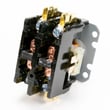
The troubleshooting chart for this unit calls out common “no cool” or “won’t start” causes such as blown fuses/breakers, thermostat issues, incorrect wiring, low line voltage, and defective controls (including a contactor).
Common repair-type parts you may see for this model include:
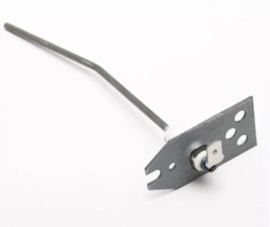
- Circ board LH33WP003 (control board that manages unit operation)
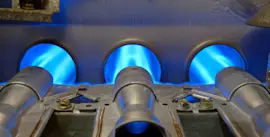
- Gas valve EF32CW035 (controls gas flow to the burners during heat)
- Filter replacement and coil cleaning (maintenance items)
When replacement is usually the smarter spend
Replacement is usually the better choice when the failure is expensive and central to heating or cooling performance.
| Situation | Usually cheaper | Why |
|---|---|---|
| Blown fuse, wiring issue, failed control | Repair | Lower parts and labor cost; quick restore |
| Control problems happening repeatedly | Replace (often) | Costs add up; reliability drops |
| Heat exchanger damage or major gas heat problems | Replace (often) | High labor, high part cost, long downtime |
| Compressor or refrigerant system restrictions/leaks | Replace (often) | Labor-intensive; can cascade into more repairs |
Why it matters
A “cheap” repair becomes expensive when it doesn’t fix the root cause (for example, low airflow causing icing, or wiring issues causing repeated trips). Using the troubleshooting steps and wiring guidance in the installation guide helps ensure the repair is complete.
Last updated: February 2026
What is an AC with both cooling and heating called?
An AC that provides both cooling and heating is typically called a combined heating and cooling system. For Payne model PY1PJB048090AAAA, it is a packaged gas heat/electric cooling unit (a central package unit designed for year-round comfort). See the PY1PJB048090AAAA owner's manual for operating and safety details.
What it’s called for this Payne model
This PY1PJB048090AAAA central package unit combines the heating section and the air conditioning section in one outdoor cabinet.
- Heating: gas heat section operates when the thermostat calls for heat
- Cooling: electric cooling runs when the thermostat calls for cooling
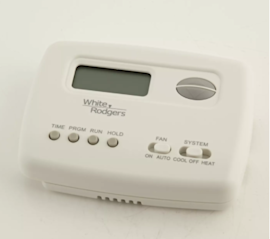
- Controls: thermostat SYSTEM or MODE and FAN settings determine operation
Common terms and how they differ
| Term | What it usually means | Typical setup |
|---|---|---|
| Packaged heating and cooling unit | Heat and AC in one cabinet | Often gas heat + electric cooling |
| Gas/electric package unit | Gas heat section plus electric AC | Common for packaged rooftop or ground units |
| Heat pump | Heats and cools by reversing the refrigeration cycle | Electric; uses a reversing valve |
Why it matters
Using the correct term helps you match the right thermostat type and understand what components should run in each mode (for example, cooling typically energizes a contactor and blower circuit).
Helpful next steps
- Set thermostat SYSTEM/MODE to COOL for air conditioning or HEAT for heating.
- Use AUTO fan for normal operation; use ON only for continuous airflow.
- If you have an auto-changeover thermostat, it can switch between heating and cooling automatically based on setpoints.
- For sequence-of-operation details (what should turn on and in what order), use the PY1PJB048090AAAA installation guide.
Last updated: February 2026
What is the 20 rule for air conditioners?
The “20-degree rule” is a rule of thumb for temperature split (Delta T): in cooling mode, many systems deliver supply air about 15 to 20°F cooler than the return air. On very hot days, longer run times on your Payne PY1PJB048090AAAA package unit can be normal (see the owner's manual).
What the “20-degree rule” actually means
We use “20 degrees” to describe the temperature drop across the indoor coil, not a promise that your home will always be 20°F cooler than outdoors.
- Measure return air temperature at the return grille or filter area.
- Measure supply air temperature at a nearby supply register.
- Normal cooling often shows a 15 to 20°F drop after the system has run 10 to 15 minutes.
- A small drop usually points to low airflow, a dirty filter, or a cooling-system problem.
- A large drop can also signal restricted airflow and can lead to coil icing.
Quick check: indoor temperature split
| Return air (°F) | Supply air (°F) | Split | What it suggests |
|---|---|---|---|
| 75 | 55 to 60 | 15 to 20°F | Often normal |
| 75 | 68 to 72 | 3 to 7°F | Airflow or cooling performance issue |
| 75 | 50 to 55 | 20 to 25°F | Possible low airflow, icing risk |
Why outdoor temperature is not a fixed “20°F” target
Outdoor heat mainly affects how long the unit runs. The manual notes that on extremely hot days the system may run longer and have shorter off cycles while still operating correctly (see the owner's manual).
What to do if cooling performance seems weak
- Replace or clean the air filter (filter sizing is listed by unit size in the manual).
- Confirm supply registers are open and returns are not blocked.
- Set thermostat to COOL and FAN = AUTO.
- Keep airflow clear around the outdoor coil section.
- If the outdoor section will not start or you hear rapid clicking, check the control circuit; a common repair part is the circ board LH33WP003.
Why it matters
Using temperature split helps you quickly judge whether the system is moving enough air and removing heat effectively, which prevents comfort problems and unnecessary wear.
Last updated: February 2026