Error Codes



How to find model number on Kenmore electric stove?
For a Kenmore electric range like model 91193712020, the model number is printed on a rating label on the appliance body, not on removable parts. Check the door frame area first, then the storage drawer opening, and finally the back panel near the vent.
Where to look on a Kenmore 91193712020 range
Check these common label locations in order:
- Oven door jamb: open the oven door and look along the frame (left or right side).
- Storage drawer area: pull the bottom drawer out and look on the frame behind it.
- Back of the range: look near the upper back panel and vent area.
- Side frame: sometimes the label is on a side panel edge (visible with the door open).
Tips to read the label correctly
The label usually includes several identifiers; use the model number for parts lookup.
- Write it exactly as shown (letters and numbers).
- Also note the serial number (helpful for date and production variations).
- If the label is greasy, wipe gently with a damp cloth and a drop of dish soap.
- If it is faded, use a flashlight at an angle to make the print easier to see.
Model number vs. part numbers (quick comparison)
| What you’re looking at | What it’s used for | Example from this model page |
|---|---|---|
| Model number label | Identifies the exact range version | 91193712020 |
| Part ID / part number | Identifies a replaceable component | Range oven light bulb 40A15 |
Why it matters
Kenmore ranges often have multiple versions that look the same. Using the exact model number helps us match the correct bake element, terminal block, surface element, drip pan, and other range parts the first time.
Last updated: February 2026
What are the two most common problems that may occur in an electric stove?
For the Kenmore 91193712020 electric range, the two most common problems we see are (1) a surface burner that will not heat or heats inconsistently and (2) oven heating problems such as no bake or weak broil. These issues usually trace back to a failed heating element, a worn control switch, or a loose/burned electrical connection.
Problem 1: Surface burner not heating (or only heats sometimes)
Most often, the failure is in the burner circuit: the coil element, the receptacle/connection, or the infinite switch behind the knob.
What to check first (quick triage):
- Swap the coil element with another same-size burner to see if the problem follows the element.
- Inspect the burner prongs and receptacle for pitting, discoloration, or looseness.
- If the burner stays on high only or will not shut off, suspect the control switch.
- If you see heat damage at the power cord connection area, inspect the terminal block.
- If multiple burners act up, verify the range has proper power at the outlet/breaker.
Problem 2: Oven not heating correctly (no bake, weak bake, or no broil)
Electric ovens rely on separate heating elements for bake and broil. If one element fails, you can get slow preheat, uneven baking, or no heat in that mode.
Common symptoms and likely causes:
- No bake but broil works: failed bake element (often visibly blistered or broken).
- No broil but bake works: failed broil element.
- Oven heats but food cooks unevenly: weak element, poor connection, or heat loss from damaged insulation.
Parts that commonly solve these problems (for model 91193712020)
| Symptom | Most likely part area | Example part for this model |
|---|---|---|
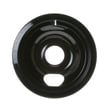
| Surface burner dead/intermittent | Coil element or receptacle | Range coil surface element, 6-in WB30T10076 |
| Burner stuck on high or will not shut off | Surface element control switch | Range surface element control switch, 1,500-watt WB24T10029 |
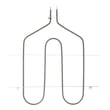
| No bake | Bake element | G.e. range bake element WB44T10010 |
| No broil | Broil element | Range broil element WB44T10009 |
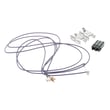
| Burning smell at cord area, power issues | Power connection | Terminal block WB17T10006 |
Why it matters
Heating and control problems can overheat cookware, damage wiring, and cause poor cooking results. Catching a failing element or switch early helps prevent burned connectors and more expensive electrical repairs.
Last updated: February 2026
What is the code F3 on a Kenmore oven?
On the Kenmore 91193712020 electric range, the F3 (sometimes shown as F30 or F31) error code points to an oven temperature sensing problem; most often the oven temperature sensor circuit is open or shorted, or the wiring connection to the control is failing.
What to do first (safe, quick checks)
- Press Cancel/Off to clear the code; if it returns immediately, treat it as an active fault.
- Turn power off at the breaker for 1 minute, then restore power and retest.
- If the oven was just cleaned or moved, check for a pinched wire harness behind the range.
- If the oven overheated before the code appeared, let it cool fully and try again.
- If you smell burning insulation or see arcing, keep power off and schedule service.
What usually causes F3
In most electric ranges, F3-family codes are triggered when the control reads an out-of-range signal from the temperature sensor circuit.
| Likely cause | What you’ll notice | Typical fix |
|---|---|---|
| Failed oven temperature sensor/probe | F3 returns during preheat or shortly after start | Replace sensor (model-specific part) |
| Loose or corroded connector | Intermittent F3, oven may work sometimes | Reseat/repair connector |
| Damaged wiring harness | F3 after moving range, door hinge work, or heat damage | Repair/replace wiring |
| Electronic oven control issue | Sensor tests good but F3 persists | Control diagnosis/replacement |
Related parts that may come up during diagnosis
These parts are commonly involved in “no heat” complaints that can be confused with an F3 sensor fault (they do not directly fix an F3 sensor circuit issue, but they are often checked during troubleshooting):
- G.e. range bake element WB44T10010 (if the oven will not bake)
- Range broil element WB44T10009 (if broil will not heat)
- Terminal block WB17T10006 (if the range has power issues at the cord connection)
Why it matters
When the control cannot trust the temperature sensor signal, it may shut the oven down to prevent unsafe heating and inaccurate cooking temperatures. Fixing the sensor circuit restores normal preheat, baking performance, and temperature control.
Last updated: February 2026
Are electric ovens worth repairing?
Yes, electric ovens are usually worth repairing when the fix is straightforward and the range is otherwise in good condition; for Kenmore model 91193712020, repairs like heating elements, surface elements, or an oven light are often cost-effective compared to replacing the entire 30-inch electric range.
Quick rule of thumb (repair vs. replace)
We use a simple value check to decide:
- Repair when the total repair cost is under about 50% of the price of a comparable new range.
- Replace when the repair cost is near or above 50%, especially if the range has had repeated failures.
- Repair when the problem is isolated (one part) and the oven cavity, door, and wiring are in good shape.
- Replace when multiple major systems are failing (bake, broil, surface heating, and controls).
Common repairs that are typically “worth it”
These are frequent, targeted fixes on electric ranges like the Kenmore 91193712020:
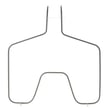
- Oven not heating evenly or not heating at all: replace the g.e. range bake element WB44T10010
- No broil heat: replace the range broil element WB44T10009
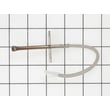
- One coil burner not heating: replace the range coil surface element, 6-in WB30T10076
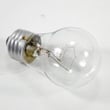
- Oven light out: replace the range oven light bulb 40A15
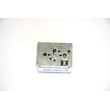
- Burnt power connection symptoms (intermittent power, melted wiring at cord): inspect/replace the terminal block WB17T10006
Cost and impact comparison
| Issue | Typical impact | Usual repair scope |
|---|---|---|
| No bake heat | Oven unusable for baking | Replace bake element, check wiring |
| No broil heat | Can’t broil, slow browning | Replace broil element |
| One surface burner out | Reduced cooktop capacity | Replace surface element or switch |
| Light out | Convenience only | Replace bulb or socket |
| Power connection overheating | Safety and reliability risk | Replace terminal block, repair wiring |
Why it matters
A targeted part replacement restores performance quickly and avoids the higher cost and hassle of replacing a full 30-inch electric range. The key is confirming the failure is limited to one component (element, terminal block, bulb) rather than a broader electrical or control issue.
Last updated: February 2026
Why is my Kenmore electric oven not getting hot?
If your Kenmore electric range model 91193712020 isn’t getting hot, the most common causes are a failed bake element, a broil element issue (some ovens use it to help preheat), or a power supply problem where the range is only getting 120V instead of the full 240V needed for heating.
Quick checks we recommend first
- Confirm the oven is set to BAKE and a temperature is selected (not just the clock/timer).
- Look for visible damage on the bake element: blisters, cracks, holes, or a separated spot.
- Try BROIL for 1 to 2 minutes; if broil works but bake does not, the bake circuit is the likely failure.
- Check the house breaker: many ranges use a double-pole breaker; one side can trip and leave lights working but no heat.
- If the oven heats but is weak or inconsistent, suspect a loose power connection at the terminal block.
Parts that commonly fix “no heat” on this model
These are common failure points for electric-heat complaints on the Kenmore 91193712020:
| Symptom | Most likely part | What you’ll notice |
|---|---|---|
| No bake heat | G.e. range bake element WB44T10010 | Bottom element stays cold, no red glow |
| No broil heat | Range broil element WB44T10009 | Top element stays cold on broil |
| Intermittent heat, burning smell, melted wiring | Terminal block WB17T10006 | Heat cuts in/out, discoloration at cord connection |
How we troubleshoot it safely (basic DIY)
- Turn off power at the breaker before inspecting wiring or elements.
- Remove the oven racks; inspect the bake element for damage.
- If you have a multimeter, do a continuity test on the element (a failed element typically reads open).
- Inspect the power cord connection area for heat damage; a loose connection can prevent proper heating.
- If wiring is brittle, scorched, or melted, replace the damaged connector parts rather than reusing them.
Why it matters
An oven that will not heat is often a simple part failure (like a heating element), but a partial power loss or overheated connection can damage wiring and create repeat failures. Fixing the root cause restores proper 240V heating and stable temperatures.
Last updated: February 2026