Owner’s manual
 Error Codes



What is the life expectancy of a Samsung refrigerator?
A Samsung refrigerator like model RSG307AABP typically lasts 10 to 15 years. With consistent maintenance (good airflow, stable temperatures, clean condenser area, and timely repairs), it reaches the upper end of that range and avoids early failures in the cooling and ice-making systems.
What affects refrigerator lifespan the most
- Condenser airflow and cleanliness: dust buildup makes the compressor work harder.
- Door seal condition: air leaks force longer run times and create frost.
- Ice maker and water system upkeep: clogs and freezing can strain components.
- Temperature settings: steady settings reduce cycling and wear.
- How full it runs and how often doors open: heavier use increases run time.
Maintenance checklist we recommend (simple, high impact)
- Vacuum dust from the condenser area and vents every 6 to 12 months.
- Keep freezer and fresh food vents unblocked.
- Confirm temps stay near 0°F (freezer) and 37°F (refrigerator).
- Inspect gaskets for gaps, tears, or warping; correct sealing issues early.
- If ice production slows, follow the steps in why your Samsung fridge stopped making ice and how to fix it.
Parts that commonly influence longevity on RSG307AABP
If cooling performance drops, addressing the right part early often extends the refrigerator’s usable life.
| Symptom | Common area to check | Example part on this model page |
|---|---|---|
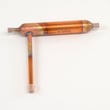
| Warm temps, long run times | Sealed system and compressor start components | Compressor overload protector DA34-00004D |
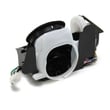
| Poor heat removal, hot cabinet sides | Condenser fan system | Condenser fan DA31-00146B |
| Frost buildup, temp swings | Defrost sensing and airflow | Temperature sensor assembly DA32-00006C |
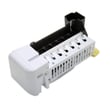
| No ice or weak dispensing | Ice maker and auger drive | Ice maker DA97-11092B |
Why it matters
A refrigerator that runs hotter or longer than normal wears out expensive cooling components faster. Catching airflow, sealing, and ice maker issues early helps your Samsung side-by-side maintain safe food temperatures and reduces strain on the compressor.
For model-specific operating and care guidance, use the owner's manual.
Last updated: February 2026
How to tell Samsung fridge model?
To tell your Samsung refrigerator model, we look for the model number on the appliance ID label, then match it exactly when ordering parts. For this parts page, the base model is RSG307AABP; the full ID label often also includes a version code (such as “/XAA”) and a revision number.
Where to find the model number on a Samsung side-by-side refrigerator
Check these common label locations first:
- Inside the fresh food compartment on a side wall near the crisper drawers
- On the ceiling of the fresh food compartment near the light housing
- Along the door frame (hinge side) when you open the refrigerator door
- On the back exterior panel near the power cord area
- On the inside wall of the freezer compartment (less common)
What to write down (so parts match)
We recommend copying the information exactly as it appears on the label.
- Model number (example for this page: RSG307AABP)
- Model code (often looks like RSG307AABP/XAA)
- Revision or version (often shown as a dash and two digits, such as “-02”)
- Serial number (helpful for confirming production range)
Quick guide: model vs. revision
| What you see on the label | What it means | Why it matters |
|---|---|---|
| RSG307AABP | Base model | Gets you to the correct parts list family |
| RSG307AABP/XAA | Model code / market code | Helps narrow down the exact configuration |
| -02 | Revision | Can change which parts fit (even if the base model is the same) |
Why it matters
Samsung refrigerators can use different parts across revisions. Using the full model code and revision helps us match the correct components the first time, especially for fit-sensitive items like an ice maker, door parts, or electrical components.
Helpful next steps
Once you have the full model information:
- Compare it to the model shown on this page (RSG307AABP)
- Use the parts list for your exact revision when selecting replacements
- If you are troubleshooting ice production, follow the steps in why your Samsung fridge stopped making ice and how to fix it
- For model-specific identification details and label examples, check the RSG307AABP owner's manual
Last updated: February 2026
What is the most common problem with Samsung refrigerators?
On Samsung side-by-side refrigerators like model RSG307AABP, the most common problems are ice maker failures (no ice, freezing up, leaking) and cooling complaints (warm fresh-food section, frost buildup, fan noise). These usually come from airflow restrictions, ice buildup, or a failing cooling component.
Most common symptoms
- Ice maker stops producing ice or produces small/hollow cubes
- Ice bucket clumps, ice room freezes up, or water drips at the dispenser
- Fresh-food section warms while freezer seems closer to normal
- Frost or ice behind the rear interior panel
- Unusual fan noise, buzzing, or clicking during operation
What typically causes it
| Symptom | Likely area | Common first check |
|---|---|---|
| No ice or slow ice | Water supply, ice maker | Water flow, frozen fill tube, ice buildup |
| Ice room freezing | Air leaks, airflow, defrost | Door sealing, vent blockage, frost pattern |
| Warm refrigerator section | Evaporator airflow | Frosted cover, blocked vents, fan operation |
| Clicking or intermittent cooling | Compressor start circuit | Power supply, overload device, wiring |
Quick checks before replacing parts
- Set temps to about 0°F (freezer) and 37°F (refrigerator).
- Keep interior vents clear; avoid packing food against vent openings.
- Check door sealing and closing; a poor seal drives frost and icing.
- If you see heavy frost behind the rear panel, address defrost and airflow first.
For model-specific control settings and diagnostics, use the RSG307AABP owner's manual.
Parts often involved when diagnosis confirms a failure
- Ice production issues: Samsung refrigerator ice maker DA97-11092B
- Clicking or start problems: refrigerator compressor overload protector DA34-00004D
Why it matters
Ice buildup and restricted airflow force longer run times, which raises energy use and can lead to temperature swings that spoil food or cause leaks.
Last updated: February 2026