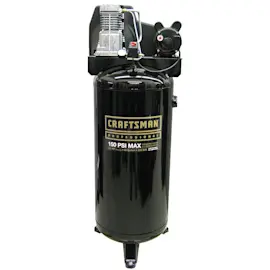
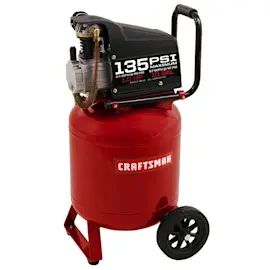
Owner’s manual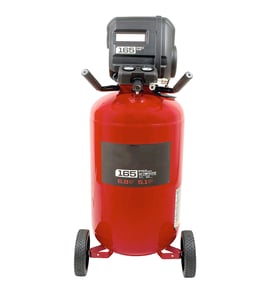

What is the average lifespan of an air compressor?
Most air compressors last about 10 to 15 years with normal DIY or light shop use and basic maintenance. For the Craftsman 919153090 air compressor, the air receiver tank does not have an unlimited life; follow the tank warning label end-of-service date and the maintenance steps in the owner's manual.
Lifespan depends most on duty cycle, heat, moisture, and maintenance.
- DIY oil-free piston compressors: 5 to 10 years
- Oil-lubricated piston compressors: 10 to 15 years
- Rotary screw compressors (shop/industrial): 15 to 20+ years
- Receiver tank life: varies; corrosion and poor draining shorten it significantly
| Compressor type | Typical use | Typical lifespan |
|---|---|---|
| Oil-free piston | Home/DIY | 5 to 10 years |
| Oil-lubricated piston | Garage/light shop | 10 to 15 years |
| Rotary screw | Continuous shop/industrial | 15 to 20+ years |
These are the most common “life reducers” we see with air compressors:
- Not draining condensed water from the tank (internal rust)
- Running in a confined or hot area (poor ventilation)
- Letting the unit run unattended for long periods
- Air leaks that force longer run time
- Using tools that exceed the compressor’s SCFM output (overwork)
Use these as your baseline routine for the Craftsman 919153090:
- Drain the tank daily or after each use to reduce internal corrosion
- Keep the compressor in a clean, dry, well-ventilated area
- Turn off and unplug when not in use; bleed pressure before maintenance
- Tighten fittings and fix leaks promptly
- Match tool demand to compressor output; avoid prolonged excessive use
The pump can often be serviced, but the receiver tank is a safety-critical component. Moisture left in the tank can cause internal corrosion that weakens the steel and can lead to sudden failure. Following the tank label service-life date and daily draining protects both performance and safety.
Last updated: February 2026
What does 4.0 SCFM at 90 psi mean?
“4.0 SCFM at 90 PSI” means the compressor can deliver 4 standard cubic feet of air per minute while maintaining 90 pounds per square inch of pressure at the outlet. For the Craftsman 919153090 specifically, the rated delivery is 2.0 SCFM at 90 PSIG (and 3.0 SCFM at 40 PSIG); see the owner's manual.
- SCFM (airflow) tells you how much air the compressor can supply continuously.
- PSI/PSIG (pressure) tells you the force available to run the tool.
- Your tool’s requirement is usually listed as SCFM at 90 PSI (or at 40 PSI).
- If the tool’s SCFM requirement is higher than the compressor rating at that PSI, the compressor will run constantly and tank pressure will drop.
- If the tool’s PSI requirement is higher than the regulator setting, the tool will be weak or may not operate.
SCFM is a standardized airflow rating so you can compare compressors more fairly than raw CFM. In the Craftsman 919153090 manual, SCFM is defined as “standard cubic feet per minute,” a unit of measure of air delivery.
| Rating item | What it tells you | 919153090 value |
|---|---|---|
| SCFM @ 40 PSIG | Air delivery at moderate pressure | 3.0 SCFM |
| SCFM @ 90 PSIG | Air delivery at common tool pressure | 2.0 SCFM |
| Approx. cut-in pressure | Pressure where motor restarts | 120 PSIG |
| Approx. cut-out pressure | Pressure where motor stops | 150 PSIG |
Matching SCFM at the tool’s working PSI prevents slow tool performance, frequent cycling, and “not enough air” complaints. If you see symptoms like low output or constant running, our air compressor won't build tank pressure guide helps you narrow down common causes.
Last updated: February 2026
How do you tell the size of a compressor?
For a Craftsman 919153090 air compressor, “size” is usually identified by the output and capacity specs: tank size (gallons), maximum pressure (PSI), and airflow (SCFM). We use those specs to match the compressor to your tools’ air requirements; check the rating label and the owner's manual.
Air compressors are not sized like HVAC compressors (1 ton, 2 ton, etc.). For portable shop compressors, the most useful sizing specs are:
- Tank capacity (gallons): how long you can run between cycles
- Max tank pressure (PSI): the highest stored pressure before shutoff (cut-out)
- Air delivery (SCFM at a given PSI): how much usable air it can supply
- Cut-in and cut-out pressure: when the motor starts and stops automatically
- Motor/electrical needs: correct voltage, grounding, and branch circuit protection
Use this quick checklist:
- Look for a data plate/rating label on the tank or shroud (often lists PSI, tank gallons, and electrical ratings)
- Compare your tool’s required SCFM at 90 PSI (common reference point) to the compressor’s SCFM rating
- Note that the compressor only provides steady working air after tank pressure is above what the outlet needs
- If the compressor runs but tools starve for air, the manual troubleshooting points to an air demand higher than the compressor can supply
- Confirm safe electrical setup (proper grounding, correct voltage, and adequate fuse protection)
| What you’re running | What matters most | Typical fit |
|---|---|---|
| Nailers, inflators, blow guns | PSI and modest SCFM | Small to mid-size compressors often work well |
| Impact wrenches, ratchets | SCFM at 90 PSI | Mid-size with higher SCFM is usually needed |
| Paint spraying, sanders, grinders | High continuous SCFM | Larger tank and higher SCFM compressor is typically required |
If your accessory’s air requirement is higher than the SCFM or pressure your compressor supplies, you will see pressure drop, frequent cycling, and poor tool performance. Correct sizing also helps the pressure switch operate normally between cut-in and cut-out.
For step-by-step help matching symptoms to sizing and airflow issues, use air compressor won't build tank pressure or air compressor common questions.
Last updated: February 2026
Is a 150 psi air compressor good for car tires?
Yes; 150 PSI is more than enough for inflating car tires because most passenger tires run around 30 to 40 PSI. With your Craftsman 919153090 air compressor, the key is controlling output pressure with the regulator and checking often with a tire gauge so you do not overinflate.
Our guidance matches the tire safety notes in the owner's manual.
- Find the vehicle placard PSI (door jamb label); use that number, not the tire sidewall maximum.
- Set the compressor’s regulator to the target PSI before connecting the tire chuck.
- Add air in small increments; small tires can fill very rapidly.
- Check pressure frequently with a separate tire pressure gauge while inflating.
- Stop a little low, disconnect, then recheck and fine-tune.
- Never exceed the maximum pressure rating of the tire or any inflator accessory.
“150 PSI” is a maximum capability number; it is not the pressure you should put into a tire. For tire inflation, regulated output PSI and airflow (SCFM) determine how controlled and how fast the fill feels.
| Spec or setting | What it affects | Best practice for tires |
|---|---|---|
| Regulated output pressure | Accuracy and safety | Set to the vehicle placard PSI |
| Airflow (SCFM) | Fill speed | Inflate in short bursts and recheck |
| Tank pressure (max) | Reserve air | Not a target for tire pressure |
- Check for air leaks at the hose and fittings; tighten exposed fittings.
- Adjust regulated pressure under flow conditions (while air is actually flowing).
- Make sure the tire chuck seals well on the valve stem.
- If the compressor struggles to keep up, reduce air use and allow recovery time.
The manual warns that overinflation can happen quickly and can cause serious injury or damage. Using the regulator plus a tire gauge prevents rapid over-pressurizing.
Last updated: February 2026