Error Codes


Are bottom mount fridges better?
Bottom-mount refrigerators like the Maytag MRFF4236RZ00 are better for many kitchens because the fresh-food section sits at eye and waist level, so everyday items are easier to see and reach. They are a strong choice if you cook often and want more ergonomic access to refrigerated foods.
What “better” usually means with a bottom-mount design
A bottom-mount (freezer-on-bottom) layout typically improves day-to-day convenience because you use the refrigerator compartment more than the freezer.
- Fresh foods are easier to access without bending as much
- Wide shelves make it easier to organize meal-prep items and leftovers
- Freezer drawers can hold bulky frozen items, but you may need to bend to reach them
- Temperature stability is often good when door seals and airflow parts are in good shape
- It is a practical fit for households that buy lots of produce, dairy, and beverages
Bottom-mount vs top-freezer: quick comparison
| Feature | Bottom-mount refrigerator | Top-freezer refrigerator |
|---|---|---|
| Everyday access | Best for fresh-food items | Best for frozen items |
| Ergonomics | Less bending for fridge use | More bending for fridge use |
| Freezer organization | Drawer-style, good for stacking | Shelves/bins, easier visibility |
| Common “comfort” factor | High | Moderate |
When a bottom-mount is not the best choice
A bottom-mount is not the best fit when freezer access is your top priority.
- You use frozen foods more than fresh foods
- You prefer freezer shelves over deep drawers
- You want the simplest, most basic layout
Why it matters
The “best” refrigerator configuration is the one that matches how you load groceries and cook. For most households, putting the fresh-food compartment up top reduces bending and makes it easier to keep food visible, which helps reduce waste and improves daily usability.
If you are comparing performance issues (warm fridge, uneven temps, noisy fan), we recommend checking airflow and temperature-sensing components such as the refrigerator thermistor W10316760.
Last updated: February 2026
What is the life expectancy of a bottom freezer refrigerator?
A bottom-freezer (bottom-mount) refrigerator typically lasts 15 to 20 years. For your Maytag MRFF4236RZ00, reaching the upper end of that range depends on steady temperatures, clean condenser airflow, and keeping door seals tight so the compressor does not run excessively.
What affects lifespan the most
- Door seal condition; air leaks force longer run times (warm spots, frost, higher energy use)
- Condenser airflow; dust and blocked vents overheat the compressor area
- Evaporator fan performance; weak airflow causes temperature swings and icing
- Accurate temperature sensing; bad sensors can cause overcooling or warm food
- Ice maker and water system upkeep; clogs and air in lines can create repeat service issues
Quick maintenance checklist (best payoff)
- Vacuum dust from the grille and condenser area every 6 to 12 months.
- Keep refrigerator at 37°F and freezer at 0°F.
- Leave space for airflow around the cabinet; avoid packing items against interior vents.
- Clean and inspect gaskets; replace if torn, warped, or not sealing evenly.
- If you hear fan noise changes or notice warm sections, address airflow issues early.
Common “wear items” vs. major repairs
| Item type | Examples on this model | Why it matters |
|---|---|---|
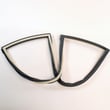
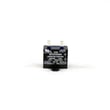
| Sealing and door-related | Whirlpool refrigerator door gasket (gray) W10443320, whirlpool refrigerator door gasket, right (gray) W10830162, refrigerator door switch W11396033 | Prevents warm air leaks and reduces compressor run time |
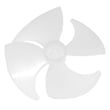
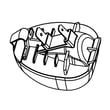
| Cooling airflow and control | Refrigerator evaporator motor W11024089, refrigerator evaporator fan blade WP2169142, refrigerator thermistor W10316760 | Keeps temperatures stable and prevents icing or warm food |
| Major sealed-system | Compressor (also order lokring parts) W11547313 | High-cost repair; often the deciding factor on replacement |
Why it matters
Bottom-freezer refrigerators like the MRFF4236RZ00 have more components than basic top-freezer models (fans, sensors, ice maker options). Keeping airflow clear and seals tight reduces stress on the compressor and helps you get the full 15 to 20 years.
Last updated: February 2026
Why is my refrigerator dripping from the bottom?
On a Maytag MRFF4236RZ00 bottom-mount refrigerator, dripping from the bottom is usually caused by a defrost drain problem (meltwater can’t flow to the drain pan) or a drain pan overflow/shift. Less often, a door seal leak creates excess condensation that ends up underneath the cabinet.
Quick checks we recommend first
- Make sure the refrigerator is level and not tilted forward (a forward tilt can encourage water to run out the front).
- Look for ice or debris in the freezer floor area; a blocked defrost drain often leaves a sheet of ice that later melts.
- Pull the unit slightly forward and inspect the drain pan for cracks, misalignment, or being overfilled.
- Check door closing: drawers fully seated, no food packages holding the door open.
- Inspect the door gasket for gaps, tears, or areas that don’t grip the cabinet.
Most common causes and what to do
| Likely cause | What you’ll notice | What typically fixes it |
|---|---|---|
| Clogged/iced defrost drain | Water/ice on freezer bottom; puddle under front | Clear the drain; melt ice; flush with warm water |
| Drain pan overflow or out of position | Water appears after heavy defrosting; pan is very full | Re-seat pan; clean it; confirm condenser fan area is clear |
| Warm air leak at door gasket | Condensation, frost near door edges; more frequent dripping | Clean/reshape gasket; replace if torn (see parts below) |
Parts that commonly relate to bottom leaks
If warm air leaks are driving condensation and puddles, replacing a worn gasket is a common repair for this model:
- Whirlpool refrigerator door gasket (gray) W10443320
- Whirlpool refrigerator door gasket, right (gray) W10830162
Why it matters
Water under the refrigerator can damage flooring and, if it’s from a defrost drain issue, it can also lead to recurring ice buildup that reduces airflow and cooling performance.
Last updated: February 2026