



Does my Kenmore top load washer have a filter?
Most Kenmore top load washers, including model 11020362813, do not use a removable lint filter like a dryer. Instead, they rely on the wash action and drain system to move lint out with the water; drain clogs are handled by cleaning the pump and hoses.
On a top load washer, customers usually mean one of these:
- Drain pump clean-out (some models have an access cap; many do not)
- Coin trap (common on front load washers, uncommon on top load)
- Inlet screen filters inside the hot and cold water valve ports
- Tub-to-pump hose where socks, coins, and lint can collect
If your washer is not draining well, the most practical “filter cleaning” is checking the drain path and pump.
- Unplug the washer; turn off both water supply valves.
- If draining is slow, inspect the drain hose for kinks and make sure it is not shoved too far down the standpipe.
- Check the washer for small items (coins, hair pins) that can migrate into the drain system.
- If you suspect a clog, inspect the pump area and hoses; a failing pump can also mimic a clog.
If you have standing water, slow drain, or a humming sound during drain, these parts are the usual suspects:
| Symptom | Most common cause | Part to consider for 11020362813 |
|---|---|---|
| Won’t drain / drains slowly | Clog or weak pump | Washer drain pump W10919003 |
| Won’t spin after filling | Lid not locking | Washer lid lock W11307244 |
| Water left in tub after cycle | Drain restriction or pump issue | Hose asm - d W11244231 |
A restricted drain path can leave water in the tub, prevent high-speed spin, and trigger out-of-balance behavior. Keeping the drain hose and pump path clear protects the drive system and helps the washer complete cycles normally.
Last updated: February 2026
How do I reset my Kenmore washer?
For Kenmore washer model 11020362813, the most reliable reset is a power reset: unplug the washer (or switch off the breaker) for 2 minutes, restore power, then start a cycle. This clears many control glitches and lets the washer reinitialize.
- Press Pause/Cancel once to stop the cycle.
- Unplug the washer (or turn the breaker off).
- Wait 2 minutes.
- Plug back in (or turn breaker on).
- Lift and close the lid once, then select a cycle and press Start.
These checks often solve the underlying issue that looks like a “needs reset” problem:
- Confirm the outlet has power (test with a lamp).
- Make sure the lid closes firmly; a failed lid lock can prevent starting or spinning.
- Check for a stuck drain condition; if the tub is full of water, the washer may refuse to spin.
- Reduce the load size and redistribute items evenly.
- If you hear a clicking or grinding during agitation or spin, inspect the belt and drive components.
| Symptom after reset | Most common cause | What to check next |
|---|---|---|
| Won’t lock or won’t start | Lid lock issue | Washer lid lock W11307244 |
| Won’t drain, water left in tub | Drain pump or drain path restriction | Washer drain pump W10919003 |
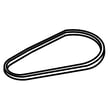
| Hums, slips, weak spin | Belt or pulley wear | Drive belt W11239857 and whirlpool washer drive pulley W10721967 |
A reset clears temporary control-board states, but repeated “needs reset” behavior usually points to a real problem such as a lid lock fault, draining problem, or a worn drive belt or pulley. Fixing the root cause prevents no-spin, no-drain, and cycle-stopping issues.
Last updated: February 2026
How to identify a Kenmore washer model?
To identify your Kenmore washer model, we look for the model and serial tag on the machine itself; on Kenmore model 11020362813, it’s typically on the top or back of the control panel, or on the cabinet near the bottom edge.
Check these common locations first (in order):
- Top of the control panel (often along the back edge)
- Back of the control panel (you may need to gently pull the washer forward)
- Left or right side of the main cabinet near the bottom front edge
- Behind the lid area on some top-load designs
- If you have a front-load washer: inside the door opening or on the door jamb
The tag usually lists a MODEL number and a SERIAL number. For parts lookup and troubleshooting, we use:
- Model number (example format: 110.XXXXXXXX)
- Serial number (helps confirm production series)
- Type or engineering code (if shown)
| Item on tag | Why it matters | Example |
|---|---|---|
| Model number | Matches the correct parts diagrams | 11020362813 |
| Serial number | Helps confirm the right revision | Varies |
| Type/code | Can affect part compatibility | Varies |
Kenmore washers often share similar styling across multiple series, so the model tag is the only reliable way to match the correct parts (like a lid lock, drive belt, or drain pump) to your exact washer.
If you’re identifying the model to order parts, these are common items for this platform:
Last updated: February 2026
How to replace Kenmore washer drain hose?
To replace the drain hose on your Kenmore washer model 11020362813, we remove the old hose from the drain pump outlet, install the new hose, and secure both ends with the correct clamps so the washer drains without leaks or siphoning.
- Unplug the washer to prevent electrical shock.
- Turn off both water supply valves.
- Have towels and a shallow pan ready for leftover water.
- Pull the washer forward enough to access the rear and bottom.
- If the washer is full of water, run a drain/spin cycle first if possible.
- Access the drain pump area. Many Kenmore top-load designs allow access by tilting the washer back or removing a lower/front access area.
- Remove the old hose from the pump. Use pliers to slide the spring clamp back, then twist and pull the hose off the pump outlet.
- Install the new hose on the pump. Push the hose fully onto the pump outlet, then move the clamp into place over the connection.
- Route the hose correctly. Follow the original path so it does not rub the belt/pulley area or kink.
- Reconnect at the standpipe or laundry tub. Insert the hose end into the drain opening and secure it so it cannot pop out.
- Test for leaks. Restore power, run a short rinse/drain, and check both ends for drips.
If your hose is damaged, also check the clamp condition and nearby drain components.
| What you may need | What it does | When to replace |
|---|---|---|
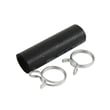
| Drain hose | Carries water from the pump to the home drain | Cracks, pinholes, soft spots, kinks |
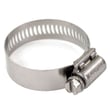
| Clamp(s) | Seals the hose to the pump/outlet | Rusted, weak tension, won’t hold position |
| Hose asm - d W11244231 | Model-matched drain hose assembly option | When you want a direct-fit replacement |
A loose or kinked drain hose can cause leaks, slow draining, or siphoning (washer drains while filling). Correct routing and a tight clamp at the pump connection prevent repeat failures.
Last updated: February 2026
Is it worth repairing a Kenmore washing machine?
Yes, repairing a Kenmore washer is worth it when the fix restores reliable washing and spinning for less than about half the cost of a comparable new washer. For Kenmore model 11020362813, common repairs like a lid lock, drive belt, or shift actuator often bring the machine back to normal operation without replacing the whole washer.
Use this checklist to make a clear call:
- Repair it if the washer fills, drains, and the tub is solid (no severe rust-through or major leaks)
- Repair it if the issue is a “wear” part (belt, lid lock, actuator, pulley)
- Repair it if the total repair (parts + labor) is under ~50% of a new washer
- Replace it if the tub or transmission area is damaged and the quote is close to a new unit
- Replace it if multiple major systems are failing at once (drain + spin + control)
These are frequent, high-impact fixes on top-load Kenmore washers like 11020362813:
| Symptom | Likely area | Example part for this model |
|---|---|---|
| Won’t start or won’t spin with lid closed | Lid safety system | Washer lid lock W11307244 |
| Weak agitation or no spin | Belt and drive system | Drive belt W11239857 |
| Clicking, won’t shift between agitate and spin | Shifting mechanism | Actuator, shift W11481722 |
| Loud squeal or slipping under load | Pulley wear | Whirlpool washer drive pulley W10721967 |
A washer that is mechanically sound but stopped by a single failed part is typically a good repair candidate. Fixing a lid lock, belt, or actuator can restore proper spin speed, reduce wet loads, and prevent repeat cycle interruptions.
If the washer is displaying an error, match the code to the right repair path before buying parts. We use our Kenmore error code resources to narrow down whether the problem is balance, draining, or motor control related.
Last updated: February 2026
What is a suds saver?
A suds saver is an older washer feature that “saves” soapy wash water so it can be reused for another load. It typically drained the wash water into a separate tub next to the washer, then pumped it back in for the next wash. Kenmore washers like model 11020362813 generally do not use a suds saver system.
A classic suds saver setup used a second container (often a laundry tub) and extra plumbing so the washer could redirect wash water.
Common steps:
- The washer drains the wash water into a nearby tub instead of the household drain.
- The wash water sits in the tub between loads.
- The washer pumps that saved water back in for the next load.
- Rinse water is usually sent to the drain (not saved).
- Loads were often washed in order (light to dark) to reuse the cleanest suds first.
A suds saver is different from modern “HE” washing and from detergent-related “suds” problems.
| Item | What it does | Common on |
|---|---|---|
| Suds saver | Reuses wash water by draining to a tub and pumping it back | Older top-load designs |
| HE washer design | Uses less water and relies on HE detergent | Most modern washers |
| “Suds” issue | Too much foam from wrong detergent or overdosing | Any washer |
Reusing wash water can save water, but it can also redeposit soil, affect cleaning results, and complicate drain and pump operation. On a modern Kenmore washer, focusing on correct detergent type and proper drain performance is usually more important than water reuse.
If you are troubleshooting draining or water handling on model 11020362813, these parts are commonly involved:
- Washer drain pump W10919003 (moves water out of the tub)
- Drain hose routing and standpipe height (installation-related)
- Lid lock operation during spin and drain
Last updated: February 2026
What is the average lifespan of a Kenmore washer?
A Kenmore washer typically lasts 10 to 15 years with normal household use and basic maintenance. For Kenmore model 11020362813, reaching the high end of that range usually comes down to avoiding overloads, keeping the tub and drain system clean, and fixing wear items early.
- Load size and frequency: frequent heavy loads shorten bearing, belt, and suspension life.
- Drain performance: slow draining strains the pump and can leave odors and residue.
- Spin vibration: out-of-balance loads wear suspension and can damage the drive system.
- Water quality: hard water increases detergent buildup and can affect valves.
- Small failures left unfixed: a minor slip or noise can turn into a bigger repair.
If your washer is otherwise in good shape, replacing a worn part can extend service life significantly.
| Symptom | Common cause | Example part for model 11020362813 |
|---|---|---|
| Won’t spin or slips under load | Worn belt or pulley | Drive belt W11239857, whirlpool washer drive pulley W10721967 |
| Lid won’t lock, won’t start/spin | Failed lid lock or strike | Washer lid lock W11307244 |
| Won’t drain or drains slowly | Clogged or failing pump | Washer drain pump W10919003 |
| Loud banging, walking, off-balance | Weak suspension | Damper asm - W11217817 |
- Run a monthly cleaning cycle (or hot wash) to reduce detergent and soil buildup.
- Use HE detergent and measure carefully; too much soap causes residue and odors.
- Keep loads balanced; mix items and avoid washing one heavy item by itself.
- Check pockets and remove debris to protect the drain pump.
- Level the washer and keep it stable to reduce spin vibration.
Washer lifespan is usually limited by a few high-wear systems (drain, spin, and suspension). Catching early symptoms like slow draining, repeated imbalance, or a slipping spin helps prevent secondary damage and keeps your Kenmore washer running longer.
Last updated: February 2026