Installation guide
 Owner’s manual


How do I force my whirlpool washer to reset?
To reset your Whirlpool washer model WTW4950XW3, we recommend starting with a simple power reset: unplug the washer (or turn off the breaker) for 1 to 5 minutes, then restore power and run a quick cycle to confirm the control has cleared.
Reset options that work most often
- Power reset (best first step): Unplug for 1 to 5 minutes, then plug back in.
- Control-panel reset: Press Pause/Cancel (or Cancel) once, then reselect a cycle.
- Lid switch reset attempt: Open and close the lid firmly several times in a row (useful if the washer seems “stuck” at sensing or won’t start).
- Drain and restart: If the tub is full, select Drain/Spin first, then try your wash cycle again.
If the washer still will not start after a reset
A reset will not fix a failed safety or drive component. On the WTW4950XW3, these checks usually pinpoint the real issue:
- Confirm the outlet has power (test with a lamp) and the breaker is not tripped
- Make sure the lid closes fully and the strike lines up with the lock
- Verify both water faucets are fully open and inlet hoses are not kinked
- Check that the drain hose is installed correctly (too far down the standpipe can cause siphoning)
- Listen for the lid lock “click” when you press Start
| Symptom after reset | Most common cause | Part that often fixes it |
|---|---|---|
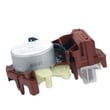
| No response, won’t lock lid | Lid lock not engaging | Washer lid lock assembly W10404050 |
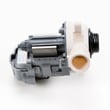
| Hums but won’t drain/spin | Drain pump jammed or failed | Washer drain pump assembly WPW10276397 |
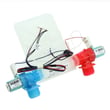
| Fills slowly or not at all | Inlet valve or supply issue | Washer water inlet valve assembly WPW10683603 |
Why it matters
Resetting clears temporary control glitches and can stop a false error condition, but repeated “no start,” “won’t drain,” or “won’t fill” symptoms usually point to a lid lock, drain pump, inlet valve, or a wiring/control issue that needs a targeted fix.
For model-specific cycle behavior and control-panel steps, follow the WTW4950XW3 owner's manual.
Last updated: January 2026
What is the capacity of wtw4950xw3?
The Whirlpool WTW4950XW3 top-load washer has a 3.6 cu. ft. capacity. That size is designed for everyday family loads, including towels and mixed clothing, while still allowing enough room for proper wash action and rinsing.
What 3.6 cu. ft. means in real use
A 3.6 cu. ft. top-load washer like the WTW4950XW3 typically handles most routine laundry without overfilling the basket.
- Wash bulky items one at a time (comforter, large blanket) so water can circulate
- Load loosely; don’t pack clothes down
- Keep items below the top rim of the basket
- Use the cycle and water level options recommended in the WTW4950XW3 owner's manual
- If the washer struggles to spin, reduce load size and rebalance
Quick load-size guide
These are practical examples for a 3.6 cu. ft. top-load washer.
| Load type | Typical examples | Best practice |
|---|---|---|
| Small | A few shirts, light items | Spread items evenly |
| Medium | Mixed clothes for 1 to 2 people | Don’t compress the load |
| Large | Towels, jeans, heavier fabrics | Balance weight around the basket |
| Bulky | Blanket or comforter | Wash alone; use appropriate cycle |
Why it matters
Capacity affects cleaning performance, rinse quality, and spin results. When the basket is overloaded, clothes can come out with detergent residue, poor soil removal, or extra water left after spin.
Related setup tip (helps performance)
Even with the right capacity, installation affects how well the washer runs. We recommend following the spacing, drain height, and leveling guidance in the WTW4950XW3 installation guide to reduce vibration and improve spin stability.
Last updated: January 2026
What is the most common problem with whirlpool washers?
The most common Whirlpool washer problems are draining or spinning issues, leaks, and loud vibration. On the Whirlpool WTW4950XW3, many of these start with simple causes like an unbalanced load, a kinked drain hose, or the washer not being level; our WTW4950XW3 installation guide covers key setup checks that prevent repeat problems.
Most common issues we see (and what they usually mean)
- Won’t drain or leaves water in the tub: drain hose problem, clogged pump, or a failing drain pump
- Won’t spin or stops mid-cycle: lid lock not engaging, drive system problem, or load out of balance
- Leaking water: loose inlet hose connections, worn fill hoses, or a drain hose that is not secured
- Loud banging or walking: washer not level, weak suspension, or consistently overloaded cycles
- No fill or slow fill: low water pressure, clogged inlet screens, or a failing inlet valve
Quick checks that fix a lot of “common problems”
Start with these basics before replacing parts:
- Confirm the washer sits on a solid floor and does not rock; level it on all four feet
- Verify hot and cold supply valves are fully open and water pressure is in a normal range
- Inspect fill hoses for bulges, kinks, cuts, or leaks; replace aging hoses (a 5-year replacement interval is a solid rule)
- Make sure the drain hose is routed correctly and secured so it cannot siphon or slip out
- Redistribute the load (especially bulky items) and run a Spin/Drain cycle again
Parts that commonly solve the underlying failure
If the basic checks do not help, these model-matched parts are frequent fixes on the WTW4950XW3:
| Symptom | Common suspect part | Example model-matched part |
|---|---|---|
| Won’t drain | Drain pump | Washer drain pump assembly WPW10276397 |
| Won’t spin, lid won’t lock | Lid lock | Washer lid lock assembly W10404050 |
| No fill or slow fill | Water inlet valve | Washer water inlet valve assembly WPW10683603 |
Why it matters
Catching the “most common” causes early (leveling, hose routing, and good water supply) prevents repeat leaks, reduces vibration-related wear, and helps the drive system and suspension last longer.
Last updated: January 2026