Owner’s manual




How do I tell what model garage door opener I have?
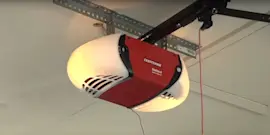
On a Craftsman garage door opener like model 13953675SRT, the model number is printed on a label on the powerhead (motor unit) under a light lens cover. Check both light lens areas and the side opposite the antenna, then match that number to the parts list or your 13953675SRT owner's manual.
Where to look on the opener (powerhead)
Use a step ladder and look directly at the motor unit mounted to the ceiling.
- Under the front light lens cover
- Under the left light lens cover (when you are facing the opener from inside the garage)
- On the side of the opener opposite the antenna wire
- Near the wiring terminals or logic board cover (often close to the light lens area)
What the model label usually includes
Most Craftsman openers list more than just the model number. Use the model number for parts lookup and troubleshooting.
| Label item | What it’s used for |
|---|---|
| Model number (example: 13953675SRT) | Finding the correct parts diagrams and manual |
| Electrical rating (volts/amps) | Verifying power requirements |
| Date code/serial info | Identifying production run for compatible accessories |
Tips to make sure you read the right number
Model labels can be dusty or partially hidden by the lens.
- Turn off power to the opener before removing a light lens cover
- Wipe the label gently with a dry cloth so the digits are clear
- Write the model number exactly as shown (including any letters)
- If you see multiple numbers, use the one that starts with 139 (common Craftsman opener format)
Why it matters
Using the exact model number (like 13953675SRT) prevents mismatched parts and saves time when you are programming remotes, checking compatibility, or diagnosing issues such as sensor problems or travel/force settings.
For broader part searches by model number, we also recommend using Sears PartsDirect.
Last updated: February 2026
How to reset garage door openers?
To reset a Craftsman 13953675SRT garage door opener, we clear the opener’s memory (so old remotes/keypads stop working) and then reprogram the remotes. This is done at the motor unit using the LEARN/SMART button steps shown in the owner's manual.
What “reset” means on the 13953675SRT
A reset usually refers to one of these actions:
- Erase all remote/keypad codes (full reset of radio memory)
- Reprogram a remote or keypad (add a device back)
- Re-adjust travel/force settings (not a code reset, but often needed after door issues)
How to reset (erase all remotes and keypads)
Use this when a remote is lost, a keypad was compromised, or you want a clean start.
- Locate the LEARN/SMART button on the opener motor unit.
- Press and hold the LEARN/SMART button until the indicator light goes out (this clears memory).
- Confirm reset by testing: previously programmed remotes should no longer operate the door.
How to add remotes back after a reset
After memory is cleared, reprogram each device one at a time.
- Press and release the LEARN/SMART button.
- Within the programming window, press the button on the remote you want to add.
- Test the remote from inside the garage first.
For step-by-step programming visuals, we use the same process covered in how to program garage door opener remotes video.
If the door still will not close after “resetting”
A reset does not fix safety sensor alignment or force/travel problems. From the manual troubleshooting guidance, these are the most common causes:
- Safety reversing sensor is blocked or misaligned (opener lights may blink)
- Door is binding/unbalanced (door reverses for no apparent reason)
- Force settings are incorrect (adjust in small increments)
- Ice/snow/debris is in the door’s closing path
Quick check table
| Symptom | Most likely cause | What we do next |
|---|---|---|
| Door starts down then reverses | Sensor issue or obstruction | Clear/align sensors; retest |
| Door reverses and lights do not blink | Force/travel or door binding | Review force/travel adjustments; check door balance |
| Door will not close by remote | Sensor not “seeing” | Hold wall button to close, then fix sensors |
Why it matters
Resetting clears who can operate your garage door, but safe operation depends on the safety reversing sensors and correct force/travel settings. Keeping force at the minimum needed helps protect the door, opener, and people.
For model-specific parts and diagrams, start with the parts list for Craftsman 13953675SRT, or search by model on Sears PartsDirect.
Last updated: February 2026
What are the common problems with Craftsman garage door openers?
Common problems with the Craftsman 13953675SRT 1/2-hp garage door opener include safety sensor issues (misalignment or obstruction), travel or force settings that need adjustment, remote control range or programming problems, and a door that is out of balance due to spring or hardware issues. Use the owner's manual for the exact adjustment and testing steps.
Most common symptoms and what they usually point to
- Door reverses and the opener lights blink after reversing: safety reversing sensors need alignment or the beam is blocked.
- Door will not close or reverses unexpectedly: sensor eyes are dirty, misaligned, or something is in the door path.
- Door does not open completely: travel limits or up force typically need adjustment.
- Remote has short range: antenna position, metal door/foil-backed insulation, or interference can reduce range.
- Opener strains or needs maximum force: the door is out of balance or springs are broken (do not increase force).
Quick checks we recommend before adjusting anything
- Make sure the door path is clear and the door is in full view when operating.
- Inspect and clean the safety sensor lenses; confirm both sensors are aimed at each other.
- Check the opener’s hanging antenna; it should extend fully downward.
- Test the door balance by disconnecting the trolley and moving the door by hand; it should stay at mid-travel.
- Reprogram remotes if operation is inconsistent; also confirm wall control wiring is not shorted.
Adjustments and tests (what to do, and what to avoid)
The 13953675SRT uses limit and force adjustments; changing one can require changing the other. After any adjustment, we always run the safety reverse test.
| Task | What you do | Why it matters |
|---|---|---|
| Safety reverse test | Test monthly using a 1-inch object (or a 2x4 laid flat) | Confirms the door reverses to reduce injury risk |
| Travel limit adjustment | Increase travel if the door stops short | Prevents partial opening/closing issues |
| Force adjustment | Adjust only as needed, then retest | Too much force can defeat safety protection |
Why it matters
Many “opener problems” are actually door or safety-system problems. A misaligned sensor can cause reversing and blinking lights, and an unbalanced door can make the opener strain. Keeping the safety reversal system tested monthly is one of the most important reliability and safety steps.
For model-specific troubleshooting patterns and light-flash diagnostics, use Craftsman error codes. For replacement parts by model number, start with the parts list for 13953675SRT, or search by model on Sears PartsDirect.
Last updated: February 2026
How do I know what garage door remote is compatible?
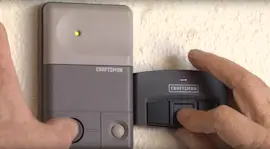
For your Craftsman 13953675SRT 1/2-hp garage door opener, a compatible remote is a SECURITY+ remote (typically identified by blue push buttons) that can be programmed to the opener’s receiver. Use the programming steps in the owner's manual to add an additional remote.
Quick compatibility checklist (what to match)
- Brand and model: Craftsman 13953675SRT
- Radio/coding family: SECURITY+ rolling code (code changes each use)
- Button style: commonly blue push button remotes for this SECURITY+ system
- How many devices you need to control: 1-button vs 3-function remotes (multi-function can run additional openers/lights)
- Accessory type: remote control vs keyless entry (the manual lists a SECURITY+ keyless entry option)
How to confirm using the opener and manual
The most reliable way is to confirm the opener’s receiver type and then program the remote:
- Check the remote style you plan to use: for this model, SECURITY+ remotes with blue push buttons are supported.
- Follow the “Receiver and remote control programming” instructions in the owner's manual.
- After programming, test operation from inside the garage first.
What this opener supports (from the manual)
| Item | What it means for compatibility | What to look for |
|---|---|---|
| SECURITY+ rolling code | Remote must be SECURITY+ compatible | SECURITY+ labeling, blue-button style remotes |
| Multiple remotes supported | You can add more than one remote | Additional SECURITY+ remotes |
| Keyless entry supported | You can use a keypad accessory | SECURITY+ keyless entry (manual lists Model 139.53684) |
If the remote still will not work
These steps often resolve “wrong remote” symptoms even when the remote is compatible:
- Make sure the opener is not in Lock mode at the wall control (Lock disables remotes until turned off).
- Replace the remote batteries and confirm correct battery orientation.
- Clear the opener’s memory and reprogram all remotes (the manual troubleshooting section calls this out when the door behaves unexpectedly).
- If range is short, note that metal doors or foil-backed insulation can reduce range; an antenna extender kit is sometimes used in those situations.
Ordering tip
If you do not have the original remote, we recommend searching by model number 13953675SRT to narrow to the correct SECURITY+ accessories; you can also search by model on Sears PartsDirect.
Why it matters
Using the correct SECURITY+ remote ensures the opener’s rolling-code security works properly and prevents wasted time programming an incompatible remote family.
Last updated: February 2026
Is it worth repairing a 20 year old garage door opener?
Yes; repairing a 20-year-old Craftsman 13953675SRT garage door opener is worth it when the problem is minor (safety sensor alignment, force or limit adjustment, wall control wiring, remote battery) and the garage door is properly balanced. For major motor or drive wear, replacement is usually the better value.
Quick decision checklist (repair vs replace)
Use this to decide what makes sense for an older 1/2-hp opener like the Craftsman 13953675SRT:
- Repair if the opener runs and the issue is sensors, wiring, remotes, or adjustments
- Repair if the safety reversal system passes after proper adjustment and testing
- Replace if you hear grinding from the gear or motor area, or the opener strains to lift
- Replace if it repeatedly reverses or fails the safety reversal test after adjustments
- Fix the door first if it binds, sticks, or is out of balance (an unbalanced door can prevent proper reversing)
Common low-cost fixes that are usually worth doing
These are the most frequent “good repair” items we see on older Craftsman openers:
- Clean and realign the safety sensors; confirm the indicator lights stay steady
- Adjust travel limits and force settings, then re-test reversal
- Replace remote batteries (many lithium remotes last up to about 5 years)
- Inspect wall control wiring for loose connections or pinched wires
Follow the safety and adjustment steps in the 13953675SRT owner's manual.
Repair vs replace comparison
| Factor | Repair makes sense | Replace makes sense |
|---|---|---|
| Problem type | Sensors, remotes, wiring, adjustments | Motor or drive wear, repeated failures |
| Safety reversal test | Passes after adjustment | Will not pass consistently |
| Door condition | Balanced, moves smoothly by hand | Binding, sticking, out of balance |
Why it matters (safety)
Your opener is only safe when the door is properly balanced and the safety reversal system works. The manual warns that an improperly balanced door may not reverse when required, and weak or broken springs can let the door fall rapidly.
If you need to look up parts by model number or shop other Craftsman garage door opener parts, search by model on Sears PartsDirect.
Last updated: February 2026