Owner’s manual
 Error Codes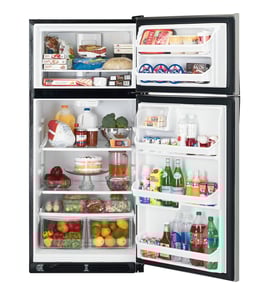




Is top mounted refrigerator better than bottom mounted?
A top-mounted (top-freezer) refrigerator like the GE GTS19KGNBRWW is usually the better choice when you want lower upfront cost, simpler design, and efficient everyday reliability; a bottom-freezer is usually better when you want fresh-food items at eye level and easier access to the refrigerator section.
Quick comparison: top-freezer vs bottom-freezer
| Feature | Top-mounted freezer (like GTS19KGNBRWW) | Bottom-mounted freezer |
|---|---|---|
| Fresh-food access | You bend more often | More at eye level |
| Freezer access | Easier (freezer is up top) | You bend more often |
| Typical price | Lower | Higher |
| Complexity | Simpler (fewer moving parts) | Often more features and parts |
| Energy use | Often efficient for the capacity | Varies by model and features |
When a top-mounted refrigerator is the better pick
- You want a straightforward, dependable layout with fewer features to maintain.
- You use the freezer frequently (frozen meals, ice trays, bulk storage).
- You want strong value for the money.
- You prefer simpler serviceability for common items like door switches and fans.
When a bottom-mounted refrigerator is the better pick
- You access fresh food many times per day and want it at a more comfortable height.
- You store lots of produce and refrigerated items and want easier visibility.
- You are willing to pay more for convenience and, often, added features.
Why it matters for day-to-day use
“Better” comes down to how you load groceries and how often you open each compartment. With a top-freezer design, you typically trade a little bending in the fresh-food section for a simpler, cost-effective refrigerator that is easy to live with.
Model-specific tip for installation and performance
No matter which style you choose, proper airflow and leveling help the refrigerator run correctly and keep doors closing smoothly. For the GE GTS19KGNBRWW, use the clearances and leveling guidance in the GTS19KGNBRWW owner's manual.
Last updated: January 2026
What are the disadvantages of a top mount fridge?
A top-mount (top-freezer) refrigerator like the GE GTS19KGNBRWW is usually affordable and efficient, but the main disadvantages are convenience and organization: you bend more for fresh-food access, and you typically get fewer premium features than French-door or side-by-side models.
Common disadvantages (what most owners notice)
- Fresh food is lower: you bend more often for produce, drinks, and leftovers.
- Less eye-level storage: fewer shelves and bins are at comfortable reach.
- Narrower refrigerator section: wide platters and large trays can be harder to fit.
- Fewer “premium” features: less common to have dual evaporators, advanced humidity zones, or in-door ice.
- Freezer access can be less convenient: items can stack and get buried without baskets.
Practical trade-offs vs other styles
| Style | Main advantage | Main disadvantage |
|---|---|---|
| Top-mount (top-freezer) | Lower cost, simple design | More bending for fresh food |
| Side-by-side | Easy freezer access, narrow door swing | Narrow shelves for wide items |
| French door | Best fresh-food access and width | Higher price, more complex |
What to check before you choose (or before you replace)
Use these quick checks to decide if a top-mount layout will frustrate you day to day:
- How often you access fresh food vs frozen food
- Whether you store wide platters or pizza boxes often
- If you want an automatic ice maker and how much ice you use
- Your kitchen clearance needs (top-mount doors can still need room to swing)
- Noise sensitivity (modern compressors and fans can sound different during normal operation)
Why it matters
Refrigerator style affects daily ergonomics more than most specs. If you cook often and live in the fresh-food section, a top-mount can feel less convenient even when it cools well and costs less.
For model-specific features, storage setup, and normal operating characteristics, we recommend checking the GTS19KGNBRWW owner’s manual.
Last updated: January 2026
What is the most common problem with a GE refrigerator?
The most common GE refrigerator problem is a cooling issue: the fresh food section gets warm, the freezer temperature drifts, or airflow is weak. On the GE GTS19KGNBRWW top-mount refrigerator, this often traces to airflow (evaporator fan), frost buildup (defrost system), or dirty condenser airflow; confirm checks in the GTS19KGNBRWW owner's manual.
Most common symptoms we see
- Refrigerator section warm but freezer still cold
- Freezer warm and ice cream soft
- Loud humming or rattling from the freezer (fan noise)
- Frost or a “snowy” back wall in the freezer
- Runs constantly or cycles too often
Quick checks before replacing parts
- Setpoints: Verify controls are set to normal (not “warm”).
- Door seal and loading: Make sure doors close fully; avoid blocking vents with food.
- Condenser airflow: Clean dust from the condenser area and confirm the condenser fan runs when the compressor runs.
- Listen for the evaporator fan: With the freezer door switch held closed, you should typically hear the fan.
- Look for heavy frost: A solid frost sheet on the evaporator cover points to a defrost problem.
Common causes and likely fixes
| Symptom | Most likely cause | What to do next |
|---|---|---|
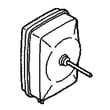
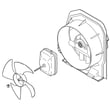
| Fridge warm, freezer OK | Weak/no evaporator airflow | Inspect/replace evaporator fan motor WR60X31522 if not running |
| Frost buildup, poor airflow | Defrost heater or defrost control issue | Check wiring and heater; consider refrigerator defrost heater assembly WR55X31113 |
| Warm temps, compressor running | Poor condenser cooling | Clean coils; inspect fan blade and housing |
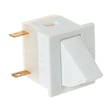
| Lights work, fan stops when door closes | Door switch not closing circuit | Test/replace refrigerator door switch WR23X31507 |
Why it matters
Cooling problems usually get worse over days, not weeks. Catching a failing fan motor, defrost heater, or airflow restriction early helps protect food, reduce run time, and prevent ice buildup that blocks vents.
Last updated: January 2026
What is the high end GE refrigerator?
GE’s high-end refrigerators are typically sold under the GE Profile and Café lines (larger capacity, premium finishes, and more advanced features than standard GE models). Your GE GTS19KGNBRWW is a top-mount refrigerator designed for reliable everyday cooling rather than luxury features; use the GTS19KGNBRWW owner's manual to confirm the exact features included on your unit.
What “high end” usually means for GE refrigerators
High-end GE models commonly include a mix of these upgrades:
- Counter-depth or built-in style installation options
- Dual evaporators or advanced temperature management for fresher food
- Premium ice systems (higher output, better storage, or specialty ice)
- Smart connectivity and more precise electronic controls
- Higher-end interior lighting and flexible storage configurations
Where your GTS19KGNBRWW fits in the GE lineup
GTS19KGNBRWW is a classic top-freezer design. It focuses on straightforward operation, easier service access, and lower ownership cost compared with premium French-door or built-in models.
| GE refrigerator tier | Common branding | Typical focus |
|---|---|---|
| Value / standard | GE | Practical features, strong reliability |
| Upper-mid | GE Profile | More capacity, more features, upgraded design |
| Premium | Café | Design-forward finishes, premium features |
| Specialty premium | Monogram | Built-in luxury, highest-end configurations |
Why it matters
If you are shopping “high end,” you are usually paying for layout (French door or built-in), finish, and feature upgrades. If you are repairing GTS19KGNBRWW, choosing model-matched parts keeps performance and fit correct.
Parts that support performance (when symptoms point there)
If you are troubleshooting cooling or airflow issues on GTS19KGNBRWW, these model-matched parts are commonly involved:
- Evaporator f WR60X31522 (moves cold air through the refrigerator)
- Refrigerator door switch WR23X31507 (controls interior light and can affect fan operation on some designs)
- Refrigerator defrost heater assembly WR55X31113 (helps prevent frost buildup that blocks airflow)
Last updated: January 2026