

Can I put aluminium foil in a convection microwave?
Yes, you can use aluminum foil in a convection microwave in limited, controlled ways; in an Apollo AAC24-BI built-in microwave, keep foil small, smooth, and away from the walls and ceiling so it cannot arc (spark) or block airflow.
- Use foil only to shield small areas (for example, thin edges of meat) from over-browning.
- Keep foil flat and tightly wrapped; avoid loose ends.
- Keep foil at least 1 inch away from the oven walls, ceiling, door, and rack supports.
- Use small pieces only; do not line the cavity or cover large surfaces.
- Place food in the center so foil cannot drift close to metal surfaces.
Avoid foil when the microwave function is running because it can arc and damage components.
- Do not use crumpled foil or foil with sharp points.
- Do not cover or line the turntable, floor, or walls with foil.
- Do not use foil to cover foods that release steam heavily (it can trap steam and cause messy boil-overs).
| Cooking mode | Foil allowed? | Best practice |
|---|---|---|
| Convection (fan heat) | Usually yes | Small, smooth shielding only |
| Microwave only | Usually no | Use microwave-safe glass/ceramic instead |
| Combination (microwave + convection) | Usually no | Skip foil unless your instructions explicitly allow it |
Foil near metal surfaces can create arcing, which can damage the waveguide cover, rack supports, or interior coating. Foil can also block airflow in convection mode, leading to uneven cooking.
If you are unsure whether your AAC24-BI is running convection, microwave, or a combination cycle, confirm the exact model number from the rating label and use it when searching diagrams and replacement components on Sears PartsDirect.
Last updated: February 2026
Is it worth fixing a microwave?
Yes, it’s worth fixing an Apollo built-in microwave model AAC24-BI when the problem is a low-cost, common failure (power issue, door switch, turntable drive) and the total repair cost stays under about half the price of a comparable replacement. For major high-voltage failures, replacement is usually the better value.
- Repair if the microwave still heats normally and the issue is mechanical or simple electrical (door won’t close, won’t start, no light, no turntable).
- Repair if the unit is under 10 years old and the cabinet and door are in good shape.
- Replace if it runs but does not heat, makes loud humming, or trips the breaker repeatedly.
- Replace if there’s burning smell, arcing, or visible damage inside the cavity.
- Replace if parts availability is limited and you cannot source what you need by model number.
These are the issues we most often see on built-in microwaves like the Apollo AAC24-BI.
| Symptom | Common cause | Typical DIY difficulty | Usually worth it? |
|---|---|---|---|
| Dead, no display | Blown fuse, loose wiring, failed door switch | Medium | Often yes |
| Runs but won’t heat | Magnetron, high-voltage diode/capacitor, transformer | Hard (high voltage) | Often no |
| Turntable not turning | Turntable motor/coupler | Easy to medium | Yes |
| Starts then stops | Door interlock switch/holder alignment | Medium | Often yes |
Microwaves contain high-voltage components that can store a dangerous charge even when unplugged. That’s why “runs but won’t heat” repairs are higher risk and often cost more than they’re worth. Choosing repair vs. replace based on the failure type helps you avoid repeated breakdowns and unnecessary labor.
- Unplug the microwave and do a quick visual check for burned connectors or melted wire insulation.
- If it’s a no-power complaint, start with basic electrical checks (outlet, breaker, then internal fuse testing).
- If it’s a no-heat complaint, treat it as a high-voltage issue and plan for professional service.
- Use your model number AAC24-BI to search parts diagrams and availability on Sears PartsDirect.
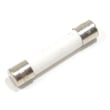
- For basic electrical troubleshooting steps, use how to tell if a fuse is blown.
Last updated: February 2026
What are some common microwave oven problems?
Common problems on an Apollo AAC24-BI built-in microwave include not heating, the turntable not rotating, sparking/arcing, a dead display (no power), and door issues that prevent the unit from running. These symptoms usually point to a power supply, door interlock, or high-voltage circuit problem.
- Microwave runs but does not heat: often a high-voltage component issue (magnetron, diode, capacitor) or a door interlock problem.
- No power, no display: commonly a blown fuse, failed thermal cutout, or a power cord/outlet issue.
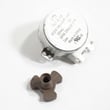
- Turntable not rotating: turntable motor, coupler, or roller guide problem; sometimes a control setting.
- Sparking or arcing: damaged waveguide cover, metal in the cavity, or burned cavity paint.
- Stops mid-cycle: overheating protection opening (blocked vents, failed cooling fan, or failing thermal protector).
- Confirm the outlet has power (try a lamp or small appliance).
- Remove any metal (foil, twist ties, metal-trimmed dishes) and re-test.
- Clean the cavity and inspect for burned spots or a damaged waveguide cover.
- Verify the door closes firmly and the latch area is not obstructed.
- Try a simple reset: unplug for 2 minutes, then plug back in.
Microwaves contain a high-voltage capacitor that can hold a dangerous charge even when unplugged. If you see arcing, smell burning, or the unit is not heating, we recommend professional service rather than internal testing.
| Symptom | Use it? | Typical next step |
|---|---|---|
| Runs, no heat | No | Service high-voltage circuit and door switches |
| Sparks/arcs | No | Remove metal, inspect cavity/waveguide cover |
| No power | No | Check fuse/thermal cutout and power supply |
| Turntable not turning | Yes (short term) | Inspect coupler/roller/motor |
A “no heat” or “sparking” microwave can indicate a high-voltage or cavity issue that can worsen quickly. Catching the symptom early helps prevent further damage and keeps cooking performance consistent.
For model-specific parts lookup and diagrams for the Apollo AAC24-BI, start with the parts list for this model, or search by model number on Sears PartsDirect.
Last updated: February 2026
What are the best built-in microwave ovens?
The “best” built-in microwave depends on your cooking style, cabinet cutout, and whether you want basic reheating or speed-oven features. For an Apollo AAC24-BI built-in microwave replacement, we recommend matching size, venting, and electrical requirements first, then comparing features like sensor cooking and convection.
- Fit and cutout size: Built-in units must match your cabinet opening and trim kit requirements.
- Power and performance: Most built-in microwaves run 900 to 1,200 watts; higher wattage heats faster and more evenly.
- Capacity: Common sizes are 1.1 to 2.2 cu. ft.; larger capacity fits wider dishes.
- Controls and cooking modes: Sensor reheat, soften/melt, and multi-stage cooking reduce guesswork.
- Ventilation style: Built-in models are typically non-venting; over-the-range microwaves vent.
| Shopper goal | What to look for | Why it’s a top pick style |
|---|---|---|
| Maximum versatility | Convection or speed-oven style cooking | Bakes and roasts in addition to microwaving |
| Clean built-in look | Trim kit compatibility, flush install | Seamless cabinetry appearance |
| Space-saving design | Drawer microwave | Frees up wall space and improves access |
| Reliable everyday use | Sensor cooking, simple keypad | Consistent results with fewer settings |
- Measure the cabinet cutout (width, height, depth) and door swing clearance.
- Confirm electrical needs (typically 120V; dedicated circuit is common).
- Decide if you need convection/air fry features or microwave-only.
- Compare wattage and interior size to what you are used to.
- Verify whether a trim kit is required for a true built-in installation.
Built-in microwaves are less forgiving than countertop models; a small mismatch in cutout size or trim kit requirements can turn a simple replacement into a cabinet modification project.
If you are comparing models or trying to match your exact unit, use how to find your appliance model number (and what it means for parts) to confirm the model tag details, then search by model on Sears PartsDirect.
Last updated: February 2026


