Owner’s manual
 Error Codes


Where to find model number on Kenmore 79576284600 Elite fridge?
On Kenmore Elite model 79576284600, the model and serial number are printed on an identification label inside the fresh food (refrigerator) compartment; it’s located on the right-hand side wall.
Where to look first (fastest checks)
- Open the refrigerator door and look along the right interior wall of the refrigerator compartment
- Check near the crisper drawer area (labels are often placed where they stay visible but protected)
- Use a flashlight; the label can be small and easy to miss
- Write down both the model number and serial number before ordering parts
What the label looks like
Most ID labels include:
- Model number (for example, 79576284600)
- Serial number
- Electrical ratings (volts/amps)
- Basic compliance markings
| What you need | Why it matters | Example |
|---|---|---|
| Model number | Ensures parts fit your exact refrigerator | 79576284600 |
| Serial number | Helps match production variations | Varies |
If you still cannot find it
Try these common alternate locations used on similar bottom-mount refrigerators:
- Inside the refrigerator compartment near the door opening (side wall)
- Behind the base grille/kick plate area
- On an interior wall behind or beside lower bins (after sliding a drawer out)
Why it matters
Kenmore 795-series refrigerators can share similar styling across multiple models; using the exact model number helps us match the correct door parts, sensors, and cooling components listed for 79576284600 in the owner's manual.
Last updated: February 2026
Is Kenmore 79576284600 Elite high end?
Yes. Kenmore Elite models like the Kenmore 79576284600 are positioned as a premium line within the Kenmore brand, typically offering upgraded features and styling compared with standard Kenmore refrigerators. For day-to-day ownership, “high end” mainly shows up as better temperature management, convenience features, and a more feature-rich control system (varies by configuration in the owner's manual).
What “high end” means for this model
High-end positioning is less about one single part and more about the overall design and feature set.
Common premium traits you’ll see in Kenmore Elite bottom-mount refrigerators include:
- More precise electronic temperature control and sensors
- Multi-airflow cooling to reduce warm spots
- Better interior organization (drawers, rails, covers)
- Enhanced door sealing and alignment for efficiency
- More serviceable modular components (switches, sensors, valves)
Quick comparison: Kenmore vs Kenmore Elite (typical)
| Category | Standard Kenmore | Kenmore Elite (like 79576284600) |
|---|---|---|
| Controls | Basic mechanical or simple electronic | More advanced electronic controls |
| Cooling consistency | Good | Better, more even airflow |
| Fit and finish | Standard | More premium trim and hardware |
| Repair approach | Basic parts | More sensors and control components |
Parts that support “premium” performance
If you’re troubleshooting features that feel “high end” (lighting, door alarms, temperature stability), these are common components involved:
- Door sensing and interior light control: refrigerator door push-button switch 6600JB1010A
- Temperature feedback to the control system: refrigerator thermistor 6500JB2002T
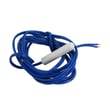
- Defrost monitoring (helps prevent frost-related airflow issues): refrigerator defrost sensor assembly 6615JB2005C
- Water and ice features (if equipped): refrigerator water inlet valve 5220JA2009D
Why it matters
When a premium refrigerator starts acting “not high end” (temperature swings, weak ice production, lights not working), the fix is often a sensor, switch, or defrost-related part rather than the sealed system. Using the correct model-specific parts for 79576284600 helps restore performance and prevents repeat failures.
Last updated: February 2026
What is the average lifespan of a Kenmore 79576284600 Elite refrigerator?
A Kenmore Elite refrigerator like model 79576284600 typically lasts 10 to 15 years. Reaching the high end depends on basic upkeep (cleaning condenser coils, keeping door seals tight, and maintaining airflow) and addressing cooling or defrost issues early using the owner's manual.
Typical lifespan and what affects it
Most bottom-mount refrigerators land in the 10 to 15 year range; heavy use, warm rooms, and poor airflow shorten life, while routine cleaning and correct temperatures extend it.
- Keep condenser coils clean to reduce compressor run time
- Make sure doors close fully and gaskets seal all the way around
- Avoid overpacking; maintain air circulation in both compartments
- Keep the freezer drawer tracks and baskets moving smoothly (less door-open time)
- Fix water leaks quickly to prevent ice buildup and corrosion
Maintenance checklist (best return for the effort)
Use this quick schedule to protect the sealed system and keep temperatures stable.
| Task | How often | Why it matters |
|---|---|---|
| Clean condenser coils | Every 6 to 12 months | Improves cooling efficiency and reduces wear |
| Inspect/clean door gaskets | Every 3 months | Prevents warm air leaks and frost |
| Confirm temps (fresh food/freezer) | Monthly | Catches cooling drift early |
| Clear/inspect drain path | As needed | Prevents puddles and ice buildup |
If you’re dealing with water under the refrigerator or ice buildup, a clogged drain system is a common cause; the refrigerator drain tube 5251JA3003D is one of the parts often involved in that repair.
Signs your refrigerator is nearing end-of-life
These symptoms usually mean the refrigerator is working harder than it should:
- Temperatures swing even after adjusting controls
- Frost builds up quickly or returns soon after defrosting
- Compressor runs almost constantly
- Water leaks or recurring ice under the freezer drawer
- Doors do not seal well or need frequent realignment
Why it matters
Once a refrigerator starts running hot or running nonstop, it can accelerate wear on major cooling components. Staying ahead of airflow, seals, and defrost drainage is the simplest way to get the full 10 to 15 years from your Kenmore Elite 79576284600.
Last updated: February 2026
Where is the water filter on a bottom freezer refrigerator?
On most bottom-freezer refrigerators, the water filter is inside the fresh food (refrigerator) compartment, typically in the upper-right area or along the top. For your Kenmore Elite 79576284600, use the filter location diagram and replacement steps in the owner's manual.
Common water filter locations on bottom-freezer models
Check these spots first (with the refrigerator door open):
- Upper-right corner inside the refrigerator compartment
- Along the top interior wall (front edge)
- Inside a small flip-down or pull-out filter cover
- Lower-left area inside the refrigerator compartment (less common)
- In the base grille at the very bottom front (some designs)
How to remove and install the filter (typical steps)
Most Kenmore bottom-mount designs use a quarter-turn style filter.
- Turn the filter cover knob or open the filter door (if equipped)
- Twist the filter counterclockwise to unlock
- Pull the filter straight out (keep a towel handy for a few drips)
- Insert the new filter fully, then twist clockwise to lock
- Run water for several minutes to purge air and carbon fines
Quick check: what you should feel
| Step | What’s normal | What’s not |
|---|---|---|
| Twist to remove | Firm quarter-turn | Won’t budge (cover not opened, or filter not fully seated) |
| Pull out | Small drip | Heavy leak (filter not seated, damaged O-ring) |
| After install | Brief sputter | No water at all (air not purged, supply issue) |
Why it matters
A correctly installed water filter helps protect the refrigerator water inlet valve and improves taste and odor. If your home water has sand or particles, the manual also recommends adding filtration in the water line near the refrigerator. For water-supply related symptoms, the refrigerator water inlet valve 5220JA2009D is a common part involved.
Last updated: February 2026
What are the common problems with Kenmore 79576284600 Elite refrigerators?
Common problems with the Kenmore 79576284600 bottom-mount refrigerator include warm refrigerator or freezer temperatures, slow ice production, frost buildup, doors that do not close or seal well, and water leaks. Many start with airflow, dirty condenser coils, door sealing, or defrost and temperature-sensing issues; use the owner's manual for the model’s control-setting and troubleshooting steps.
Most common symptoms and likely causes
- Fresh food or freezer too warm: vents blocked by food, doors opened often, controls not set for conditions, dirty condenser coils
- Ice maker slow: freezer not cold enough, heavy ice usage, door left open, restricted water supply
- Frost or ice crystals: door not closing properly, frequent door openings
- Doors hard to open or will not close: refrigerator not level, bins or drawers out of position, sticky/dirty gasket
- Water leaks or puddles: defrost drain restriction, loose or damaged water tubing, inlet valve seepage
Quick checks we recommend first (no tools)
- Adjust the refrigerator control first; wait 24 hours before making another change.
- Keep packages from blocking interior air vents.
- Push doors firmly shut; reseat bins, shelves, and drawers.
- Clean condenser coils to restore heat transfer.
- Clean the door gasket and the sealing surface; apply a thin coat of wax to reduce sticking.
Common problem to next step
| What you notice | First check | Common fix |
|---|---|---|
| Refrigerator section warm | Control setting, vents | Adjust setting; clear vents; wait 24 hours |
| Ice slow | Freezer temp, door left open | Set colder; confirm door seals; wait 24 hours |
| Puddles | Drain path, water line | Clear drain; inspect tubing and connections |
Parts that often relate to these issues
- Leaks tied to defrost drainage: refrigerator drain tube 5251JA3003D
- Defrost-related cooling problems: refrigerator defrost heater 5300JB1100J
- Temperature swings: refrigerator sensor 6500JB2001B
Why it matters
Correct temperatures and good door sealing prevent food spoilage, reduce frost, and help the ice maker keep up while lowering compressor run time.
Last updated: February 2026