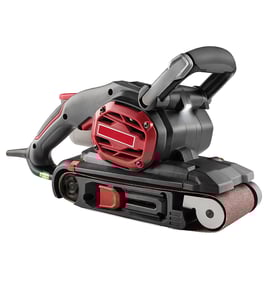

How much is the Delta 31-460 sander?
Pricing for a Delta 31-460 disc sander (type 2) varies widely based on condition, included accessories (disc, table, guards), and whether it’s new, used, or refurbished. For the most accurate current price, compare listings by the exact model number and verify what’s included before buying.
Typical price ranges you’ll see
Because this is a power tool and many units are sold used, prices usually fall into these buckets:
- As-is / needs work: lower priced; expect missing parts or electrical issues
- Used, working: mid-range; normal wear, complete guards and table
- Clean, serviced, or with extras: higher priced; may include sanding discs, jigs, or a stand
| Condition | What it usually includes | What to verify before purchase |
|---|---|---|
| As-is | Tool only | Motor starts, switch works, no heavy vibration |
| Used working | Tool plus basic hardware | Disc runs true, table locks, tracking is stable |
| Refurbished / bundled | Tool plus accessories | Exact accessories list, return terms, wear parts |
What to check so you don’t overpay
These checks help you judge value quickly on a Delta 31-460:
- Motor behavior: starts quickly, no burning smell, no excessive sparking at brushes
- Vibration: disc runs smoothly; wobble often points to arbor, bearings, or disc issues
- Table and trunnion: table tilts and locks firmly; no cracked castings
- Switch and cord: no intermittent power; cord jacket intact
- Dust collection and guards: present and not broken (safety and cleanup)
Why it matters
With sanders, the purchase price is only part of the cost. A “cheap” unit that needs bearings, a switch, or wiring repair can quickly cost more than a solid used machine.
Finding the right listing and parts
When you shop, match the tag to 31-460 exactly (Delta made similar sanding centers and disc sanders). For parts lookup and model-based searching, start with the model page parts list, then use Sears PartsDirect to search by model number and compare options.
If you’re troubleshooting power or wiring issues before buying, our DIY tips on how to use a multimeter to test electrical parts video help you confirm whether the switch, cord, or motor circuit is behaving normally.
Last updated: February 2026
How to tell what size belt for belt sander?
For a Delta 31-460 disc sander (type 2), belt size is determined by measuring the belt’s width and overall loop length. The most reliable method is to measure the old belt (or the roller path) and record the size as width x length (for example, 4 in. x 24 in.).
How to measure the belt size (best methods)
- Measure belt width: Measure straight across the belt’s back (the non-grit side).
- Measure belt length using the old belt (most accurate):
- Cut the old belt straight across.
- Lay it flat and measure end-to-end.
- If you cut it at a point other than the factory seam, double the flat measurement.
- Measure belt length using a string (if the belt is missing):
- Wrap a non-stretch string around the rollers where the belt rides.
- Mark the overlap point and measure the string length.
- Use that measurement as the belt’s loop length.
- Write it down as: width x length (in inches).
Quick reference: which method to use
| Situation | What to do | Why it works |
|---|---|---|
| You have the old belt | Cut and measure it flat | Matches the exact belt that fit your sander |
| Belt is broken/missing | String around rollers | Captures the correct loop length |
| Belt slips or won’t track | Re-check length and width | Wrong size changes tension and tracking |
Common fit problems (and what they usually mean)
- Belt won’t go on: length is too short.
- Belt goes on but is very loose: length is too long.
- Belt walks off the rollers: width is wrong, tracking is off, or rollers are worn/misaligned.
- Belt stalls under light pressure: belt is too long (low tension) or the drive system is slipping.
Why it matters
A correctly sized sanding belt keeps proper tension on the rollers, tracks straight, and transfers motor power efficiently. The wrong width or length can cause slipping, poor sanding results, and premature wear on rollers and bearings.
Ordering tip
Once you have the width x length, use the model number 31-460 to search compatible belts and other replacement items on Sears PartsDirect.
Last updated: February 2026
Is a 4x36 belt sander good for knife making?
Yes; a 4x36 belt sander works well for knife making tasks like profiling, rough shaping, and handle shaping, but it is slower and less precise for grinding long, even bevels than a 2x72 grinder. If you own a Delta 31-460 disc sander (type 2), it is a strong companion tool for squaring and flattening.
Best uses for a 4x36 in knife making
A 4x36 belt sander earns its keep on jobs where speed and perfect bevel geometry are less critical.
- Profiling the blade outline before heat treat
- Removing forge scale and surface rust
- Rough shaping handle scales (wood, G10, Micarta)
- Rounding handle contours and easing sharp edges
- General cleanup sanding between steps
Where a 4x36 struggles (and why)
These limitations are why many makers eventually move up to a 2x72.
- Lower belt speed and power than typical 2x72 setups, so stock removal takes longer
- Shorter belt length loads up faster, so belts need changing more often
- More heat at the edge during bevel grinding, especially after heat treat
- Less control for crisp plunge lines and consistent bevels on longer blades
How the Delta 31-460 disc sander fits in
Your Delta 31-460 is a disc sander, not a belt sander; it shines on flat, square, repeatable sanding tasks that support knife making.
| Knife-making task | 4x36 belt sander | Delta 31-460 disc sander |
|---|---|---|
| Long bevel grinding | Possible, but slower | Not ideal |
| Squaring handle faces/shoulders | Good | Excellent |
| Flattening small parts | Good | Very good |
| Deburring and edge cleanup | Good | Very good |
Tips to get better results on a 4x36
- Start coarse (36 to 60 grit) for shaping; step up gradually for finish work
- Use fresh belts; dull belts create heat and waste time
- Quench often to protect temper and reduce burn risk
- Use light, consistent pressure to avoid waves and gouges
Why it matters
Knife grinding success comes down to control and heat management. A 4x36 can produce quality knives with patience and good technique; pairing it with a disc sander like the Delta 31-460 improves squaring, flattening, and cleanup.
If you need diagrams or want to look up replacement items by model number, search for Delta 31-460 parts on Sears PartsDirect.
Last updated: February 2026