Installation guide
 Owner’s manual
 Error Codes



Is GE profile considered high end?
Yes. GE Profile is generally considered GE’s higher-end mainstream line, positioned above standard GE models with more premium features and finishes; it is a step below GE’s luxury-tier brands. For your GE PDW8680N20SS dishwasher, that typically means more feature-focused design and performance options.
What “high end” means for GE Profile dishwashers
GE Profile usually targets shoppers who want upgraded performance and convenience without moving into true luxury pricing.
Common “higher-end” traits include:
- More wash options and cycle customization
- Quieter operation compared with entry-level models
- More advanced controls and indicators
- Better rack flexibility and loading features
- More emphasis on appearance (stainless finishes, hidden controls)
Where GE Profile fits in the GE lineup
This is the typical positioning most shoppers use when comparing GE families.
| GE family | Typical market position | What to expect |
|---|---|---|
| GE (standard) | Value to mid-range | Core cycles and basic features |
| GE Profile | Mid-to-high end | More features, quieter builds, upgraded design |
| GE luxury-tier brands | Premium/luxury | Highest-end design, materials, and specialty features |
How to confirm what your PDW8680N20SS includes
The fastest way to judge “high end” is to compare the exact feature set on your unit (cycles, options, indicators, and rack configuration) to a standard GE model.
We recommend checking:
- Cycle and option list (Heavy, Normal, heated dry, delay start, etc.)
- Any dispenser features and recommended detergents
- Water temperature requirements for best cleaning (many dishwashers perform best with hot water in a specific range)
- Control panel indicators and what they mean
For the model-specific details, use the PDW8680N20SS owner’s manual.
Why it matters
Knowing the product tier helps set expectations for noise level, cycle length, cleaning performance, and which repairs are worth doing (for example, replacing a wear item like a gasket versus replacing a major motor assembly).
Last updated: February 2026
How to do a hard reset on a GE dishwasher?
For the GE PDW8680N20SS dishwasher, a hard reset is a power reset: turn the dishwasher off at the breaker (or unplug it) for 1 minute, restore power, then use START/RESET to cancel and restart control logic. This clears many “stuck” control states after a glitch.
Hard reset steps (power reset)
- Turn OFF the dishwasher circuit breaker (or unplug the unit).
- Wait 1 full minute.
- Turn power ON.
- If the dishwasher was mid-cycle, let it finish draining; the START/RESET light can flash while it pumps out.
- Press START/RESET once to ready the dishwasher, then close the door to start a cycle.
- If controls are locked, press and hold HEATED DRY for 3 seconds to unlock.
What “START/RESET” does on this model
On PDW8000/PDW9000-series controls, START/RESET cancels the current cycle and the dishwasher pumps out water; the flashing light stops after the drain completes (typically about 90 seconds to 2 minutes). After that, you can reprogram and restart. See the PDW8680N20SS owner’s manual.
Quick reference table
| Situation | What you’ll see | What to do |
|---|---|---|
| Control glitch or unresponsive keypad | Buttons don’t respond normally | Do the 1-minute power reset, then press START/RESET |
| START/RESET light flashing | Unit is canceling and draining | Wait for drain to finish, then select a new cycle |
| Controls locked | Lock light on, no selections | Hold HEATED DRY 3 seconds to unlock |
| Beeping every 30 seconds | Door left open during operation | Close and latch the door |
Why it matters
A true hard reset (removing power) clears temporary control-board errors and restores normal operation after a power interruption. If the dishwasher still won’t run afterward, checking stored faults using GE electronic dishwasher error codes helps pinpoint whether the issue is a door latch, drain problem, or control input.
Last updated: February 2026
What is the most common problem with a GE dishwasher?
The most common problem we see with GE dishwashers like model PDW8680N20SS is drainage trouble (water left in the tub) caused by a clogged filter, blocked air gap/high drain loop, or a restriction in the drain path. Leaks and “won’t start” symptoms are also frequent.
Most common issues (and what they usually point to)
- Not draining or slow draining: clogged filter area, blocked air gap, disposer plug not knocked out, kinked drain hose
- Poor cleaning: spray arm blockage, improper loading, low water temperature, detergent not dispensing
- Leaks at the door: worn or mis-seated door/tub seal
- Won’t start or stops mid-cycle: door latch not fully seated, control reset needed
- Water not filling: water supply issue, float stuck, inlet restriction
Quick checks we recommend first
- Cancel/reset correctly: If you press START/RESET during a cycle, the unit typically drains for about 90 seconds before the light stops flashing.
- Check the air gap or disposer: Clean the air gap cap and cover; flush the disposer connection.
- Confirm proper drain setup: Use an air gap or a high drain loop as shown in the installation guide.
- Inspect loading: Large items can block the detergent dispenser or wash arms.
- Clean the filter area: Remove debris that can restrict circulation and draining.
Parts that commonly solve “drain” and “cleaning” complaints
| Symptom | Common area | Example part for PDW8680N20SS |
|---|---|---|
| Water left in bottom | Filter/sump restriction | Dishwasher filter WD12X10109 |
| Poor spray/coverage | Wash arm issue | Dishwasher spray arm WD22X10047 |
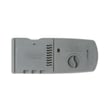
| Detergent not dispensing | Dispenser problem or blockage | Dishwasher detergent dispenser assembly WD12X10163 |
Why it matters
Drain restrictions can trigger longer cycle times, odors, and poor wash results. Fixing the drain path and keeping the filter area clean helps the pump move water correctly and protects key components.
For model-specific operating and care steps (including cleaning guidance and troubleshooting tables), use the PDW8680N20SS owner's manual.
Last updated: February 2026
What is the life expectancy of a GE profile dishwasher?
A GE Profile dishwasher typically lasts 10 to 12 years. For your GE PDW8680N20SS, lifespan depends most on installation quality, water conditions, and routine cleaning; consistent maintenance and avoiding misuse are what keep key parts like the pump, seals, and racks going longer.
Typical lifespan and what affects it
Most dishwashers in this class land in the same range, but these factors move the needle:
- Hard water (scale buildup reduces wash performance and stresses the circulation system)
- Heavy daily use (more cycles equals more wear on the motor, seals, and door latch)
- Poor loading habits (blocked spray arms and detergent cup issues)
- Skipped cleaning (filters and sump collect debris, leading to poor cleaning or draining)
- Improper installation (leaks, vibration, and service access problems)
For model-specific care and operating guidance, follow the PDW8680N20SS owner’s manual.
Maintenance that extends life (high impact)
These steps prevent the most common dishwasher failures (poor cleaning, leaks, and drain problems):
- Clean the filter area regularly; replace a worn or damaged dishwasher filter WD12X10109
- Check spray arm holes for clogs; replace a cracked or warped dishwasher spray arm WD22X10047
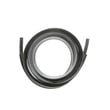
- Inspect the door seal for flattening, tears, or leaks; replace the dishwasher tub gasket WD08X10032 if it no longer seals
- Use only dishwasher detergents and rinse agents intended for automatic dishwashers (per manual guidance)
- Keep the control panel and exterior clean using a lightly damp cloth, then dry
Quick “what to expect” table
| Dishwasher age | What’s common | What we recommend |
|---|---|---|
| 0 to 5 years | Minor clogs, loading issues | Clean filters, verify spray arm rotation |
| 6 to 10 years | Seals, drain issues, wear items | Inspect gasket, drain path, and filter system |
| 10 to 12 years | Higher chance of motor/pump wear | Evaluate pump performance and leak history |
| 12+ years | Repairs become more frequent | Compare repair cost vs. replacement |
Why it matters
Knowing the expected 10 to 12 year lifespan helps you decide when a repair (like a gasket or filter) is smart preventive maintenance versus when repeated pump, drain, or leak issues signal end-of-life planning.
Last updated: February 2026