Installation guide
 Owner’s manual
 Error Codes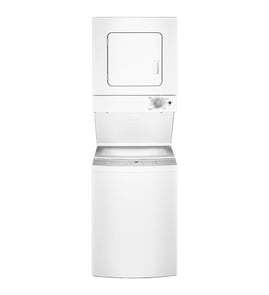


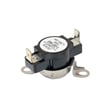

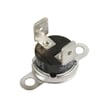
What are the most common issues with 41761733810?
For the Kenmore 41761733810 stacked laundry center, the most common problems are dryer overheating or no-heat conditions, dryer noise from drum support wear, and washer issues such as not draining or not locking. We use the symptoms to pinpoint likely parts and the safest checks.
Common symptoms and what they usually mean
- Dryer runs but no heat: failed thermal limiter, thermostat, or temperature sensor
- Dryer shuts off early or overheats: restricted venting, lint buildup, or a high-limit safety opening
- Squealing, scraping, or thumping in dryer: worn drum bearing, glides, felt seal, or bearing bracket
- Washer won’t drain or leaves water: drain pump blockage or pump failure
- Washer won’t start or won’t spin: lid lock not engaging, or control not sensing a locked lid
Quick checks we recommend first (before replacing parts)
- Unplug power and let the unit cool if the dryer overheated.
- Clean the lint screen every load; replace it if it’s torn or warped.
- Check airflow: the outside vent hood should blow strongly; weak airflow points to a clogged duct.
- Listen for noise location: front drum area often points to glides or felt; rear noise often points to bearing support.
- For washer draining: check the drain hose for kinks and clear the pump filter area if accessible.
Parts that commonly fix these issues on this model
| Symptom | Common fix part | What it does |
|---|---|---|
| No heat or heat cuts out | Dryer thermal limiter 134120900 | Opens if temperature gets unsafe; stops heat |
| Overheating | Kelvinator dryer high-limit thermostat 3204267 | Limits heater temperature |
| Temperature errors or poor drying | Dryer thermistor 134587700 | Senses exhaust temperature |
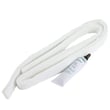
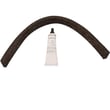
| Dryer noise or drum drag | Dryer drum bearing 131825900 | Supports drum rotation |
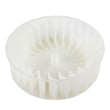
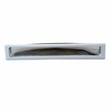
| Poor drying, lint issues | Frigidaire laundry center dryer lint screen 5304516871 | Captures lint and protects airflow |
| Washer not draining | Laundry center washer drain pump 5304524452 | Pumps water out during drain/spin |
| Washer won’t lock/start | Washer lid lock 137353303 | Confirms lid is locked for spin |
Why it matters
Overheating and poor airflow can repeatedly trip safety devices (thermal limiter, high-limit thermostat) and shorten the life of the heater and controls. Catching drum support wear early prevents cabinet damage and belt or motor strain.
Where to confirm procedures and diagnostics
Use the wiring diagram, troubleshooting steps, and access instructions in the owner's manual and the clearances and venting requirements in the installation guide.
Last updated: March 2026
What is the cubic foot capacity of a Kenmore washer model 41761733810?
The Kenmore stacked laundry center washer in model 41761733810 has a 3.9 cu. ft. washer capacity. You can confirm the capacity and other washer specifications in the 41761733810 use and care guide.
How to confirm the capacity in the manual
Use the PDF search feature to jump to the specs quickly.
- Search for: capacity, cu. ft., specifications, washer features
- Verify you are in the washer section (not dryer features)
- Match the model family on the cover: 417.6173*
- If your unit has a color suffix, the base capacity remains the same for the 417.6173* family
Capacity at a glance
| Item | Specification |
|---|---|
| Washer capacity | 3.9 cu. ft. |
| Appliance type | Kenmore stacked laundry center |
| Model number | 41761733810 |
Why it matters
Washer capacity determines practical load size. With a 3.9 cu. ft. tub, you can wash larger everyday loads and medium bulky items more effectively while reducing the chance of poor agitation, incomplete rinsing, or out-of-balance spinning.
Tips for using the full capacity without performance issues
- Load loosely; do not pack clothes down
- Mix item sizes (small and large) to balance the spin
- Use the correct water temperature and cycle for fabric type
- For bulky items, wash one large item with a few smaller items for balance
- Use HE detergent amounts recommended in the manual to prevent oversudsing
Last updated: February 2026
Where can I find Kenmore model number?
On Kenmore stacked laundry center model 41761733810, the model number is typically printed on the appliance’s rating label; common locations include the washer lid opening area and the dryer door opening area. Use the exact model number when ordering parts or checking instructions in the 41761733810 owner's manual.
Most common places to check
- Washer section: under the washer lid, around the lid opening, or on the underside of the lid
- Dryer section: inside the dryer door opening, on the door frame, or just behind the door
- Rear of unit: on the back panel near where the power cord and vent connect
- Side panel: near the lower cabinet edge on either side
Quick tips to find it faster
- Wipe the label with a damp cloth; detergent residue can hide the print.
- Use a flashlight and look for a sticker that says Model or Model No.
- Write down the full number exactly as shown (for example, 41761733810).
- If you see a number like 417.6173*, that is a series format used in documentation; your full label shows the complete model.
What the label usually looks like
| What you see on the label | What it means | Why you need it |
|---|---|---|
| Model number | The exact unit identifier | Ensures correct parts fit and diagrams match |
| Serial number | Production identifier | Helps with service history and age |
| Electrical info | Voltage/amps | Helps confirm safe installation and troubleshooting |
Why it matters
Kenmore laundry centers share many similar-looking parts across the 417-series; using the exact model number prevents ordering the wrong dryer drum bearing, control board, or washer drain pump.
Last updated: February 2026