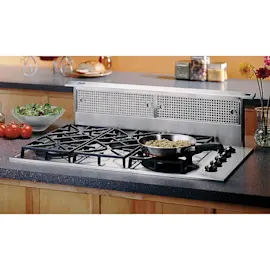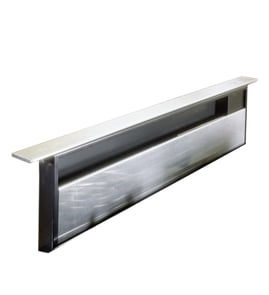

What are the cons of a downdraft range?
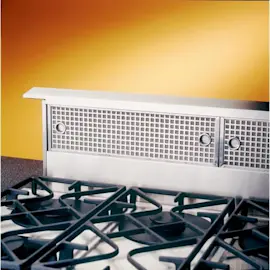
Downdraft ventilation (like the KitchenAid KIRD862HSS0 style) looks clean and keeps sightlines open, but the tradeoff is performance: it typically captures smoke, steam, and grease less effectively than an overhead hood, especially with high-heat cooking and tall cookware.
Main drawbacks to expect
- Weaker capture for smoke and grease: rising heat naturally wants to go up, so pulling it down is harder.
- Tall pots and pans block airflow: stockpots, griddles, and canning pots can shield the vent intake.
- More noise for the same results: downdrafts often need higher fan speed to keep up.
- Installation constraints: duct routing under the cooktop can be complex and may reduce cabinet space.
- More frequent cleaning: grease and residue collect quickly at the intake and filters.
Performance comparison (typical)
| Feature | Downdraft vent | Overhead hood |
|---|---|---|
| Smoke capture at high heat | Fair to poor | Good to excellent |
| Tall cookware impact | High | Low |
| Grease control | Moderate | Better |
| Cabinet space impact | Often reduces base cabinet space | Usually none below cooktop |
| Cleaning frequency | Higher | Moderate |
Why it matters
If you do a lot of searing, wok cooking, frying, or boiling large pots, the ventilation system affects indoor air quality, lingering odors, and how much grease ends up on nearby cabinets and countertops.
Tips to reduce the downsides
- Run the fan before you start cooking and leave it on a few minutes after.
- Use rear burners when possible so the plume is closer to the intake.
- Keep the intake and filters clean; a clogged filter reduces airflow fast.
- If airflow seems weak, inspect and clean the grease filters; replace if damaged (for this model, see the grease filter WPW10396091 or grease filter WPW10381779).
- For electrical troubleshooting (switches, wiring), use safe testing practices from how to use a multimeter to test electrical parts video.
Last updated: January 2026
Does downdraft cooktop ventilation work?
Yes, downdraft cooktop ventilation can work well for everyday cooking on the KitchenAid KIRD862HSS0 when it is installed correctly and the filters are clean. It is most effective for light to moderate cooking and is less effective than an overhead hood at capturing rising heat, smoke, and grease.
What to expect from downdraft ventilation
Downdraft systems pull air sideways and down, so performance depends heavily on airflow and how much “capture” the intake has over the cooking surface.
- Works best on front burners and lower-profile cookware
- Handles steam and light smoke well during typical meals
- Struggles more with tall pots, high-heat searing, and heavy frying
- Can be noisier at higher speeds because it needs strong suction
- Needs clean grease filters to maintain airflow
Quick performance checklist (most common causes of weak venting)
Use this list when the vent “runs” but does not seem to remove smoke.
- Grease filter is clogged; clean it or replace it with the correct filter
- Ductwork is restricted (crushed flex duct, too many elbows, blocked cap)
- Backdraft damper is stuck or installed backwards
- Fan is running but airflow is low (wiring issue, failing switch, or motor problem)
- Intake area is blocked by foil, liners, or debris
Parts that commonly affect airflow on KIRD862HSS0
If you are troubleshooting poor performance, these model-matched parts are often involved.
| Symptom | What to check | Model-matched part example |
|---|---|---|
| Greasy odor, weak suction | Filter condition | Grease filter WPW10396091 |
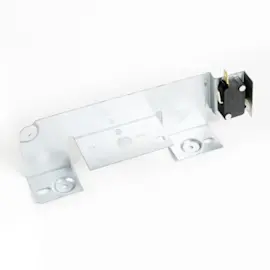
| Vent will not change speeds or respond | Control/switch circuit | Oven switch WPW10240604 |
Why it matters
Good downdraft performance is mostly about maintaining airflow. A clean grease filter and an open, properly routed duct path help the fan move the air it is designed to move, which improves smoke capture and reduces grease buildup around the cooktop.
Last updated: January 2026
Do downdraft vents need to be vented outside?
Downdraft vents do not have to be vented outside, but venting outdoors is the best-performing setup for a KitchenAid downdraft ventilation system like model KIRD862HSS0. If outside ducting is not possible, some installations use recirculation (ductless) filtering, which removes grease and some odors but does not remove heat and moisture.
Best option: vent outside (recommended)
Venting outside moves smoke, steam, and cooking odors out of the kitchen instead of sending them back into the room.
- Better odor and smoke removal during high-heat cooking
- Helps reduce moisture buildup in the kitchen
- Typically quieter at the cooktop because air has a clear exit path
- Less frequent filter cleaning compared with recirculating setups
When recirculating can work
Recirculating (ductless) setups are used when you cannot run ductwork to an exterior wall or roof. They rely heavily on clean filters.
- Plan on more frequent filter cleaning
- Expect reduced performance with heavy smoke or high-heat searing
- Keep the intake and discharge paths clear inside the cabinet
What to check before deciding
Because we do not have model-specific installation documentation for KIRD862HSS0 here, we recommend confirming your exact configuration with your installer or by matching parts and cabinet layout.
- Is there a practical duct route to an exterior wall or roof?
- Is the duct run short with minimal elbows (best airflow)?
- Is your blower moving air freely (no blockage or crushed duct)?
- Are the grease filters clean and seated correctly?
Filter maintenance that affects venting performance
A clogged grease filter can make any setup feel weak, even with perfect ducting. For this model, start by inspecting and cleaning or replacing the grease filter.
| Symptom | Common cause | What we recommend |
|---|---|---|
| Weak airflow | Grease filter clogged | Clean or replace the grease filter WPW10396091 |
| More odor in kitchen | Recirculating setup or dirty filters | Clean filters more often; consider outside venting |
| Noisy operation | Restricted airflow | Check for blockage, tight bends, or dirty filters |
Why it matters
Outside venting improves indoor air quality by removing heat, moisture, and airborne cooking byproducts. Recirculating setups mainly capture grease and some odors, so they are best treated as a compromise when ducting outdoors is not feasible.
Last updated: January 2026
Can you install a downdraft vent behind a range?
Installing a downdraft vent behind a range is typically not a good option; it usually vents poorly and the range oven cabinet space conflicts with the downdraft housing. For KitchenAid model KIRD862HSS0, plan on a cooktop-style installation where the downdraft can sit in its intended cabinet space.
What usually prevents a behind-the-range install
Behind a range, a downdraft has to capture smoke and heat rising from front burners while also fitting around the range body. Most setups fail for one or more of these reasons:
- Physical interference: the range oven and chassis occupy the same space where the downdraft box and duct transition need to sit.
- Insufficient cabinet depth: the downdraft housing and ducting typically require more depth than a standard behind-range cavity allows.
- Poor capture performance: steam and smoke rise and roll forward; a downdraft behind the range struggles to pull it back.
- Duct routing limits: tight turns and short clearances reduce airflow and increase noise.
Better options that work in real kitchens
If you want downdraft-style ventilation, these approaches are the most reliable:
- Use a cooktop with a compatible downdraft (downdraft mounted adjacent to the cooktop).
- Use a range hood (wall or island) for the best capture, especially for high-heat cooking.
- If you already own the downdraft, design the base cabinet to match the downdraft footprint and duct path.
Quick fit check (behind a range vs cooktop cabinet)
| Item to verify | Behind a range | Cooktop cabinet (typical downdraft use) |
|---|---|---|
| Space for downdraft housing | Usually blocked by oven | Usually available |
| Duct transition clearance | Usually too tight | Planned into cabinet |
| Vent capture on front burners | Often weak | Better (closer to cooking surface) |
Why it matters
A downdraft that cannot physically fit or cannot capture cooking smoke leads to lingering odors, greasy buildup, and higher heat in the kitchen. Getting the cabinet layout and airflow path right matters as much as the vent itself.
Parts that commonly come up during planning and maintenance
Even with a correct installation, airflow depends on clean filters and working controls:
- Replace or clean the grease filter WPW10396091 on schedule.
- If the vent will not turn on or respond, the oven switch WPW10240604 (control switch) is a common electrical checkpoint.
Last updated: January 2026