Owner’s manual
 Error Codes


What is the cubic foot of my Kenmore refrigerator model 25351234102?
The exact cubic foot capacity for Kenmore model 25351234102 is listed on the model’s specification information in the 25351234102 owner's manual. If you do not see it immediately, use the manual’s model identification section and look for “capacity” or “cu. ft.” in the specifications.
How to find the capacity in the manual
We recommend checking these spots in the 25351234102 owner's manual:
- The specifications section (often near the front or back of the Owner’s Guide)
- Any “features” or “product data” page that lists dimensions and capacity
- The model and serial number page (helps confirm you are reading the correct guide)
- The refrigerator section describing storage features (sometimes lists total capacity)
What “cubic feet” means (and why it matters)
Cubic feet is the total internal storage volume of the refrigerator and freezer compartments combined. It matters because it affects:
- How much food you can store
- How quickly the unit recovers temperature after door openings
- Whether shelves, bins, and door storage match your needs
- How your refrigerator compares to other side-by-side models
Typical capacity range for side-by-side refrigerators
If you are comparing sizes, most side-by-side refrigerators fall into this general range:
| Refrigerator type | Typical total capacity |
|---|---|
| Compact / apartment | 18 to 22 cu. ft. |
| Standard side-by-side | 22 to 26 cu. ft. |
| Large side-by-side | 26 to 30 cu. ft. |
Related tip if you are checking size for a water filter
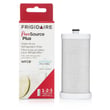
If you are confirming the model for filter fit, match by model number first, then replace the filter as scheduled. This model uses a rear filter system on some versions; the replacement filter listed for this model is the genuine Kenmore refrigerator water filter WFCB.
Last updated: February 2026
Why is my Kenmore side-by-side ice maker not working?
If your Kenmore 25351234102 side-by-side refrigerator ice maker is not making ice, the most common causes are the wire signal arm being OFF (up), the household water valve being closed or restricted, or the freezer not being cold enough. Confirm these basics in the owner's manual.
Quick checks we recommend first
- Make sure the ice maker wire signal arm is down (ON) and not held up by food.
- Verify the household water line valve is fully open; check for kinks in the supply line.
- Check freezer temperature; ice production drops quickly when the freezer is too warm.
- Dispense water at the door (if equipped); slow or no water points to a supply, filter, or valve issue.
- Check for a frozen fill tube or ice clumps that can jam the mechanism.
What “normal” ice production looks like
The manual notes typical output of about 4 to 5 pounds of ice per 24 hours under normal conditions (and up to 8 pounds per 24 hours with an “extra ice” feature, if equipped).
| What you see | What it usually means |
|---|---|
| No ice at all | Ice maker turned off, no water supply, or freezer too warm |
| Small or hollow cubes | Restricted water flow (often filter or valve related) |
| Cubes stuck together | Ice not used often; bin needs to be loosened |
Parts that commonly fix “no ice”
If temperature and shutoff arm position are correct, these model-compatible parts are common fixes:
- Refrigerator water valve 242252702 if the valve is not opening to fill the ice maker
- Genuine Kenmore refrigerator water filter WFCB if water flow is restricted or cubes are hollow/small
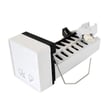
- Refrigerator ice maker 5303918277 if the ice maker assembly is not cycling
Why it matters
Ice makers need steady water flow and proper freezer temperature. Fixing the underlying cause prevents repeat clogs, hollow cubes, and dispenser jams.
Last updated: February 2026
What is the average lifespan of 25351234102?
A Kenmore side-by-side refrigerator like model 25351234102 typically lasts 13 years with normal use and basic maintenance (clean condenser, good door seals, correct temperatures). Following the care and operating guidance in the 25351234102 owner's manual helps you get full life from the compressor and sealed system.
What affects lifespan most
- Condenser cleanliness: dust buildup makes the compressor run hotter and longer
- Door gasket condition: air leaks force longer run times and can cause frost issues
- Door-opening habits: frequent or long openings add heat and moisture load
- Temperature settings: overly cold settings increase run time and wear
- Airflow around the cabinet: poor ventilation stresses the sealed system
Quick maintenance checklist (high impact)
- Vacuum the condenser area regularly (more often with pets).
- Keep door gaskets clean; replace if torn, warped, or not sealing.
- Avoid blocking interior vents with food packages.
- After a move or long shutdown, replace the water filter before using ice and water.
Common wear items vs. long-life components
| Item | Typical role | Replaceable? |
|---|---|---|
| Door gasket | Keeps cold air in, warm air out | Yes (example: refrigerator gasket 241786016) |
| Water filter | Improves water quality, protects dispenser flow | Yes (example: genuine Kenmore refrigerator water filter WFCB) |
| Compressor | Pumps refrigerant through the sealed system | Yes, but major repair |
Why it matters
Most “end of life” complaints start as efficiency problems: dirty condensers, leaking gaskets, or airflow restrictions. Fixing those early reduces run time, stabilizes temperatures, and helps the refrigerator reach its full expected lifespan.
Last updated: March 2026