Installation guide
 Error Codes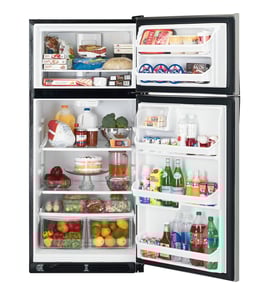



What are the disadvantages of a top mount fridge?
Top-mount refrigerators like the Frigidaire FFHT1826LW9 typically trade convenience for simplicity: the fresh-food section sits lower (more bending), freezer access is easiest, and premium features like in-door water and ice are less common on this style.
- More bending for fresh food: the refrigerator compartment is below the freezer, so you reach down more often.
- Less “eye-level” organization: shelves and crispers can feel less convenient to sort and see at a glance.
- Fewer built-in dispenser options: many top-mount models do not include an external water or ice dispenser.
- Smaller freezer usability: top freezers can be narrower and require more stacking.
- Door swing and leveling sensitivity: if the cabinet is not level, doors may not seal or align as well.
Our installation guide calls out a few setup items that directly affect usability and sealing:
- Confirm door seals completely to the cabinet on all sides.
- Level the refrigerator side-to-side and tilt it about 1/4 inch (6 mm) front-to-back.
- Make sure the freezer door is level across the top.
- Recheck for water leaks after 24 hours if you connect a water supply for an icemaker.
| Feature | Top mount (FFHT1826LW9 style) | Bottom freezer (typical) |
|---|---|---|
| Fresh-food access | Lower, more bending | Higher, less bending |
| Freezer access | Easy, at eye level | Lower drawer, more bending |
| Cost and complexity | Usually lower and simpler | Often higher and more complex |
| Dispenser features | Less common | More common |
Most “disadvantages” come down to ergonomics and daily workflow. If you use fresh food more than frozen, a top-mount layout can feel less convenient, but good leveling and door sealing help it run efficiently and keep temperatures stable.
Last updated: February 2026
Is top mounted refrigerator better than bottom mounted?
A top-mount (top-freezer) refrigerator like the Frigidaire FFHT1826LW9 is typically “better” if you want more fresh-food space at eye level and a lower purchase and repair cost; a bottom-mount is typically better if you want the freezer easier to reach and use most often.
| Feature | Top-mount (top freezer) | Bottom-mount (bottom freezer) |
|---|---|---|
| Fresh-food access | More items at eye level | You bend less for fresh food in many designs |
| Freezer access | Higher reach for freezer | Easier freezer access (less bending) |
| Cost and complexity | Usually lower, simpler | Often higher, more complex |
| Efficiency and airflow | Strong, straightforward airflow | Varies by design |
A top-mount refrigerator is usually the best fit when you prioritize everyday refrigerated groceries and want a simpler layout.
- You use the refrigerator section more than the freezer
- You want more usable shelf and door-bin space for fresh food
- You prefer a simpler design that is typically easier to service
- You want a lighter door load (fewer heavy pull-out freezer drawers)
- You want straightforward setup and leveling (important for good door sealing)
Bottom-mount models are often preferred for convenience if frozen foods are a bigger part of your routine.
- You access the freezer multiple times per day
- You want pull-out freezer baskets for organization
- You prefer not reaching up for frozen items
Whichever style you choose, good door sealing and proper leveling help temperatures stay stable and reduce frost and moisture issues. During setup, we recommend following the leveling and door-seal checks in the installation guide.
- Confirm the doors seal to the cabinet on all sides
- Level the refrigerator side-to-side
- Tilt the cabinet about 1/4 inch (6 mm) front-to-back so doors close reliably
- Recheck for water leaks after 24 hours if an ice maker water line is connected
Last updated: February 2026
What is the most common problem with Frigidaire refrigerators?
Cooling complaints are the most common issue we see with Frigidaire refrigerators, including the Frigidaire FFHT1826LW9. Typical symptoms are a warm fresh-food section, weak airflow, or heavy frost, often tied to airflow restrictions, dirty condenser coils, or door seals that do not close tightly.
- Refrigerator section warm but freezer still cold
- Frost buildup on the freezer back wall
- Fan noise changes or little to no airflow from vents
- Longer run times than normal
- Moisture, sweating, or condensation around the doors
Use these steps first because they address the most frequent causes.
- Confirm the doors seal completely on all sides (the installation checklist calls this out as a final check) using the guidance in the installation guide.
- Set controls and then wait 24 hours before making another adjustment (also noted in the installation instructions).
- Make sure vents are not blocked by food packages in either compartment.
- Clean condenser coils and the area around the condenser fan so heat can leave the cabinet.
- Verify the refrigerator is level and tilted slightly front-to-back so doors self-close; the install guide specifies about 1/4 inch (6 mm) front-to-back tilt.
If basic checks do not restore normal temperatures, these are common repair paths for cooling and frost issues.
| Symptom | Common cause | What to inspect next |
|---|---|---|
| Frost on freezer back wall | Defrost system issue | Defrost heater and defrost thermostat |
| Warm fridge, weak airflow | Air movement problem | Evaporator fan area and airflow paths |
| Condensation or warm edges at door | Poor seal | Door gasket fit and door alignment |
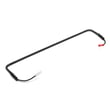
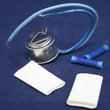
Model-matched parts that often relate to these symptoms include the refrigerator defrost heater 242044008 and the refrigerator defrost bi-metal thermostat 5303918202.
A refrigerator that cannot move air or shed heat efficiently will run longer, struggle to hold safe food temperatures, and can develop frost that further blocks airflow. Fixing airflow, leveling, and sealing issues early prevents repeat cooling problems.
Last updated: February 2026
Why is my Frigidaire top mount freezer not freezing?
If your Frigidaire FFHT1826LW9 top-mount freezer is not freezing, the most common causes are incorrect control settings, poor airflow from dirty condenser coils, a door that is not sealing, or a failed evaporator fan or defrost component that prevents cold air from circulating.
- Confirm the freezer control is set to a colder setting; after any change, wait 24 hours before adjusting again (this is normal for this model family). See the installation guide.
- Make sure the freezer door closes fully and the gasket seals all the way around.
- Check that the refrigerator is level and tilted about 1/4 inch (6 mm) front to back so doors self-close properly. See the installation guide.
- Verify vents inside the freezer are not blocked by food packages.
- Clean dust from the condenser coil area (unplug the refrigerator first).
| What you notice | Most likely issue | What to do next |
|---|---|---|
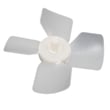
| Freezer is warm and you do not hear a fan inside | Evaporator fan not running | Inspect for ice buildup or a stalled fan; replace the fan blade if damaged (refrigerator evaporator fan blade 5308000010). |
| Frost or ice sheet on freezer back wall | Defrost system problem | Check the defrost heater (refrigerator defrost heater 242044008) and defrost bi-metal thermostat (refrigerator defrost bi-metal thermostat 5303918202). |
| Freezer cools a little, then warms up | Airflow or condenser issue | Clean coils, confirm condenser fan area is clear, and recheck temps after 24 hours. |
A top-mount refrigerator cools the fresh food section by moving freezer air through vents. When airflow is restricted (fan issue, heavy frost, blocked vents, or a door leak), the freezer temperature rises first and food can thaw quickly.
If the controls are set correctly and the door seals well, but the freezer still will not reach safe temperatures after 24 hours, focus on airflow and defrost parts. On this model, the most common repair paths are evaporator fan-related or defrost heater/thermostat-related.
Last updated: February 2026