Installation guide
 Owner’s manual
 Error Codes


How to hard reset Kenmore washer?
To hard reset your Kenmore washer model 11016852503, we recommend a simple power reset first: unplug the washer (or switch off the breaker) for 1 minute, then restore power and try a normal cycle. This clears minor control glitches and cycle “hang-ups.”
Quick hard reset steps (power reset)
- Turn the cycle control knob to Off.
- Unplug the washer from the outlet (or turn off the circuit breaker).
- Wait 60 seconds.
- Restore power.
- Close the lid and select a normal wash cycle.
- Pull out the cycle control knob to start.
If the washer still will not run: do these checks next
A “reset” will not fix a mechanical or safety-interlock problem. On this style of Kenmore top-load washer, the lid must be closed for the washer to run; a failed lid switch can stop agitation, spin, or drain.
- Confirm the lid is fully closed and the lid strike lines up.
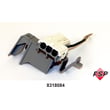
- If the washer will not start or stops when it should spin, inspect the washer lid switch assembly WP8318084.
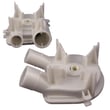
- If the washer hums but will not drain, check for a clog and consider the washer drain pump WP3363394.
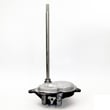
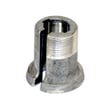
- If the washer fills but will not agitate or spin, the washer motor coupling 285753A is a common wear item.
What “reset” means on this model (and what it does not)
This model uses a mechanical cycle control knob for starting and stopping cycles. A power reset clears temporary electrical issues, but it does not recalibrate a control board the way some digital-display washers do.
| Situation | Best next step |
|---|---|
| Washer stuck mid-cycle | Power reset, then restart cycle |
| Will not start/spin with lid closed | Check lid switch function |
| Will not drain | Check drain hose, pump, and clogs |
| Excess vibration after moving washer | Re-level the washer per the installation guide |
Why it matters
Resetting is the fastest way to clear a minor interruption, but checking the lid switch, drain pump, and motor coupling prevents repeat no-start, no-spin, and no-drain symptoms that look like “electronics” but are actually part or installation related.
Last updated: February 2026
How to identify a Kenmore washer model?
Your Kenmore washer model number is printed on the appliance’s model and serial tag; for Kenmore model 11016852503, it’s typically under the lid on a top-load washer, inside the door opening on a front-load washer, or on the back panel near the power cord or control console. Confirm the full number before ordering parts.
Where to look on Kenmore washers
Check these common tag locations first:
- Under the lid, around the tub opening (top-load models)
- Inside the door opening on the front frame (front-load models)
- Back panel near the power cord entry
- Along the side of the cabinet near the control panel
- Occasionally behind the lower front access panel (some designs)
For diagrams and model-specific identification notes, use the 11016852503 owner's manual.
What the model number looks like (and why it matters)
Kenmore washer model numbers are often a long numeric string; many start with 110 (a common Kenmore prefix). Using the exact model number helps us match the correct fit for parts like a lid switch, drain pump, clutch, or motor coupling.
Quick check table
| What you see on the tag | What to do | Why it matters |
|---|---|---|
| Full model number (example: 11016852503) | Use it exactly as printed | Ensures correct parts list and diagrams |
| Serial number | Record it too | Helps confirm production run details |
| Only partial digits | Re-check tag and cabinet areas | Prevents ordering the wrong part |
Tips before you order parts
- Write the model number exactly, including all digits
- Take a clear photo of the tag for reference
- Match the model number to the parts list before checkout
- If you are troubleshooting a symptom, confirm the model first, then diagnose (for example, a no-spin issue can involve the lid switch, clutch, or motor coupling)
Why it matters
Kenmore washers can look similar across multiple series, but internal components and mounting styles change by model. Using 11016852503 ensures we point you to the right Kenmore washer parts and the correct installation details.
Last updated: February 2026
What is the average lifespan of a Kenmore washer?
A Kenmore washer typically lasts 10 to 15 years with normal household use. For Kenmore model 11016852503, good installation (level floor, correct water pressure, proper drain setup) and routine care help you reach the high end of that range; chronic overloading and poor draining shorten it. See the 11016852503 owner's manual for care and operating practices.
What affects washer lifespan the most
- Load size and balance: frequent overloading strains the drive system and suspension.
- Drain performance: slow draining makes the pump work harder and can leave water behind.
- Agitation and spin wear items: couplers, clutches, and agitator components wear with use.
- Installation conditions: a level, sturdy floor reduces vibration and component fatigue.
- Cold-weather storage: operating at or below 32°F can leave water that may damage components.
Common wear parts that can shorten life (and what they do)
If performance changes, these model-matched parts are common suspects:
| Symptom | Likely area | Example model-matched part |
|---|---|---|
| Won’t drain or drains slowly | Drain system | Washer drain pump WP3363394 |
| Won’t spin, intermittent agitation | Drive coupling | Washer motor coupling 285753A |
| Agitator “slips” or doesn’t move clothes well | Agitator dogs | Agitator dog 80040 |
| Won’t spin with lid closed, stops mid-cycle | Safety interlock | Washer lid switch assembly WP8318084 |
Maintenance habits that extend life
- Keep loads evenly distributed; wash bulky items in pairs when possible.
- Use the right amount of detergent; excess suds can contribute to poor draining and residue.
- Periodically inspect fill hoses and the drain hose for kinks, rubbing, or leaks.
- If the washer will be in freezing conditions, follow the winterizing guidance in the installation guide.
Why it matters
Washer lifespan is mostly about reducing stress on the drive and drain systems. A stable installation and consistent care help prevent early failures in high-wear components like the drain pump, motor coupling, and lid switch.
Last updated: February 2026