Owner’s manual




Is LG dual inverter AC better?
LG Dual Inverter air conditioners are better for many homes because the inverter-style compressor can run at variable speeds, which delivers steadier temperatures, lower noise, and improved energy efficiency versus a basic single-speed design. For your LG LP123HD3A packaged unit, use the LP123HD3A owner's manual to confirm the exact compressor/control features.
What “better” usually means in real use
When customers compare inverter vs non-inverter cooling, the biggest differences show up in comfort and sound level.
- More consistent room temperature (less hot-cold cycling)
- Quieter operation at low and medium load
- Better efficiency during long run times
- Softer starts that reduce electrical stress
- Often better humidity control in cooling mode
Quick comparison: dual inverter vs traditional
| Feature | Dual inverter style | Traditional single-speed |
|---|---|---|
| Compressor operation | Variable speed | On/off cycling |
| Temperature stability | More stable | Wider swings |
| Noise | Typically lower | Typically higher |
| Energy use pattern | Lower during steady demand | Higher due to frequent restarts |
What to check on the LG LP123HD3A specifically
Even within LG, features vary by model and control system. We recommend verifying these items for LP123HD3A:
- Compressor type listed in the specifications section
- Electrical requirements (115V, 230V, or 265V) and plug safety notes
- Whether the power cord has a test/reset interrupter device and how to test it
- Installation clearances (for example, keeping the rear area clear for exhaust airflow)
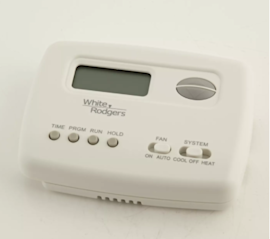
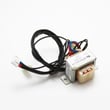
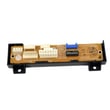
If you are troubleshooting comfort or cycling issues, a failing control can mimic “non-inverter” behavior. On this model, the room air conditioner thermostat control board 6871A00086A is one of the parts that can affect temperature regulation.
Why it matters
A more stable compressor and control strategy reduces temperature swings and frequent restarts; that improves comfort, can lower operating cost, and can reduce wear on electrical components such as capacitors and overload protection.
Last updated: February 2026
Does the LG 3 Star AC have WiFi?
The LG LP123HD3A packaged terminal air conditioner/heat pump is not a WiFi-connected model; it’s designed for local controls and optional wired controls such as a remote wall thermostat or front desk control. For the exact control features and wiring options, use the LP123HD3A owner's manual.
What controls this model supports (and what that means)
This unit is built around physical controls and hardwired control options commonly used in hotels and multi-room installations.
- Local control using the unit’s built-in controls
- Remote wall thermostat control (24 Volt AC thermostat connections)
- Front desk control (wired ON/OFF control)
- Energy saver/continuous fan behavior controlled by a switch setting
Quick feature comparison
| Feature | WiFi app control | Wired remote wall thermostat | Front desk ON/OFF control |
|---|---|---|---|
| How it connects | Wireless network | Low-voltage wiring (24V AC) | Low-voltage wiring to control connector |
| Typical use | Home app control | Central thermostat control | Property management control |
| LP123HD3A support | No | Yes | Yes |
If you need “smart” control anyway
If your goal is remote temperature scheduling or centralized control, the most reliable path on LP123HD3A is using a compatible 24V AC wall thermostat (wired) rather than WiFi.
- Confirm the thermostat is set up for 24 Volt AC systems
- Follow the thermostat wiring terminals shown for the unit
- Use the remote/local control setting so the thermostat takes over
- Turn power off before opening panels or moving wires
Why it matters
WiFi features are model-specific; “3 Star AC” is a rating/marketing description used on many different LG air conditioners, but LP123HD3A is a packaged terminal style unit focused on wired control options and straightforward operation.
Last updated: February 2026
Is the LG dual inverter AC worth the price?
For an LG LP123HD3A packaged terminal air conditioner/heat pump, the “worth it” question comes down to comfort, noise, and operating cost. If you want steady temperatures, quieter operation, and lower energy use versus older fixed-speed units, paying more up front is typically justified; confirm features and operating details in the LP123HD3A owner's manual.
What you should compare before paying more
- Room size and load: Oversizing can cause short cycling; undersizing runs constantly.
- Noise expectations: Inverter-style systems usually sound steadier because they avoid frequent hard starts.
- Energy use: Variable output typically reduces run-time spikes and improves comfort.
- Controls and convenience: Decide if you need advanced controls or simple thermostat operation.
- Repairability: Availability of boards, capacitors, and fan blades can affect long-term value.
Quick value checklist (practical scoring)
| If you care most about... | Paying more usually makes sense when... | When it may not |
|---|---|---|
| Lower electric bills | You run cooling or heat many hours per week | You use it only occasionally |
| Quieter comfort | You sleep or work near the unit | It is in a utility area |
| Stable temperature | You dislike big hot/cold swings | You are fine with wider swings |
| Long-term ownership | You plan to keep the unit for years | You expect to replace soon |
Why parts availability matters to “worth it”
Even a high-efficiency unit is only a good value if it stays reliable and serviceable. For the LP123HD3A, common service items that can restore performance include:
- Room air conditioner thermostat control board 6871A00086A (control and temperature regulation)
- Electric capacitor EAE43285407 (helps motors start and run properly)
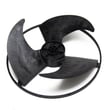
- Room air conditioner condenser fan blade 5901A20051A (moves heat out during cooling)
- Room air conditioner evaporator fan blade 5901A20050A (moves air across the indoor coil)
“Worth it” decision rule we use
If you run the unit daily in a bedroom, living space, or office, the comfort and noise improvements alone typically justify the higher price. If it is for occasional use, a lower-cost non-inverter style can be the better value.
Why it matters: The right efficiency and control style reduces temperature swings, improves comfort, and can lower operating cost over the life of the unit.
Last updated: February 2026
What are common problems with the LG LP123HD3A?
Common problems with the LG LP123HD3A packaged terminal air conditioner/heat pump include weak cooling or heating, poor airflow, water leaking or not draining correctly, and control or power-related issues. Most problems trace back to airflow restrictions, drainage setup, or an electrical component that is failing.
Most common symptoms and what they usually mean
- Not cooling well: dirty filter or coils, blocked intake/exhaust, fan issue
- Not heating well: airflow restriction, control issue, or heat pump performance problem
- Weak airflow: clogged filter, obstructed grille, blower/fan blade problem
- Water leaking indoors: drain pan or drain path issue, unit not level, sleeve gaps
- Unit will not start or trips: power supply issue, capacitor/control board problem
Quick checks we recommend first (safe, no tools)
- Confirm airflow is clear: keep the back area free of obstructions so exhaust heat can leave the unit.
- Clean the filter and front intake: restricted airflow is the most common cause of poor performance.
- Check for water management issues: look for standing water, a blocked drain path, or signs the unit is not sitting correctly.
- Review operating and troubleshooting tips in the owner's manual.
Parts that commonly relate to these problems
If basic cleaning and airflow checks do not fix the issue, these model-specific parts are often involved:
| Symptom | Likely area | Example part for LP123HD3A |
|---|---|---|
| Won’t start, intermittent operation | Controls/electrical | Room air conditioner thermostat control board 6871A00086A |
| Hums, struggles to start, trips | Motor/compressor start circuit | Electric capacitor EAE43285407 or central air conditioner run capacitor 3H00660C |
| Water leaking or not draining | Drainage | Pan asy,drai 3087A20033A |
| Loud vibration or fan noise | Fan blade | Room air conditioner condenser fan blade 5901A20051A or room air conditioner evaporator fan blade 5901A20050A |
Why it matters
Airflow and drainage problems reduce efficiency and comfort, and they can lead to icing, overheating, or water damage around the wall sleeve area. Catching a clogged filter, blocked exhaust, or drain issue early helps the unit run cooler, quieter, and more reliably.
Last updated: February 2026
What size heat pump do I need for a 2000 sq ft home?
Most 2,000 sq ft homes need a heat pump in the 2.5 to 5 ton range; 3 to 4 tons (36,000 to 48,000 BTU/h) is a common starting point, then the final size is set by a Manual J load calculation. That calculation prevents comfort issues and wasted energy from over or undersizing.
Quick sizing ranges (rules of thumb)
These ranges help you sanity-check quotes before you commit to equipment:
- Mild climates, good insulation: 2.5 to 3 tons (30,000 to 36,000 BTU/h)
- Mixed climates, average insulation: 3 to 4 tons (36,000 to 48,000 BTU/h)
- Hot or very cold climates, leaky or poorly insulated homes: 4 to 5 tons (48,000 to 60,000 BTU/h)
What changes the required tonnage
A 2,000 sq ft home can vary widely. These items drive the load up or down:
- Insulation and air sealing (attic, walls, duct leakage)
- Window size, glass type, and sun exposure
- Ceiling height and open floor plan volume
- Local design temperatures and humidity
- Ductwork sizing and airflow capability
- Occupancy and internal heat gains (cooking, electronics)
Oversized vs undersized: what you will notice
| If the heat pump is… | Common symptoms | Typical result |
|---|---|---|
| Oversized | Short cycling, uneven temperatures | Higher wear, poorer humidity control |
| Undersized | Runs constantly on extreme days | Struggles to hold set temperature |
How this relates to LG LP123HD3A
LG LP123HD3A is a room air conditioner style heating and cooling unit, not a whole-home central heat pump. Use the LP123HD3A owner’s manual for its electrical requirements, controls, and installation details; use Manual J to size a central system for a 2,000 sq ft house.
Why it matters
Right-sizing improves comfort, lowers operating cost, and reduces cycling stress on components such as the compressor and run capacitor.
Last updated: February 2026