Owner’s manual
 View engine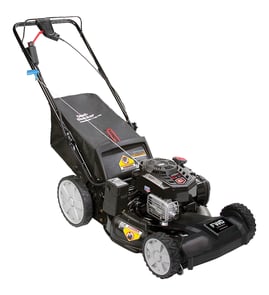


How to look up Craftsman model number?
On your Craftsman walk-behind mower, the model number is printed on a decal on the rear of the mower housing. For model 917371940, use that decal to record both the model and serial number, then match it to parts and diagrams in the owner's manual.
Look for a sticker or metal decal on the mower deck area:
- Check the rear of the mower housing (back side of the deck)
- Wipe off grass and dirt so the decal text is readable
- Record the model number and serial number exactly as shown
- Also note the date of purchase if you still have it
- Keep the info with your maintenance records for blade, belt, and cable service
Once you have the model number, use it to confirm you are ordering parts that fit your exact mower configuration (engine, drive system, and deck setup).
Common parts people look up by model include:
- Blade and blade hardware (blade bolt torque matters)
- Drive belt and drive control cable
- Wheels and height adjuster components
- Operator presence (zone) cable
- Rear skirt and discharge parts
| What you are replacing | What to match | Example part on this model |
|---|---|---|
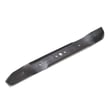
| Cutting blade | Deck size and blade style | Lawn mower 22-in deck mulching blade 532406713 |
| Self-propel drive | Belt length/profile | Poulan lawn mower ground drive belt, 3/8 x 33-3/16-in 532196857 |
| Drive engagement | Cable/assembly routing | Lawn mower drive control cable 532407816 |
Craftsman model numbers can look similar, but small differences change the correct blade, belt, and control cable. Using the exact model and serial from the rear-housing decal helps prevent ordering the wrong parts and avoids fit or performance issues.
Last updated: February 2026
What year is Craftsman Model 917371940?
Craftsman model 917371940 is identified in the documentation as a Craftsman rotary mower (675 Series Briggs & Stratton engine, 22-inch Multi-Cut), but the owner’s manual does not list a manufacture year. For the most accurate year, use the product’s date code (typically on the mower’s ID label) and match it to the date-code format described in the owner's manual.
On walk-behind mowers like the Craftsman 917371940, the date code is usually on the same label as the model and serial information.
Check these common locations:
- Rear of the deck near the discharge opening or rear door
- Top of the deck near the engine mounting area
- Handle bracket area (near the upper handle mounts)
- Under the rear skirt area (wipe off grass and debris first)
Many Craftsman mower labels include a numeric code that represents a build date. The exact format varies by production run, so we recommend confirming the format on your mower’s label and comparing it to the guidance in the owner's manual.
Typical date-code patterns you may see:
- MMDDYY (month, day, year)
- YYMMDD (year, month, day)
- A longer serial number that embeds the date
| Code example | Format | What it means |
|---|---|---|
| 072811 | MMDDYY | July 28, 2011 |
| 110728 | YYMMDD | July 28, 2011 |
Knowing the correct year helps us match the right illustrated parts and specifications for your mower, especially for wear items like the drive belt, drive control cable, and mulching blade.
If you are ordering maintenance parts for this model, common matches from the parts list include:
- Lawn mower 22-in deck mulching blade 532406713
- Poulan lawn mower ground drive belt, 3/8 x 33-3/16-in 532196857
- Lawn mower drive control cable 532407816
Last updated: February 2026
What is the life expectancy of a gas-powered lawn mower?
Most gas-powered walk-behind lawn mowers last 8 to 10 years with normal residential use and routine maintenance. For your Craftsman 917371940, keeping the deck clean, replacing wear items on schedule, and storing it correctly are the biggest factors in reaching (or beating) that lifespan; see the owner's manual.
A mower’s “years” are really driven by hours, maintenance, and storage conditions. These items have the biggest impact:
- Oil and air filtration upkeep (dirty oil and clogged filters accelerate engine wear)
- Deck and drive-area cleaning (built-up grass holds moisture and causes corrosion)
- Blade condition (a dull or bent blade increases vibration and engine load)
- Drive system wear (belt, pulleys, and cables on self-propelled models)
- Off-season storage (stale fuel and moisture cause hard-start and carb issues)
Your manual calls out key intervals that directly protect engine life.
| Item | Typical interval | Why it matters |
|---|---|---|
| Clean underside of mower deck | After each use | Prevents rust and heavy buildup that hurts performance |
| Clean under drive cover | At least twice per season | Keeps the drive system from binding and wearing early |
| Replace spark plug | Each season or every 100 hours | Helps reliable starting and efficient combustion |
These are “expendable” items on most gas mowers; replacing them on time is normal ownership and helps the mower last longer:
- Blade (this model uses a 22-in deck blade such as the lawn mower 22-in deck mulching blade 532406713)
- Ground drive belt (self-propelled drive) such as the poulan lawn mower ground drive belt, 3/8 x 33-3/16-in 532196857
- Drive control cable such as the lawn mower drive control cable 532407816
A gas mower that is cleaned regularly and kept from running hot typically reaches the full expected lifespan because heat, vibration, and corrosion are what shorten engine and deck life fastest.
Last updated: February 2026
Is it cheaper to repair or replace a lawnmower?
For a Craftsman walk-behind mower like model 917371940, repairing is usually cheaper when the fix is a common wear item (blade, belt, cable, wheel). Replacing the mower is usually cheaper when the engine or drive system needs major work and you would pay labor for diagnosis and repair.
- Repair when the mower starts and runs, but performance is poor (uneven cut, vibration, slipping drive, hard to push).
- Replace when the engine has major internal damage, won’t run even after basic tune-up steps, or the repair estimate approaches the cost of a comparable new mower.
- Repair when you can do the work yourself with basic tools and a manual.
- Replace when multiple systems are failing at once (engine + self-propel + deck damage).
These are frequent, straightforward fixes on walk-behind mowers and usually make financial sense:
- Replace a worn blade (poor cut quality, vibration): lawn mower 22-in deck mulching blade 532406713
- Replace a slipping or broken drive belt (self-propel slows or stops): poulan lawn mower ground drive belt, 3/8 x 33-3/16-in 532196857
- Replace a stretched/broken drive cable (drive control doesn’t engage): lawn mower drive control cable 532407816
- Replace a worn wheel (wobble, poor traction): lawn mower wheel 532433121
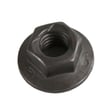
- Replace small hardware that loosens or strips during service: lawn mower hex flange nut 532409149
| Situation | Usually best choice | Why |
|---|---|---|
| Blade is dull/bent, mower vibrates | Repair | Low parts cost, immediate improvement in cut quality |
| Self-propel won’t move but engine runs | Repair | Often belt/cable/pawl related, not an engine issue |
| Mower won’t start after storage | Repair | Often fuel, spark plug, air filter, or basic maintenance |
| Engine needs major internal work | Replace | Parts plus labor can exceed mower value |
A walk-behind mower’s “big money” components are the engine and drive system. The manual for 917371940 also calls out many items as normal wear (blades, belts, air cleaners, spark plug), and those are exactly the repairs that keep ownership costs low when you handle them early. Use the owner's manual for maintenance intervals, troubleshooting steps, and correct adjustment procedures.
Last updated: February 2026
What are the common problems with Craftsman lawn mowers?
Common problems on the Craftsman 917371940 gas walk-behind mower are no-start (fuel, air, ignition, or control bar issues), loss of power from grass buildup or overfilling oil, uneven cutting from a worn or bent blade, and self-propelled drive problems from belt or cable wear. Use the owner's manual troubleshooting chart for the fastest model-specific checks.
- Won’t start: stale fuel, dirty air filter, spark plug wire off, bad spark plug, control bar released
- Loss of power: grass packed under deck, cutting too much at once, dirty air filter, too much oil
- Poor or uneven cut: worn or bent blade, blade loose, wheel heights uneven, debris under deck
- Excessive vibration: loose/damaged blade, broken blade adapter, bent crankshaft
- Loss of drive or slow drive: belt wear, belt off pulley, worn/broken drive cable, loose drive control
- Shut the engine off and disconnect the spark plug wire before working near the blade.
- Drain old fuel and refill with fresh gasoline if it sat 30+ days.
- Clean or replace the air filter; confirm the spark plug wire is firmly connected.
- Clean packed clippings from under the deck so airflow and discharge return.
- Verify wheel height settings match side-to-side.
| Symptom | Part to inspect/replace | What it affects |
|---|---|---|
| Uneven cut, poor bagging, vibration | Lawn mower 22-in deck mulching blade 532406713 | Cut quality and airflow |
| Loss of drive / slow self-propel | Poulan lawn mower ground drive belt 532196857 | Power transfer to drive |
| Drive won’t engage consistently | Lawn mower drive control cable 532407816 | Drive engagement and tension |
Fixing a dull or bent blade and clearing deck buildup restores lift and reduces vibration; that prevents premature wear on the blade adapter, pulleys, and drive components.
Last updated: February 2026