Owner’s manual
 Error Codes


Are top mount or bottom mount fridges better?
Bottom-mount and top-mount refrigerators are both good choices; the better option depends on how you shop and how you use your kitchen. For an LG bottom-mount like model LFX33975ST, a bottom freezer typically puts fresh-food items at eye level, while a top-mount often costs less and can be simpler to live with day to day. For feature and layout details specific to your unit, use the owner's manual.
| Feature | Bottom-mount (bottom freezer) | Top-mount (top freezer) |
|---|---|---|
| Everyday access | Fresh food is easier to reach | Freezer is easier to reach |
| Organization | Often more drawers and bins | Often simpler layout |
| Space for large items | Wide shelves, more fridge space | Freezer can be boxier |
| Typical cost/complexity | More features, more components | Often fewer components |
- You use the refrigerator section more than the freezer
- You want more fresh-food organization (bins, drawers, adjustable shelving)
- You prefer a pull-out freezer drawer for frozen foods
- You want easier access to produce, drinks, and leftovers without bending
- You want a simpler design with fewer convenience features
- You prioritize value and straightforward storage
- You use the freezer frequently and want it at eye level
- You want a layout that is often easier to fit into tight spaces
The mount style changes how often you bend, what you can see quickly, and how well food stays organized. It also affects which parts tend to get the most use (door gaskets, ice and water components, and airflow parts). If you are troubleshooting cooling or sealing issues on your LG LFX33975ST, checking door alignment and gasket condition is a practical first step.
- Ergonomics: fridge-at-eye-level vs freezer-at-eye-level
- Food habits: fresh-food heavy vs frozen-food heavy
- Maintenance: more features can mean more serviceable components
- Kitchen workflow: how often doors open and how long they stay open
Last updated: February 2026
What are the disadvantages of a bottom freezer refrigerator?
Bottom-freezer refrigerators like the LG LFX33975ST put fresh food at eye level, but the tradeoffs are higher upfront cost, more bending to reach frozen items, and freezer organization that can be tougher in deep drawers. They can also be more prone to drain and defrost-related maintenance. See the owner's manual for model-specific features and care steps.
- You bend more often to access frozen foods, ice bins, and lower baskets.
- Deep freezer drawers can hide items; it is easier to lose track of smaller packages.
- Heavier frozen items (bulk meat, large bags) are harder to lift up and out.
- Bottom drawers can be awkward in tight kitchens because they need clearance to pull out fully.
- Some households use the freezer a lot; frequent freezer access is less convenient at floor level.
Bottom-freezer designs commonly route defrost water down to a drain system; if that drain clogs, you can see water or ice buildup.
| Issue you might see | Typical cause | What we check first |
|---|---|---|
| Water pooling inside or under the refrigerator | Defrost drain restriction | Clear the drain path; inspect the refrigerator drain tube 5251JA3003D |
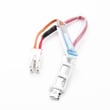
| Frost buildup, warm temps, or odd cycling | Defrost sensing/heating problem | Inspect the refrigerator defrost sensor assembly 6615JB2005R |
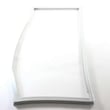
| Doors not sealing well, moisture, or icing | Worn or warped gasket | Inspect the refrigerator door gasket, left ADX72930460 and refrigerator door gasket, right ADX72930461 |
These disadvantages affect food visibility, ergonomics, and long-term efficiency. For example, a poor door seal or a restricted drain can lead to temperature swings, frost, odors, and extra compressor run time.
Last updated: February 2026
What is the common problem with an LG fridge?
For the LG LFX33975ST refrigerator, the most common issues we see are cooling problems (warm fridge or freezer), ice maker or dispenser trouble, and water leaks. Many of these start with airflow restrictions, dirty condenser coils, a weak door seal, or a defrost/drain problem; the owner's manual helps confirm the correct checks for your settings and features.
- Not cooling or weak cooling: dirty condenser coil, condenser fan airflow blocked, sealed-system/compressor issue
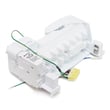
- Ice maker not making ice: clogged filter, low water pressure, ice room door not sealing, inlet valve problem
- Water leaking or puddles: clogged/iced drain tube, loose water line, door not closing fully
- Food freezing in fresh food section: temperature sensor/airflow issue, control settings, door left ajar
- Noisy operation: condenser area needs cleaning, fan hitting ice, items vibrating inside
- Confirm temperatures: 37°F fresh food and 0°F freezer.
- Make sure doors close tightly; inspect gaskets for gaps, tears, or warping.
- Clean dust from the condenser area and ensure airflow around the cabinet.
- If water or ice is slow, replace the filter and purge air from the dispenser.
- If you see water under the fridge, check for a blocked drain path.
| Symptom | Common fix | Example part for LFX33975ST |
|---|---|---|
| Warm temps, long run time | Clean/restore heat rejection | Refrigerator condenser coil ACG73645004 |
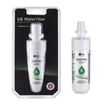
| Slow water, poor ice | Replace filter | LG kenmore refrigerator water filter ADQ36006101 |
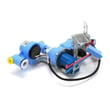
| No ice or weak fill | Restore water flow to ice maker | LG refrigerator water inlet valve AJU72992603 |
| Leaks inside/freezer | Clear/repair drain | Refrigerator drain tube 5251JA3003D |
| Frost buildup, temp swings | Defrost sensing issue | Refrigerator defrost sensor assembly 6615JB2005R |
Small airflow or sealing problems can look like “major cooling failure” because the refrigerator cannot move heat efficiently. Fixing basics like coil cleanliness, door sealing, and water flow often restores normal temperatures and ice production.
Last updated: February 2026