 Installation guide
 Owner’s manual
 Error Codes



Can a clogged drain cause an FTD error?
Yes. On the GE GDWT358V55ES dishwasher, an FTD (fail to drain) error commonly happens when water cannot leave the tub due to a clog or an improper drain setup (such as a missing air gap or an insufficient high drain loop).
- Cancel the cycle and let the unit attempt to drain; listen for the drain pump running.
- Check the sink connection: if the drain hose connects to a garbage disposer, confirm the disposer drain plug was removed.
- Verify the drain hose routing: avoid kinks, crushing, or low spots that trap water.
- Confirm the drain connection height: use an air gap when required, or a high drain loop at least 32 inches above the platform.
- Clean the filter area in the tub; debris here can restrict flow and trigger drain errors.
A clog and a drain setup problem can look identical because both prevent the pump from moving water out. The installation guide calls out two common causes of poor draining: missing air gap when the drain ties in low, and not having a 32-inch minimum high drain loop.
| Symptom | More likely cause | What to do |
|---|---|---|
| Standing water, hose looks kinked or crushed | Drain hose restriction | Reroute/straighten hose; remove kinks |
| Dishwasher drains slowly after disposer install | Disposer drain plug still installed | Remove the disposer drain plug |
| Intermittent draining, especially after install | Drain loop/air gap not correct | Set up air gap or 32-inch high loop per guide |
| Gurgling/backflow from sink | Drain connection issue | Verify air gap/high loop and sink plumbing |
If the drain path is clear and the installation is correct, a worn or obstructed pump or a restricted filter can still cause FTD.
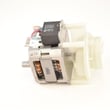
- Dishwasher drain pump WD26X10048: pumps water out; debris in the impeller area can reduce flow.
- Dishwasher filter WD22X10077: a clogged filter can slow water movement and contribute to drain problems.
A dishwasher that cannot drain properly can leave dirty water in the tub, stop mid-cycle, and repeatedly throw FTD. Correct drain hose height and a clear drain path restore normal pump performance and help prevent repeat errors.
For model-specific drain routing and air gap/high loop requirements, follow the GDWT358V55ES installation guide.
Last updated: January 2026
What is the average lifespan of a GE dishwasher?
Most GE dishwashers, including model GDWT358V55ES, typically last 10 to 12 years. With consistent cleaning and correct installation (especially the drain setup), many households see 10 to 15 years of service before major repairs become common.
- Filter and wash system care: keeping the filter area clean helps the circulation system work efficiently.
- Leak prevention: worn seals and gaskets can shorten life by causing water damage and corrosion.
- Drain setup: an incorrect drain connection can cause poor draining and repeat service issues.
- Detergent use: too much detergent or the wrong type can leave buildup and stress components.
- Water quality: hard water scale can reduce heating and cleaning performance over time.
- Clean the filter area regularly; replace the filter if it is damaged or won’t come clean (see dishwasher filter WD22X10077).
- Inspect the door sealing surfaces; replace a flattened or torn seal (see dishwasher door seal WD08X10055).
- Run a dishwasher cleaner or descale routine periodically if you have hard water.
- Confirm the drain line is routed correctly; the installation instructions call out a 32-inch minimum high loop/air gap routing to help prevent drain problems (see GDWT358V55ES installation guide).
| Usage pattern | Typical lifespan | What usually fails first |
|---|---|---|
| Light (few loads/week) | 12 to 15 years | Seals, racks, dispenser |
| Average (daily or near-daily) | 10 to 12 years | Pump, heater circuit, seals |
| Heavy (multiple loads/day) | 8 to 10 years | Pump, drain components, controls |
Knowing the expected lifespan helps you decide whether to repair or replace. For a 10+ year old dishwasher, fixing leaks early (seals, gaskets, drain issues) often prevents bigger failures like pump damage or electrical problems.
Last updated: January 2026
What is the most common problem with a GE dishwasher?
The most common problem we see on a GE dishwasher like model GDWT358V55ES is draining trouble (slow drain, standing water, or a “won’t drain” complaint). In many homes, the root cause is a drain setup issue (missing high loop or air gap) or a restriction in the drain path.
- Confirm the drain hose is routed with a high drain loop (typically at least 32 inches above the floor) to help prevent backflow and improve drain performance.
- If the drain hose connects to a waste tee or disposer lower than 18 inches above the floor, use an air gap.
- Look for kinks, crushing, or rubbing where the drain hose passes through the cabinet.
- Make sure the sink/disposer connection is clear (a clogged disposer inlet can mimic a dishwasher drain failure).
- If the dishwasher hums but does not move water out, the drain pump can be the failure point.
For the exact routing requirements and checkpoints for this model, follow the GDWT358V55ES installation guide.
| Symptom | Most common cause | What to do next |
|---|---|---|
| Standing water after cycle | Drain hose routing or restriction | Verify high loop/air gap, clear hose path |
| Slow draining | Partial clog in hose or sink connection | Check for kinks, clear sink/disposer inlet |
| Won’t start (no wash action) | Door not fully latched, power issue | Confirm door closes firmly, check breaker |
| Leaks at the door | Worn door seal | Inspect and replace if torn or flattened |
If you confirm the drain path is correct and clear but the unit still will not drain, these model-matched parts are commonly involved:
- Dishwasher drain pump WD26X10048 (moves water out during drain)
- Drain tube WD24X10045 (drain path component that can clog or leak)
- Dishwasher door seal WD08X10055 (helps prevent leaks around the door)
A correct drain loop or air gap helps prevent dirty sink water from flowing back into the tub and reduces repeat clogs. It also helps the dishwasher drain consistently, which protects wash performance and helps avoid odor issues.
Last updated: January 2026





