Owner’s manual
 Error Codes



How to get the bottom shelf out of a Samsung refrigerator?
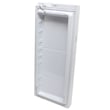
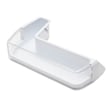
On the Samsung RFG298HDWP, the bottom glass shelf removes by taking out the drawers below it first, then tilting the front of the shelf up and lifting it straight up before pulling it out. This prevents the shelf from catching on the drawer rails.
- Remove food from the shelf and drawers.
- Pull the vegetable/fruit drawers out to full extension.
- Tilt up the front of each drawer and pull straight out to remove the drawers.
- With the drawers out, grab the shelf with both hands.
- Tilt up the front of the shelf, lift it up vertically, then pull the shelf out.
- Use two hands and lift evenly; tempered glass shelves are heavy.
- Do not force the shelf past the side rails; re-tilt the front higher and lift straight up.
- Set the shelf on a towel or flat surface after removal.
- If the shelf feels “locked,” confirm both drawers are fully removed (the shelf above them cannot lift out until they are out).
- Clean and dry the shelf and supports before reinstalling to prevent sticking.
To put the shelf back in, guide the shelf hooks into the slots at the height you want, then lower the front so the hooks drop into place.
| Task | What you do | Why it helps |
|---|---|---|
| Remove drawers first | Pull out, tilt front up, pull straight out | Clears the shelf lifting path |
| Lift shelf correctly | Tilt front up, lift vertically, pull out | Prevents binding and glass stress |
| Reinstall | Hook into slots, then lower front | Keeps shelf level and secure |
Removing the drawers first and lifting the shelf vertically protects the glass, prevents damage to the shelf supports, and makes cleaning the interior faster and safer.
For diagrams and the exact shelf and drawer removal illustrations for this model, follow the RFG298HDWP owner's manual.
Last updated: January 2026
What is the most common problem with Samsung refrigerators?
For Samsung refrigerators like model RFG298HDWP, the most common customer-reported issues are ice maker problems (no ice, clumping, freezing up) and cooling/airflow problems (warm fresh food section, frost buildup). These often trace back to airflow restrictions, ice buildup, or fan and defrost-related conditions.
- Ice maker stops producing ice or makes very small cubes
- Ice clumps together or the ice maker area freezes up
- Fresh food section warms up while the freezer still seems cold
- Frost or ice buildup on the evaporator cover or vents
- Water leaks or puddles (often after heavy frost/defrost cycles)
- Fan noise changes (rattling, buzzing, or no fan sound)
Use these steps first because they solve many “common problem” symptoms without parts.
- Confirm doors close fully and seals are making contact all the way around
- Do not block air vents with bags, bins, or tightly packed food (blocked vents can cause overcooling and leakage conditions)
- If the refrigerator was unplugged, wait at least 5 minutes before plugging it back in
- If water dispenses slowly, replace the water filter and reset the filter indicator
- Look for frost buildup that suggests an airflow or defrost issue
| Symptom | Most likely category | What to check first |
|---|---|---|
| No ice or slow ice production | Ice maker / water supply | Filter age, water supply valve open, ice bin seated |
| Ice clumping or freezing up | Ice room airflow / temperature | Frost buildup, door closing, vents blocked |
| Fridge warm, freezer OK | Airflow / evaporator fan | Frost on evaporator cover, fan running |
| Water under crisper or on floor | Drain/defrost water path | Drain tube condition, ice blockage |
If troubleshooting points to a failed component, these are model-matched examples for RFG298HDWP:
- Refrigerator ice maker assembly da97-07365g (ice production and harvesting issues)
- Refrigerator cabinet drain tube assembly da97-04049d (defrost drain leaks and puddles)
- Samsung refrigerator water filter da29-00020b (slow water flow, poor ice fill)
Ice and cooling problems usually get worse over time; restricted airflow and heavy frost can reduce temperature stability, increase run time, and lead to food spoilage. Following the operating and maintenance guidance in the RFG298HDWP owner's manual helps prevent repeat issues.
Last updated: January 2026
What is the difference between force defrost RD and FD?
On Samsung refrigerator model RFG298HDWP, RD and FD are service-style forced defrost options; RD is used to defrost the refrigerator (fresh food) side, while FD is used to run a broader forced defrost routine when you need a more complete defrost. For your model’s exact control-panel steps and what the display shows, use the RFG298HDWP owner's manual.
These modes are chosen based on where frost is building up and what symptoms you are seeing.
- Use RD when the fresh food section is warming, airflow feels weak at the refrigerator vents, or you see frost behind the refrigerator evaporator cover.
- Use FD when symptoms point to heavier or more widespread icing (cooling problems plus ice maker or freezer symptoms).
- Stop and unplug the refrigerator if you smell burning or see damaged wiring; forced defrost uses heaters.
- If icing returns quickly, focus on the cause (air leaks, drainage, fan operation) instead of repeatedly forcing defrost.
| Option | Primary purpose | Typical symptom match |
|---|---|---|
| RD | Defrost the refrigerator-side cooling area | Warm fresh food, frosty refrigerator back wall |
| FD | More complete forced defrost routine | Heavy icing, multiple compartments affected |
Forced defrost clears ice; it does not correct the condition that created the ice.
- Door sealing: look for gaps, torn gasket, or doors not closing fully.
- Drainage: clear a clogged drain that can refreeze and cause repeat icing (a drain tube issue can require the refrigerator cabinet drain tube assembly da97-04049d).
- Airflow: avoid blocking vents with food packages.
- Temperature settings: Samsung’s common recommended targets are 38°F refrigerator and -2°F freezer (adjust as needed for your kitchen conditions).
Using the right forced defrost option reduces unnecessary heat exposure and helps you troubleshoot faster by matching the defrost routine to the area that is icing up.
Last updated: January 2026