 Owner’s manual


Can I replace dishwasher parts myself?
Yes, for a GE PDT145SGL0WW dishwasher you can replace many common parts yourself if you can safely shut off power and water, follow the step-by-step procedures, and use basic hand tools. For electrical and wiring-related repairs, we follow the safety guidance in the PDT145SGL0WW owner's manual.
What you can usually replace yourself
These repairs are typically straightforward DIY jobs:
- Clean or replace the filter components (often restores cleaning and draining performance)
- Replace a leaking or kinked drain hose
- Replace a worn rack slide
- Replace a door striker if the door will not latch consistently
- Replace a detergent dispenser if the cup will not open
Repairs that need extra caution
The manual emphasizes disconnecting power before maintenance and avoiding repairs not specifically recommended; for higher-risk repairs, we treat these as advanced DIY or technician-level.
- Control and user interface issues (live voltage and sensitive electronics)
- Internal wiring, junction box work, or hard-wiring changes
- Pump and sump repairs that require pulling the dishwasher out and managing water lines
Quick risk guide
| Repair type | Typical DIY difficulty | Main risk | Common symptom |
|---|---|---|---|
| Filter cleaning | Easy | None to low | Poor cleaning, slow drain |
| Drain hose replacement | Medium | Leaks | Water left in tub |
| Control board replacement | Advanced | Electric shock, miswiring | Dead unit, erratic operation |
| Wash pump replacement | Advanced | Leaks, fitment | Not washing, weak spray |
Safe DIY checklist (before you start)
We use this checklist on GE dishwashers like the PDT145SGL0WW:
- Turn off power at the breaker (or wall switch if your installation uses one)
- Shut off the water supply valve under the sink
- Protect the floor with towels and a shallow pan
- Take photos of wire and hose routing before disconnecting anything
- Run a quick leak check after reassembly (fill and drain)
Parts that commonly come up on this model
If your symptom matches, these model-specific parts are often involved:
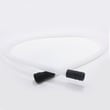
- Not draining or slow drain: check the dishwasher drain hose WD24X24649 and the filter system (including the fine filter)
- No power or intermittent power: check the machine control fuse WD21X25696
- Will not start or acts “dead” with power present: control and interface components may be involved
Why it matters
Dishwashers combine water, heat, and electricity in a tight space. Doing the simple maintenance and mechanical replacements yourself can save time and money, but following the manual’s safety steps helps prevent leaks, damage, and shock hazards.
Last updated: February 2026
What is the most common problem with GE dishwashers?
The most common problems we see with GE dishwashers like model PDT145SGL0WW are draining problems (clogged filters or a restricted drain path), “won’t start/won’t run” complaints (power, control lock, or a control reset), and cleaning performance issues caused by poor water flow or detergent use.
Most common issues and what to check first
- Not draining or standing water: Clean the filter system and check for a kinked or clogged drain hose.
- Won’t run or won’t start: Confirm power is on (some installs use a wall switch), then reboot power for 30 seconds.
- Detergent left in the cup: Make sure dishes are not blocking the dispenser door.
- White film or cloudy glassware: Hard water minerals or detergent issues; use rinse aid and run a cleaning cycle.
- Poor cleaning: Verify spray arms can rotate freely and the filters are seated correctly.
Quick “symptom to likely cause” guide
| Symptom | Most likely cause | Best first step |
|---|---|---|
| Water left in tub | Filter restriction or drain path issue | Clean and reseat the filter assembly |
| Lights on, won’t run | Control lock, power interruption, needs reset | Reboot power; then try Start again |
| Detergent not dissolving | Cup blocked by dishes | Reload so the cup can open |
| Film on dishes | Hard water minerals, low-performing detergent | Use rinse aid; run a cleaner cycle |
Model PDT145SGL0WW tips from the manual
The manual calls out a few high-impact basics: allow the control to initialize after turning power on, use automatic dishwasher detergent, and keep the filter assembly properly installed because an improperly seated filter can reduce performance. For the exact steps and diagrams, use the PDT145SGL0WW owner’s manual.
Parts that commonly relate to these symptoms
If cleaning and reset steps do not fix the issue, these model-matched parts are often involved:
- Drain restrictions or routing: dishwasher drain hose WD24X24649 and drain hose extension WD24X10062
- No-run/no-start after power events: machine control fuse WD21X25696
- Intermittent operation or dead controls: dishwasher electronic control board WD21X24676
- Poor wash performance from debris buildup: fine filter WD12X24656
Why it matters
Drain flow, proper detergent dispensing, and a stable control startup are the foundation for wash performance. When any of these are off, you can get standing water, incomplete cycles, or residue on dishes even when the dishwasher seems to “run.”
Last updated: February 2026
What are the commonly replaced parts in a dishwasher?
In a GE dishwasher like model PDT145SGL0WW, the most commonly replaced parts are the ones that handle water flow, washing action, draining, and door sealing. Filters and hoses clog or leak over time, and electronic controls can fail after power issues or moisture exposure.
Commonly replaced dishwasher parts (and what they do)
- Filters: trap food soil to protect the pump; a clogged filter can reduce cleaning and cause drain issues (see PDT145SGL0WW owner's manual).
- Drain components: drain hose, drain pump, and discharge hose; problems show up as standing water or slow draining.
- Wash system parts: wash pump and sump; issues show up as poor cleaning, weak spray, or unusual noise.
- Door closing parts: striker, latch pieces, and door seals; issues show up as leaks or the dishwasher not starting because the door will not “catch.”
- Fill components: fill hose and inlet seals/gaskets; issues show up as no fill, underfilling, or leaks at the water connection.
- Controls and fuses: user interface, electronic control board, and control fuse; issues show up as dead panel, beeping, or cycles that will not start.
Model-specific examples for PDT145SGL0WW
These are parts we often see replaced on this GE platform:
| Symptom | Likely area | Example part for this model |
|---|---|---|
| Not draining, water left in tub | Drain path | Dishwasher drain hose WD24X24649 or drain hose extension WD24X10062 |
| Will not power up or randomly stops | Electrical/control | Machine control fuse WD21X25696 or dishwasher electronic control board WD21X24676 |
| Leaks at the door or will not latch | Door closing | Door striker assembly WD12X24648 |
| Poor cleaning, debris in bottom | Filtration | Fine filter WD12X24656 |
Quick checks that prevent “part failures”
- Clean and reseat the filter assembly correctly after cleaning (a mis-seated filter can reduce performance).
- Check the drain hose routing for kinks and ensure the connection is secure.
- If the dishwasher will not run, reset power at the breaker or wall switch for 30 seconds.
- Keep small removable pieces out of children’s reach (they can be a choke hazard if removed).
Why it matters
Replacing the right part the first time saves repeat tear-downs. On PDT145SGL0WW, many “not cleaning” and “not draining” complaints trace back to filter maintenance and a clear drain path, while “dead” symptoms often point to the fuse, user interface, or control board.
Last updated: February 2026





