


Who makes Kenmore dishwasher model 66515958793?
Kenmore model 66515958793 was built by Whirlpool. Kenmore is a brand name (not a factory), and the 665 model prefix is the key identifier that points to Whirlpool as the manufacturer for this dishwasher.
How we identify the manufacturer for Kenmore 665 models
Kenmore uses model-number prefixes to indicate the original manufacturer. For dishwashers with a 665 prefix, the unit is Whirlpool-built.
Common Kenmore dishwasher manufacturer clues:
- The first three digits (the prefix) are the fastest way to identify the builder
- The full model number matters; use 66515958793 exactly when shopping parts
- Parts diagrams and part cross-references typically align with Whirlpool-built designs
- Many internal components (like the inlet valve, heater, and door latch) follow Whirlpool patterns
Why this matters when you’re buying parts
Knowing Whirlpool built your Kenmore 66515958793 helps you match the correct replacement parts and avoid look-alike components that do not fit.
Here are a few model-matched parts we list for this dishwasher:
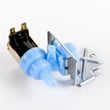
- Inlet valve W10844024
- Dishwasher door latch WP3380854
- Heater WPW10082896
- Dishwasher drain hose WP3374077
Quick examples: common symptoms and likely part areas
| Symptom | Common area to check | Example part on this model |
|---|---|---|
| Not filling | Water inlet system | Inlet valve |
| Door won’t latch | Door latch assembly | Door latch |
| Poor drying | Heating circuit | Heater or thermostat |
| Not draining | Drain path | Drain hose |
Why it matters
When we match parts to the correct manufacturer family (Whirlpool-built Kenmore 665), you get better fit, fewer returns, and faster repairs.
Last updated: February 2026
How to do a hard reset on a Kenmore dishwasher?
On Kenmore model 66515958793, a “hard reset” is usually done by canceling the current cycle and rebooting the control; the most reliable method is to cut power to the dishwasher for a few minutes, then restart a normal wash cycle.
Quick reset methods (try in this order)
- Press Cancel/Drain once; wait for the drain to finish (often 1 to 2 minutes).
- Turn the dishwasher OFF (if it has a power button), wait 10 seconds, then turn it back on.
- If the keypad is unresponsive, turn power off at the breaker for 3 to 5 minutes, then restore power.
- Start a Normal cycle and let it run for 2 to 3 minutes to confirm the control is responding.
- If the dishwasher beeps and stops immediately, latch the door firmly and try again.
What a “hard reset” fixes (and what it does not)
A reset clears many temporary control issues, but it will not fix a mechanical problem like a door that will not latch, a fill problem, or a wash motor that is not running.
| Symptom after reset | Most likely cause | What to check next |
|---|---|---|
| Won’t start, lights on | Door not fully latched | Inspect/replace dishwasher door latch WP3380854 |
| Fills slowly or not at all | Water supply or inlet valve issue | Verify shutoff valve is open; consider inlet valve W10844024 |
| Stops mid-cycle, water cool | Heating circuit issue | Check heater wiring; test thermostat WP661566 |
Why it matters
Resetting the control is the fastest way to clear a stuck cycle or keypad glitch on an undercounter dishwasher. If the problem returns, the symptom pattern helps pinpoint whether you are dealing with a control issue or a part like the door latch, inlet valve, or thermostat.
Last updated: February 2026
Are all dishwashers 600mm wide?
No. Many full-size built-in (undercounter) dishwashers are designed to fit a standard 600 mm (about 24-inch) cabinet opening, but compact and slim models are narrower, and some specialty units vary. For Kenmore model 66515958793, plan on a standard 24-inch class opening unless your cabinet cutout measures differently.
Common dishwasher width categories
Most dishwashers fall into these size groups:
- Full-size built-in: typically fits a 24-inch (about 600 mm) opening
- Slim built-in: typically fits an 18-inch (about 450 mm) opening
- Compact/specialty: countertop or portable units vary by design
- Panel-ready vs. standard front: width is usually similar, but door style can affect clearances
How to confirm what fits in your kitchen
Measure the cabinet opening, not the old dishwasher door.
- Measure opening width at the front and back (cabinets can be out of square)
- Measure opening height from floor to underside of countertop
- Measure opening depth to the back wall, noting plumbing and wiring space
- Check for side clearance so the door opens without rubbing cabinets
- Confirm the toe-kick area is not blocked by flooring changes
Quick reference: inches to millimeters
| Nominal size | Typical opening (in) | Approx. (mm) |
|---|---|---|
| Full-size built-in | 24 | 610 |
| Slim built-in | 18 | 457 |
Why it matters
Dishwashers are built around cabinet standards, but real kitchens are not always standard. Measuring first prevents fit issues and helps you avoid problems with door swing, toe panel clearance, and water line or drain hose routing.
If you are repairing fit-related issues (racks not sliding well, door not closing smoothly, or loading problems), replacing worn internal parts can help, such as the dishwasher dishrack W10833650 or dishwasher door latch WP3380854.
Last updated: February 2026
What are common problems with Kenmore dishwashers?
Common problems on Kenmore undercounter dishwashers like model 66515958793 include not starting, not filling, poor cleaning, not draining, leaks, and drying or heating complaints. Most causes trace back to water supply issues, a door-latch problem, or clogged or worn wash components.
Most common symptoms and what usually causes them
- Won’t start or stops mid-cycle: door not fully latched, failed door latch switch, power interruption
- Poor cleaning or gritty dishes: clogged spray arm holes, low water fill, worn wash parts
- Won’t drain: drain hose restriction, pump/impeller issue, sink drain or disposal blockage
- Leaking: loose clamps, worn seals, overfilling from a float issue
- No heat or poor drying: heater circuit issue, thermostat problem, rinse-aid dispenser issue
Quick checks we recommend before replacing parts
- Confirm the door closes firmly and the latch engages.
- Run hot water at the sink for 30 to 60 seconds before starting a cycle.
- Check that the spray arms spin freely and the holes are not plugged.
- Inspect the drain hose routing for kinks and a proper high loop.
- Look for standing water and debris in the bottom of the tub after a cycle.
Parts that commonly fix these problems (for model 66515958793)
| Problem | Part to check | What it affects |
|---|---|---|
| Won’t start | Dishwasher door latch WP3380854 | Confirms the door is closed so the control will run |
| Won’t fill or fills slowly | Inlet valve W10844024 | Controls water entering the dishwasher |
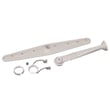
| Poor wash coverage | Dishwasher spray arm 675808 | Distributes wash water to the dishes |
| Not heating or weak drying | Thermostat WP661566 | Helps regulate water temperature and heater operation |
| Overfilling or leak from high water level | Dishwasher float assembly WP3376397 | Signals the unit to stop filling |
Why it matters
Dishwashers depend on the right water level, strong spray action, and correct draining. When one of those basics is off, you can see multiple symptoms at once (for example, low fill can look like “not cleaning” and “not drying”).
Last updated: February 2026
Is it worth repairing a Kenmore dishwasher?
Yes, it’s usually worth repairing a Kenmore undercounter dishwasher like model 66515958793 when the problem is isolated to a common service part (latch, inlet valve, drain hose, heater) and the tub is in good shape; you typically spend far less than replacing the entire dishwasher.
Quick rule of thumb (repair vs. replace)
We use these practical checkpoints to decide:
- Repair when the issue is a single failed part (no repeated breakdown pattern)
- Repair when the dishwasher still cleans well and the racks and tub are solid
- Replace when you have multiple major failures close together (motor plus leaks plus controls)
- Replace when the tub is leaking or badly rusted (that’s a structural failure)
- Replace when repair cost is close to the cost of a comparable new unit
Common repairs that are often “worth it” on this model
These are typical, straightforward fixes that can restore performance:
- Door won’t latch or won’t start: check/replace the dishwasher door latch WP3380854
- Not filling or filling slowly: check/replace the inlet valve W10844024
- Not draining: inspect the drain path and consider the dishwasher drain hose WP3374077
- Poor wash or weak spray: inspect the dishwasher spray arm 675808 and seals
- Dishes not drying well: test heating circuit parts such as the thermostat WP661566 or heater components
Cost and impact comparison
| Situation | Typical outcome | Usually worth repairing? |
|---|---|---|
| One functional failure (fill, drain, latch) | Restores normal operation | Yes |
| Wear items (spray arm, seals, basket) | Improves cleaning and usability | Yes |
| Major drive issue (pump/motor) | Higher parts cost and labor | Sometimes |
| Tub leak or severe corrosion | Structural, not a “part swap” | No |
Why it matters
A targeted repair keeps your kitchen setup the same (no re-fit or re-install), reduces downtime, and avoids replacing an appliance when a single part is the real cause. It also helps you keep cleaning performance consistent once the root issue is fixed.
Last updated: February 2026







