Owner’s manual
 Error Codes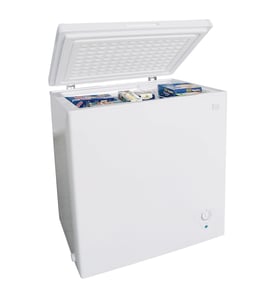




How to get Kenmore Elite freezer out of demo mode?
Kenmore Elite chest freezer model 25316582104 does not use a retail “demo mode” like many display refrigerators; when it seems stuck in demo, the cause is almost always a control setting, alarm switch position, or a power reset issue. Use the steps below and confirm control locations in the 25316582104 owner's manual.
Quick reset steps (most effective)
- Unplug the freezer for 5 minutes (or switch the breaker off), then restore power.
- Verify the temperature control is not set to OFF.
- Confirm the Power On light is illuminated (it should glow even if the temperature control is turned to OFF).
- If your unit has a high-temp alarm switch, open the lid and set the switch to ON after the freezer has cooled.
- If the alarm is sounding, press ALARM OFF (the buzzer can shut off automatically after 48 hours, but the alarm light may keep blinking).
Check the settings that get mistaken for “demo mode”
These features can make the freezer look like it is not cooling or not responding:
| What you notice | Most common cause | What to do |
|---|---|---|
| Freezer runs but seems “off” | Temperature control set to OFF or too warm | Set colder and allow 24 hours to stabilize |
| Alarm light blinking or buzzer | Temp alarm condition after warm-up or power interruption | Press ALARM OFF; let freezer pull down |
| No interior light when lid opens | Door switch or bulb issue | Test the lid switch; inspect wiring |
If the lid switch is not working, the freezer may not behave normally with the light and some alarm functions. The model-specific replacement is the freezer door switch 216822900.
Why it matters
A true demo mode disables cooling for showroom display. On model 25316582104, “demo-like” symptoms usually point to a setting, alarm state, or an electrical/control issue, so a reset and control check restores normal operation faster than replacing parts.
Last updated: January 2026
Why is my Kenmore Elite freezer not freezing?
If your Kenmore Elite chest freezer model 25316582104 is running but not freezing, the most common causes are an incorrect temperature control setting, warm air leaking in through the lid seal, or a cooling-system start problem. Use the checks below to pinpoint whether it is airflow, power, or a failed component. See the 25316582104 owner's manual for the model-specific troubleshooting chart.
Quick checks (most common fixes)
- Make sure the temperature control is not set to OFF; set it colder and allow 24 hours to stabilize.
- Confirm the freezer is plugged in firmly; avoid outlets protected by a GFCI that may trip.
- Check your home breaker or fuse if the freezer is completely dead.
- Reduce lid openings and do not load large amounts of warm food at once.
- Verify the lid closes fully; look for packages preventing a tight seal.
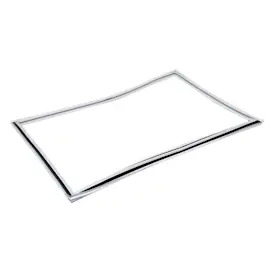
- Inspect the lid gasket for dirt, gaps, or damage; clean it with mild soap and water.
What to listen and feel for
| What you notice | What it usually means | What to do next |
|---|---|---|
| No sound, no lights | No power or control set to OFF | Check control setting, outlet, breaker |
| Hums then clicks off | Start device or compressor issue | Test start components; consider service |
| Runs constantly, still warm | Air leak, warm load, or sealed-system issue | Check gasket and lid alignment first |
| Frost only in one area, poor cooling | Possible sealed-system restriction/leak | Professional sealed-system service |
Parts that commonly relate to “not freezing”
If basic checks do not restore freezing, these model-compatible parts are often involved:
- Freezer electronic control board 216979700 (temperature regulation and run logic)
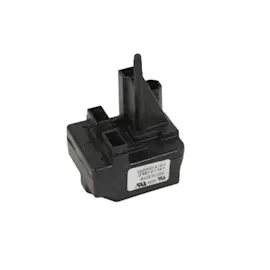
- White-westinghouse freezer compressor start relay 216954228 (helps the compressor start)
- Freezer compressor overload and relay clamp 216954300 (protects compressor; can interrupt starting)
- Frigidaire freezer gasket and liner fastener kit 5304406520 (helps restore a tight lid seal)
Why it matters
A chest freezer that is slightly warm can spoil food quickly and can also run too long, increasing energy use. Fixing lid sealing and temperature control issues early prevents unnecessary compressor strain.
Last updated: January 2026
Why is my Kenmore chest freezer flashing 6?
A flashing “6” on a Kenmore chest freezer model 25316582104 typically points to an alarm or control-related condition rather than a simple temperature knob setting. Start by checking for a warm-temperature event (lid left open, recent power loss) and then verify the control and door-switch operation using the steps in the 25316582104 owner's manual.
What “flashing” usually means on this freezer
On many Kenmore chest freezers with indicator lights and an alarm, flashing is used to signal an unsafe temperature condition. The manual describes a temperature alarm behavior where an indicator light blinks and a buzzer may sound until the freezer returns to a safe temperature.
Common triggers include:
- Recent power failure or the freezer being unplugged
- Lid not sealing fully (gasket issue) or lid left open
- Large load of unfrozen food added too quickly
- Freezer not yet stabilized after a temperature adjustment
- Control sensing a temperature that is too warm for too long
Quick checks we recommend (in order)
- Confirm the freezer is actually cold: items should be hard frozen; if not, treat it as a cooling failure.
- Check the lid seal and closing force: look for gaps, frost trails, or a warped lid.
- Press any alarm reset/off button (if equipped): some models silence the buzzer but keep the indicator flashing until temperature recovers.
- Allow recovery time: after loading food or changing settings, give it several hours to stabilize.
- Inspect the door/lid switch (if your model uses one): a failed switch can confuse alarm logic on some designs.
Parts that commonly relate to alarms or “flashing” conditions
If the freezer is not cooling normally or the flashing returns after temperature recovers, these parts are common suspects:
| Symptom you notice | Most likely area | Example part for this model |
|---|---|---|
| Warm freezer, compressor struggles to start/clicks | Start components | White-westinghouse freezer compressor start relay 216954228 |
| Warm freezer, compressor runs but won’t maintain temp | Control or sealed system | Frigidaire freezer electronic control board 216979700 |
| Light/alarm behavior seems wrong when lid is closed | Lid/door sensing | Freezer door switch 216822900 |
Why it matters
A flashing alarm condition is your freezer’s way of warning that food-safe temperatures may not be maintained. Addressing lid sealing, loading habits, and control or start-component issues quickly helps prevent thawing and reduces compressor strain.
Last updated: January 2026