Owner’s manual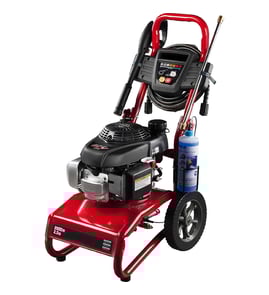




Can you put 87 gas in a pressure washer?
Yes. For the Craftsman gas pressure washer model 580752700, regular unleaded gasoline is appropriate; 87 octane is commonly used and aligns with the fuel guidance in the 580752700 owner’s manual. Use clean, fresh fuel and avoid mixing oil into the gasoline.
Fuel type guidance for model 580752700
For this model, we recommend following these basics:
- Use clean, fresh, regular unleaded gasoline
- Use 87 octane (regular) for typical operation
- Do not mix oil with the fuel (this is a 4-stroke engine)
- Avoid gasoline containing methanol
- Do not use old or stale fuel, especially after storage
What to avoid (to prevent hard starting and fuel-system issues)
Alcohol-blended fuels can create storage problems if the unit sits. To reduce issues:
- Do not store fuel in the tank for 30 days or longer without proper storage steps
- If the washer will sit, run it dry or treat fuel with a stabilizer (per the manual)
- Keep the fuel cap tight and wipe up spills before starting
Quick reference: fuel do’s and don’ts
| Item | Recommended for 580752700 | Notes |
|---|---|---|
| Gasoline type | Regular unleaded | Clean and fresh |
| Octane | 87 | Higher octane is not required for normal use |
| Oil mixed in gas | No | Add oil to crankcase, not the fuel |
| Methanol fuel | No | Can damage components |
Why it matters
Using the right gasoline helps your Craftsman 580752700 start easier, run smoother under load, and reduces carburetor and fuel-system problems that often show up as rough running, surging, or “won’t start” symptoms.
Last updated: January 2026
What is the PSI of a gas-powered pressure washer?
For the Craftsman gas pressure washer model 580752700, the rated pressure is 2,500 PSI under normal operating conditions. You can confirm the rating and operating limits in the 580752700 owner's manual.
What PSI means (and what affects it)
PSI (pounds per square inch) is the water pressure at the spray tip. Actual cleaning force can vary based on setup and restrictions.
- Spray tip choice (0°, 15°, 40°, or chemical tip) changes impact and coverage
- Water supply must be adequate (the manual calls for at least 20 PSI at the hose end)
- Clogged inlet screen or in-line filter can reduce pressure
- Kinked or leaking hoses reduce pressure and flow
- Running without squeezing the trigger can heat the pump and trigger thermal relief
Quick reference: pressure vs. flow for this model
| Spec | Craftsman 580752700 rating | Why it matters |
|---|---|---|
| Pressure | 2,500 PSI | Determines how aggressively it can strip dirt and grime |
| Flow rate | 2.2 GPM | Higher flow rinses faster and improves cleaning efficiency |
If your washer feels weaker than 2,500 PSI
We recommend checking these common causes first:
- Verify you are using a high-pressure spray tip (not the chemical tip)
- Inspect and clean the water inlet screen
- Check the high-pressure hose for bulges, cuts, or leaks; replace if damaged
- Make sure the garden hose is not longer than recommended and is not kinked
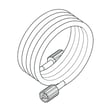
- If the hose itself is damaged, replace it with the correct hose 84006753
For broader troubleshooting steps, use solving pressure washer problems.
Why it matters
Choosing the right PSI helps prevent surface damage (paint, wood, siding) while still giving you enough cleaning power for concrete, decks, and outdoor equipment. Matching spray tip angle and distance to the job is just as important as the PSI rating.
Last updated: January 2026
What PSI should my pressure washer be?
For the Craftsman pressure washer model 580752700, the rated pressure is 2,500 PSI. That is the PSI we expect when the washer is operating correctly with proper water supply, the correct spray tip, and no restrictions. For operating and safety details, use the 580752700 owner’s manual.
What “2,500 PSI” means in real use
Your actual cleaning pressure at the surface varies based on spray tip angle, distance, and flow.
- 0° (red) concentrates pressure; highest risk of surface damage
- 15° (yellow) strong cleaning for tougher grime
- 40° (white) gentler rinse and general cleaning
- Black is for detergent application (low pressure)
If your spray seems weak or erratic, a restriction (clogged tip, dirty inlet screen, kinked hose) is more likely than the washer “needing more PSI.”
Quick PSI guidance by common tasks
| Task | Typical PSI range | Tip to start with |
|---|---|---|
| Car washing | 1,200 to 1,900 | 40° (white) |
| Decks and fences | 1,500 to 2,500 | 40° then 15° as needed |
| Patios and light concrete | 2,000 to 3,000 | 15° (yellow) |
| Heavy concrete stains | 2,800+ | 15° with proper technique |
If you are not getting close to rated PSI
We recommend checking these items first (in order):
- Verify the water supply is steady and cold (not over 100°F)
- Inspect and clean the water inlet screen
- Make sure the spray tip is not clogged; back-flush the nozzle extension filter screen
- Check for kinks, leaks, or bulges in the high-pressure hose; replace if damaged
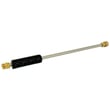
- Confirm you are using the correct nozzle extension; inspect the extension 207796GS if yours is cracked or leaking
For deeper troubleshooting steps, use solving pressure washer problems.
Why it matters
Using too much PSI or the wrong spray tip can etch wood, strip paint, and damage seals, while low PSI usually points to a maintenance or water-supply issue that you can correct before replacing parts.
Last updated: January 2026
What is the most common problem with pressure washers?
Low or inconsistent water pressure (weak spray) is the most common pressure washer problem, and it is often caused by a restricted spray tip, a clogged inlet screen/filter, or an inadequate water supply. On Craftsman model 580752700, these checks are the fastest way to restore cleaning power.
Quick checks first (most fixes take minutes)
- Confirm the garden hose is fully on and supplying steady flow; this model needs strong supply flow and at least 20 PSI at the hose end.
- Inspect and clean the water inlet screen before the pump.
- Remove and clean the spray tip (a clogged tip can cause pulsing or low pressure).
- Purge air from the pump by squeezing the trigger until the stream is steady.
- Verify you are using the correct spray tip (high-pressure tips for cleaning, black tip for chemical).
Common causes and what they look like
| Symptom | Most likely cause | What to do |
|---|---|---|
| Weak spray / low pressure | Clogged spray tip or in-line filter | Clean tip and in-line filter screen |
| Pressure surges (pulsing) | Tip restriction or air in pump | Clean tip; purge air |
| Low water volume | Inlet screen blocked or hose kink/leak | Clean screen; straighten/replace hose |
| Pressure drops under use | High-pressure hose leak or restriction | Inspect hose; replace if damaged |
Model 580752700 parts that commonly affect pressure
If you find a cracked, kinked, or leaking hose, replacing it is typically the correct repair (high-pressure hoses should not be patched).
For operating steps, spray tip selection, and the troubleshooting chart for “failure to produce pressure” and “erratic pressure,” use the 580752700 owner’s manual.
Why it matters
Running with low pressure usually means the pump is not getting enough clean water flow. Fixing restrictions early helps prevent overheating and internal pump wear, and it restores the 2,500 PSI cleaning performance this unit is designed to deliver.
Last updated: January 2026
Does Craftsman have a lifetime warranty on pressure washers?
No. For the Craftsman pressure washer model 580752700, the owner’s manual specifies a limited 1-year warranty from the purchase date for defects in materials and workmanship when the unit is maintained and operated as instructed.
What the warranty covers for model 580752700
The warranty described in the 580752700 owner’s manual is focused on defects in materials and workmanship under normal, instructed use.
Key points called out in the manual:
- Coverage period is 1 year for consumer use.
- Warranty service is handled through a Sears service center or dealer (U.S.).
- Normal wear items are excluded.
- Damage from misuse, neglect, or running the pump without water is excluded.
Consumer vs. commercial or rental use
This model’s warranty period changes based on how the pressure washer is used.
| Use type | Warranty period (model 580752700) |
|---|---|
| Consumer (homeowner) use | 1 year |
| Commercial use | 90 days |
| Rental use | 30 days |
What is not covered (common examples)
Even with a valid warranty period, some items and situations are typically excluded for this model.
- Expendable maintenance items (for example, spark plugs and air filters)
- Pump damage caused by no water supply to the pump
- Failures caused by not performing routine maintenance (oil checks, cleaning inlet screen, etc.)
- Damage related to operator abuse or negligence
Why it matters
Warranty terms affect whether you should troubleshoot, perform maintenance, or plan a repair. For example, preventing pump damage by always supplying water and purging air helps you avoid failures that are commonly excluded.
If you are diagnosing a performance issue (low pressure, surging, detergent not siphoning), our solving pressure washer problems guide can help you narrow down the cause before replacing parts.
Last updated: January 2026
Is it worth repairing a pressure washer?
For the Craftsman 580752700 gas pressure washer, repairing is usually worth it when the engine still runs well and the issue is limited to wear items (hose, wand, seals) or routine maintenance. This model is a 2,500 PSI, 2.2 GPM unit, so keeping it running can deliver strong value versus replacement.
Quick way to decide (repair vs. replace)
We recommend repairing when you see any of these:
- The pump still builds pressure (even if it is weak or pulsing) after basic cleaning and setup checks.
- The engine starts and runs without heavy smoke or loud knocking.
- The problem is a common service item: clogged spray tip, dirty inlet screen, worn hose, or overdue pump oil.
- The frame, handle, and wheels are solid and not bent or broken.
- You can complete the fix with basic tools and safe handling.
We recommend considering replacement when you see any of these:
- The pump is confirmed faulty after you rule out tip clogs, inlet restrictions, and hose leaks.
- The engine has persistent internal problems (won’t run even after tune-up basics).
- Multiple major systems need work at the same time (pump + engine + hose/gun).
High-impact repairs that often pay off on model 580752700
These are common, cost-effective fixes that restore performance:
- Clean the spray tip and the in-line filter screen (a frequent cause of pulsing/low pressure).
- Inspect and clean the water inlet screen; do not run if the screen is damaged.
- Replace a leaking or damaged hose such as the hose 84006753.
- Service pump oil on schedule using the specified pump oil item (see 580752700 owner’s manual).
Cost-to-value comparison (practical rule of thumb)
| Situation | Typical outcome | Usually worth it? |
|---|---|---|
| Maintenance and small parts (hose, wand, seals, oil) | Restores pressure and reliability | Yes |
| Single major repair (pump-related) | Can be worthwhile if engine is strong | Often |
| Multiple major repairs at once | Costs can stack up quickly | Sometimes not |
Why it matters
A pressure washer that is maintained correctly avoids the most expensive failures. On the 580752700, running without proper water flow or skipping pump care can lead to pump damage, turning a small fix into a big repair.
Last updated: January 2026
How much does it cost to get a pressure washer fixed?
For the Craftsman 580752700 gas pressure washer, repair cost usually depends on whether the issue is a simple leak or a pump-related failure. Minor fixes (seals, O-rings, clogs) often run $20 to $50 in parts, while pump valve or unloader-type repairs commonly land around $100 to $200; a full pump replacement can be $200 to $500.
What typically drives the price up
These are the most common cost factors we see with gas pressure washers like model 580752700:
- Pump damage from running without water (can turn a small issue into a major repair)
- Low/erratic pressure caused by internal pump wear versus a clogged spray tip
- High-pressure hose or gun leaks that require replacement instead of repair
- Maintenance items (oil, filters, spark plug) that restore performance cheaply
- Labor time (diagnosis plus teardown) if the pump or engine needs internal service
Quick triage: cheap checks before paying for service
Before you commit to a repair bill, we recommend these quick checks from the 580752700 owner’s manual:
- Verify water supply flow and pressure are adequate
- Inspect and clean the water inlet screen
- Clean the spray tip and the in-line filter in the nozzle extension
- Check for kinks, cuts, or leaks in the high-pressure hose
- Purge air from the pump by squeezing the trigger until flow is steady
Common repair scenarios and rough cost ranges
| Problem you notice | Likely cause | Typical cost range |
|---|---|---|
| Weak or pulsing spray | Clogged tip/filter, air in pump | $20 to $75 |
| Leaks at connections | Worn O-rings, loose fittings | $20 to $50 |
| Low pressure even with clean tip | Pump wear, valve issues | $100 to $200 |
| No pressure, loud pump noise | Pump failure | $200 to $500 |
Parts that can support a lower-cost fix
If the issue is maintenance-related, these model-compatible items can help keep costs down:
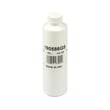
- Pressure washer pump oil 190586GS (for scheduled pump oil changes)
- Hose 84006753 (if the water hose is leaking or damaged)
- Extension 207796GS (if the wand is cracked or leaking)
Why it matters
Catching a restriction (spray tip, inlet screen, in-line filter) early can prevent overheating and internal pump wear. That is often the difference between a small parts-only fix and a pump replacement.
Last updated: January 2026