Installation guide
 Owner’s manual
 Error Codes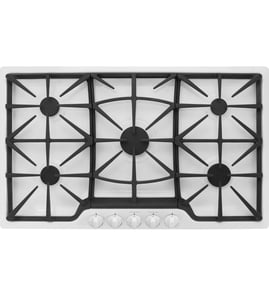



Can you use a downdraft vent with a gas range?
Yes, you can use a downdraft vent with a gas range or gas cooktop, but it must be designed and installed so it does not blow air downward toward the burners. For the Jenn-Air JGD3536GS00, follow the venting and installation requirements in the installation guide to prevent ignition and combustion problems.
What to check before you install or use downdraft ventilation
- Confirm the ventilation setup pulls air into the vent intake (not downward air discharge toward the cooktop).
- Use the correct duct size and venting method (wall, roof, between joists, or behind a kick plate) for your kitchen layout.
- Keep the vent run and number of elbows as short as practical for better airflow.
- Make sure any wall or roof cap used is not reduced in size and includes a backdraft damper.
- Seal duct joints with clamps and seal exterior openings with caulk to reduce leaks.
- If you live above 4,500 ft elevation, shorten the recommended vent run by about 20% for best performance.
Downdraft performance tips for the JGD3536GS00
The built-in downdraft system works best when the filter is installed correctly and cleaned often.
- Install the filter at an angle (not flat against the fan wall).
- Run the vent on HI for heavy smoke or high-heat searing.
- Leave the vent running briefly after cooking to clear lingering vapors.
Venting guidelines at a glance
| Item | Typical guidance for this cooktop style |
|---|---|
| Max equivalent duct length | 60 ft |
| Common duct size | 6 in round (or 3-1/4 in x 10 in in some layouts) |
| Best practice | Fewer elbows, shorter run, sealed joints |
Why it matters
Gas burners need stable combustion air. A ventilation system that pushes air downward toward the flame can disrupt ignition, cause poor burner performance, and lead to unintended operation. Correct vent direction and proper ducting protect both cooking results and safe operation.
Last updated: February 2026
What are the cons of a downdraft range?
Downdraft ventilation (like the built-in system on the Jenn-Air JGD3536GS00 gas downdraft cooktop) is less effective than an overhead hood for capturing smoke and steam, especially from tall pots and high-heat cooking. It also adds installation complexity because it relies on duct routing and filter placement.
Common downsides you will notice
- Weaker capture at the source: Smoke and grease naturally rise; downdraft has to pull them downward.
- Tall cookware reduces performance: Stockpots and canning pots can block airflow to the vent grille.
- More installation constraints: Duct runs through a wall or floor, and layout options can be limited.
- Cabinet space tradeoff: The blower and ducting can reduce usable storage below the cooktop.
- Performance depends on setup: Filter position and cleanliness directly affect airflow.
Installation and venting tradeoffs (what matters for JGD3536GS00)
The installation guide shows multiple venting methods (through wall, roof, between floor joists, or behind the cabinet kick plate). Longer or more complex duct runs generally reduce airflow and can increase noise.
| Factor | Downdraft vent | Overhead hood |
|---|---|---|
| Best at capturing | Light to moderate cooking vapors | High-heat smoke, steam, grease |
| Cookware impact | Tall pots can block airflow | Minimal |
| Install complexity | Higher (duct routing under/behind cabinets) | Often simpler (duct up and out) |
| Space impact | Uses base cabinet space | Uses upper cabinet or wall space |
How to get the best performance from your downdraft
- Run the fan on HI for searing, frying, or heavy smoke.
- Keep the filter clean; grease buildup reduces airflow.
- Install the filter at the correct angle; a flat filter reduces effectiveness.
- Use appropriately sized cookware and keep it centered over the burner.
- Minimize cross drafts; drafts can affect flames and can also disrupt capture.
Why it matters
Downdraft systems are a great fit when you cannot use an overhead hood, but they are more sensitive to real-world cooking conditions (pot height, smoke load, duct layout, and filter maintenance). Following the setup and use guidance in the installation guide and owner's manual helps you get the strongest ventilation your cooktop can deliver.
Last updated: February 2026
Is JennAir considered high end?
Yes. Jenn-Air is considered a high-end (luxury) appliance brand, and the Jenn-Air JGD3536GS00 gas cooktop is positioned as a premium, design-forward product with higher-end materials, styling, and features than mainstream cooktops.
What “high end” typically means for Jenn-Air
High-end brands usually differentiate themselves with a mix of performance, aesthetics, and build details. With Jenn-Air cooktops, that often shows up as:
- Premium finishes and a built-in, architectural look
- Strong burner performance options (high and low simmer capability varies by model)
- More refined control feel and tighter fit-and-finish
- Integrated ventilation options on some models (like downdraft configurations)
- A parts ecosystem designed around factory-specified components
For model-specific use, care, and feature details, we recommend checking the owner's manual.
How this affects parts and repairs
Because Jenn-Air is positioned as a premium line, using the correct replacement parts matters for fit, ignition reliability, and safe operation.
Common cooktop repair-related parts you may see for the JGD3536GS00 include:
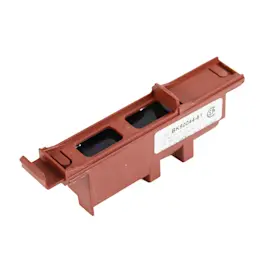
- Ignition components such as the spark module WPW10475150
- Burner ignition parts such as the electrode W10876262
- Gas delivery components such as orifice holders and burner valves
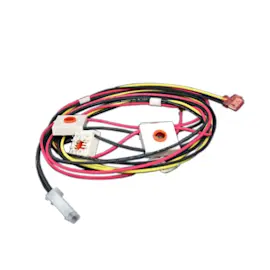
- Wiring and connection parts such as the main harness and power cord components
Quick examples (what the part does)
| Part | What it supports | When it’s commonly suspected |
|---|---|---|
| Spark module | Creates spark for burner ignition | Clicking but weak/no spark, multiple burners affected |
| Electrode | Sparks at the burner | One burner won’t light, sparking to the wrong spot |
| Orifice holder | Meters gas to the burner | Poor flame pattern, uneven flame after cleaning |
Why it matters
A “high-end” cooktop like the Jenn-Air JGD3536GS00 is built to deliver consistent ignition and controlled flame performance. Keeping burners clean and using factory-specified parts helps maintain the look, performance, and day-to-day reliability you expect from a premium appliance.
Last updated: February 2026
What are common problems with Jenn Air stoves?
Common Jenn-Air stove and cooktop problems include burners that click but won’t light, weak or uneven flames, gas odors from a leaking valve or manifold connection, and ignition that keeps sparking. On the Jenn-Air JGD3536GS00 gas cooktop, most issues trace back to dirty burner ports, moisture, or a failing ignition part; use the owner's manual for model-specific checks.
Most common symptoms (and what usually causes them)
- Burner clicks but won’t ignite: wet/dirty burner cap, clogged ports, misaligned electrode, weak spark
- Continuous clicking after ignition: electrode tip dirty, burner cap not seated, moisture around igniter
- Uneven flame or low heat: clogged burner ports, incorrect orifice sizing, restricted gas flow
- One burner won’t adjust properly: worn or sticking gas valve
- No spark on multiple burners: failed spark module or power supply issue
Quick checks we recommend first
- Turn the burner off; let the area dry completely (spills and cleaning water commonly cause misfires).
- Remove grates and caps; clean ports with a soft brush and clear debris.
- Reseat the burner cap so it sits flat and centered.
- Confirm the cooktop has power (ignition needs electricity even though it is gas).
- If you smell gas, stop using the cooktop and have a qualified technician check it before further operation.
Parts that commonly fix ignition and flame problems
If cleaning and reseating don’t help, these model-compatible parts are common fixes:
| Symptom | Likely part area | Example part for JGD3536GS00 |
|---|---|---|
| No clicking or no spark on several burners | Ignition control | Spark module WPW10475150 |
| Clicking but weak/no ignition on one burner | Igniter at burner | Electrode W10876262 or electrode W10905489 |
| Flame too low/uneven after cleaning | Gas metering at burner | Cooktop burner orifice holder, 15,000-btu W10826753 (BTU varies by burner) |
Why it matters
Ignition and flame issues affect cooking performance and can lead to nuisance sparking, soot, or unsafe operation. Keeping burner parts clean and replacing worn ignition components restores reliable lighting and steady flame control.
Last updated: February 2026
Can Jenn-Air cooktops be repaired?
Yes. Jenn-Air cooktops, including model JGD3536GS00, are designed to be repaired by troubleshooting the symptom first and then replacing the failed component (such as an ignition part, burner valve, or wiring). We use the owner's manual to match the problem to the correct repair path.
What repairs are most common on JGD3536GS00?
These are the issues we see most often on gas cooktops with electronic ignition and downdraft ventilation:
- Burners click but won’t light (dirty burner ports, weak spark, or ignition wiring issue)
- One burner won’t ignite but others work (electrode or orifice holder issue)
- Continuous clicking after the flame is on (moisture or misaligned electrode)
- No clicking on any burner (failed spark module or loss of power)
- Downdraft vent runs poorly (blower or plenum airflow restriction)
Quick troubleshooting steps before replacing parts
Start with the simplest checks; many “no light” complaints are cleaning or alignment related.
- Confirm the cooktop has power (igniters need electricity even though it’s a gas cooktop)
- Dry the burner area thoroughly if it was recently cleaned
- Remove grates and caps; clean burner ports and reseat caps flat
- Inspect the electrode tip for cracks and heavy buildup
- If only one burner acts up, swap caps (if identical) to see if the problem follows the cap
Parts that are commonly replaced
If cleaning and reseating do not fix ignition, these parts are frequent repair solutions:
| Symptom | Likely part category | Example part for this model |
|---|---|---|
| No spark on all burners | Ignition control | Spark module WPW10475150 |
| Weak or intermittent spark on one burner | Ignition electrode | Electrode W10876262 or electrode W10905489 |
| Burner lights poorly or flame is uneven | Gas orifice/orifice holder | Cooktop burner orifice holder, 10,000-btu W10826754 or cooktop burner orifice holder, 5,000-btu W10826751 |
Why it matters
Repairing a gas cooktop promptly helps prevent repeated ignition clicking, delayed ignition, and uneven heating. It also helps protect related components like the spark module and burner valves from unnecessary wear.
Last updated: February 2026